
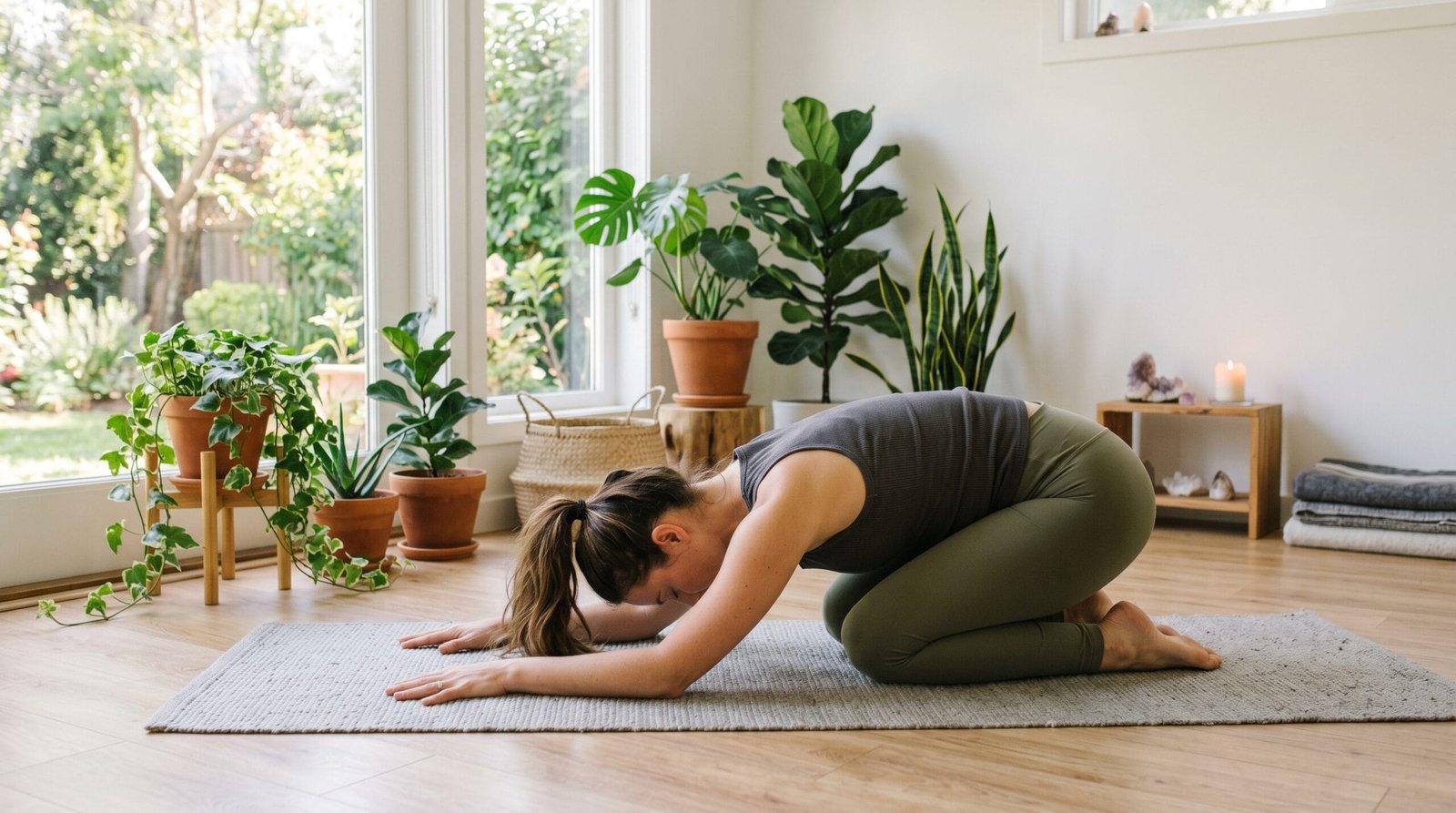
Child Pose (Balasana)
How to Perform Child Pose:
- Start by kneeling on the floor.
- Extend your arms out in front of you, keeping them straight.
- Lower your torso onto your thighs, allowing your forehead to touch the ground.
- Ensure your big toes are touching, and your knees are either together or slightly apart, depending on the tightness of your hips.
- Take at least ten deep, cleansing breaths, focusing on the sensation of your body relaxing onto the ground.
Benefits:
- Gentle Stretching: Child Pose provides a gentle stretch for the hips, ankles, thighs, and back, alleviating tension and discomfort.
- Calming Effects: This pose is known for its calming effects on stress hormones, reducing anxiety and promoting relaxation.
- Restorative: It is a restorative pose that allows your body to rest and recharge, making it great for ending a yoga practice or taking a quick break during the day.
Cat Pose (Marjaryasana) and Cow Pose (Bitilasana)
How to Perform Cat and Cow Poses:
- Start in a tabletop position on your hands and knees. Ensure your wrists are directly under your shoulders and your knees are under your hips.
- Cow Pose (Bitilasana): Inhale and drop your belly towards the floor, lifting your chin and chest. Keep your shoulders relaxed and away from your ears.
- Cat Pose (Marjaryasana): Exhale and pull your stomach towards your spine, rounding your back towards the ceiling. Drop the crown of your head and your tailbone.
- Continue to alternate between these two poses, synchronizing your breath with the movement. Inhale into Cow Pose and exhale into Cat Pose.
Benefits:
- Spinal Flexibility: These poses increase flexibility in the spine, improving posture and reducing back pain.
- Stress Relief: The flowing movement between Cat and Cow poses releases tension and calms the mind.
- Energetic Flow: The combination of these poses creates a gentle warming sensation in the body, promoting the flow of vibrant energy (prana) and releasing stored tension.
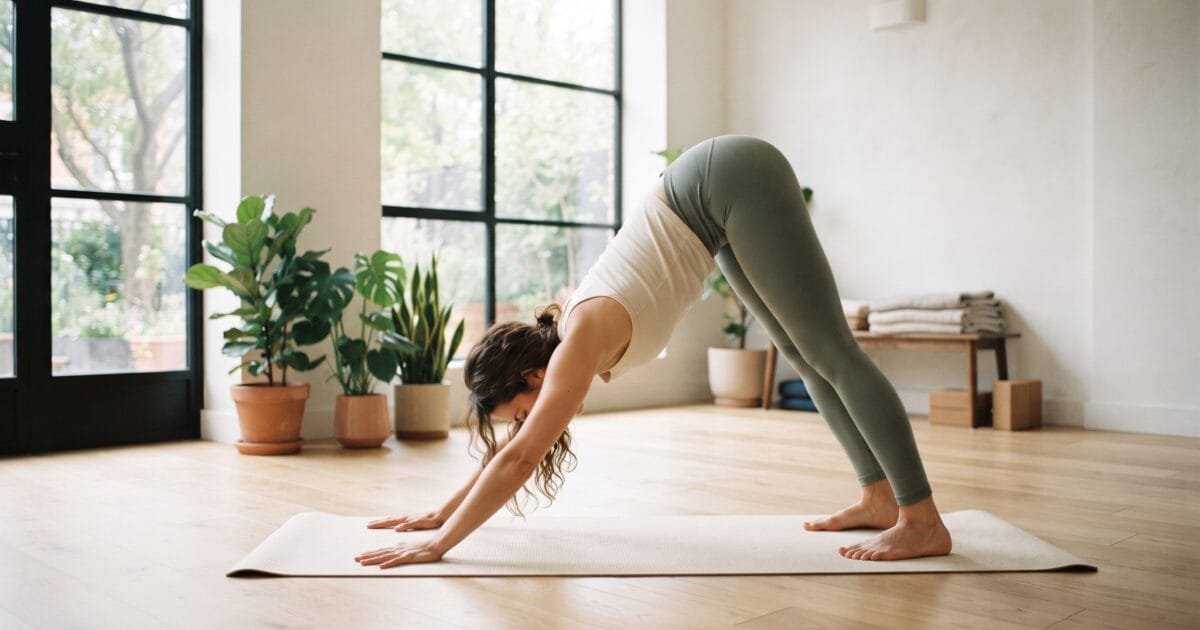
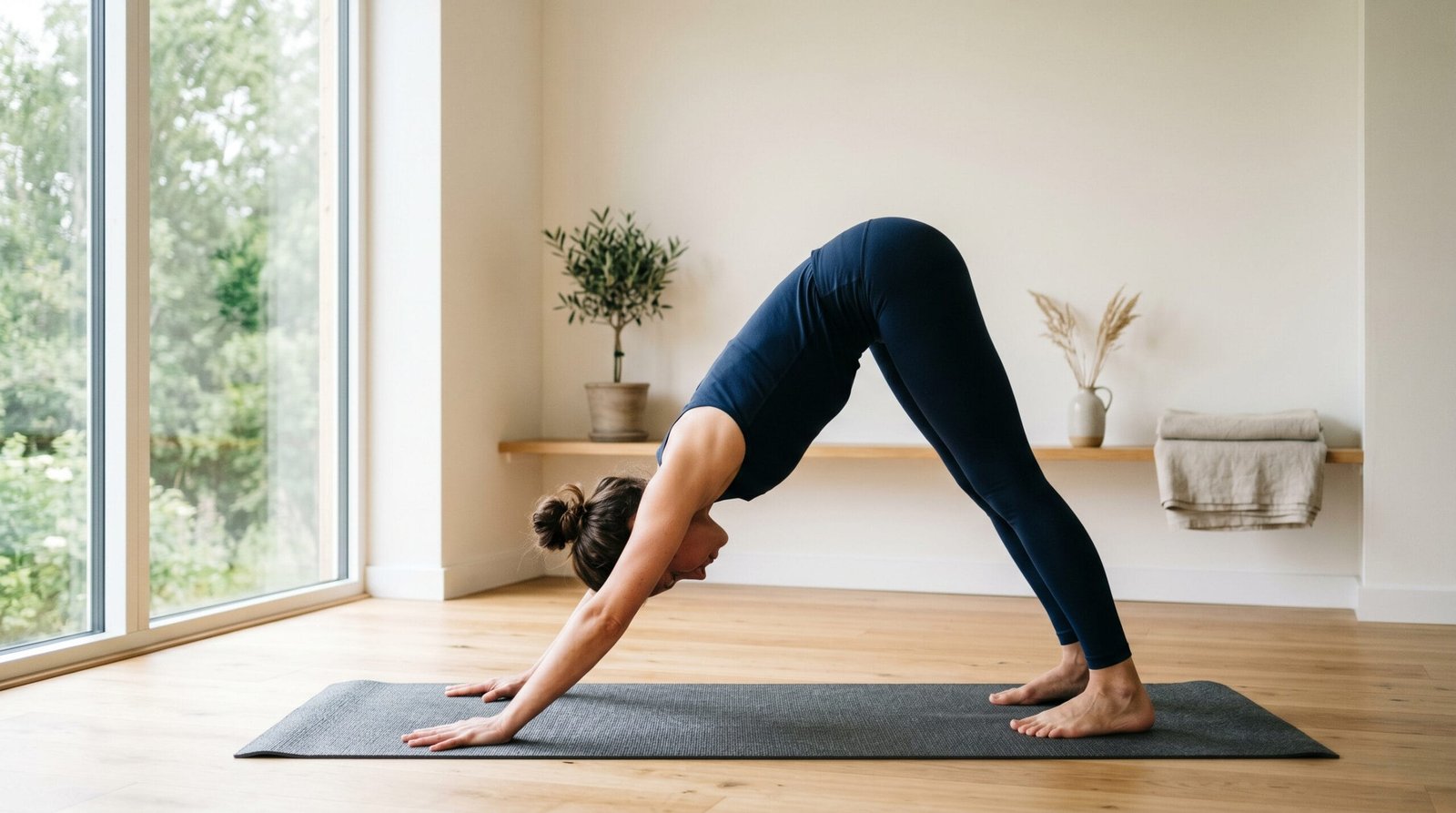
Downward Facing Dog (Adho Mukha Svanasana)
How to Perform Downward Facing Dog:
- Start on all fours.
- Curl your toes under and lift your hips back, straightening your legs as much as possible. Keep your heels slightly lifted if they cannot touch the ground.
- Ensure your hands are firmly planted on the ground, with your fingers spread wide.
- Let your head hang long and loose, avoiding any pressure on your neck.
- Maintain proper alignment by keeping your back flat and transferring the weight from your hands to your feet.
Benefits:
- Physical Stretching: Downward Facing Dog stretches and strengthens the entire body, particularly the hamstrings, calves, and spine.
- Mental Benefits: This pose is excellent for reducing stress and anxiety, promoting a sense of calm and relaxation.
- Restorative Freedom: Regular practice of this pose helps clear adhesions in multiple body areas and expands the energetic body, leading to greater awareness and inner peace.
Standing Forward Bend (Uttanasana)
How to Perform Standing Forward Bend:
- Start in a standing position with your feet hip-width apart and arms by your sides.
- Inhale and raise your arms overhead.
- Exhale and bend forward at the hips, keeping your spine long and straight as you lower your torso towards the floor.
- Bend your knees slightly if needed to release any tension in your lower back.
- Place your hands on the ground beside your feet or grab opposite elbows to deepen the stretch.
- Hold the pose and take several deep breaths, feeling the stretch through your hamstrings, calves, and spine.
- Inhale to slowly rise back up, one vertebra at a time, with your head coming up last.
Benefits:
- Full-Body Stretch: This pose provides a thorough stretch for your hamstrings, calves, hips, and spine.
- Stress Relief: The inversion of the body in this pose helps increase blood flow to the brain, promoting mental clarity and reducing stress.
- Improves Digestion: The compression of the abdominal area in this pose can stimulate digestive organs and improve digestion.
Seated Spinal Twist (Ardha Matsyendrasana)
How to Perform a Seated Spinal Twist:
- Sit with your legs extended, then bend your right knee and place your right foot flat on the floor outside your left thigh.
- Inhale and lengthen your spine; exhale and twist gently toward your right, placing your right hand behind you and your left elbow outside your right knee.
- Hold for 3–5 breaths, feeling the twist through your mid and lower back rather than forcing it.
- Release slowly and repeat on the other side.
Benefits:
- Spinal Mobility: Gentle twists keep the spine supple and can ease the stiffness that builds up from sitting.
- Nervous System Reset: Slow, breath-linked twists are commonly used in body-based stress work to help shift out of a tense, activated state.
Why These Poses Help — Body and Nervous System
Gentle yoga works on two levels. Physically, the poses lengthen tight muscles, mobilize the spine and hips, and build the kind of low-grade strength that protects joints. Just as importantly, pairing slow movement with steady breathing activates the parasympathetic nervous system — the “rest and digest” state — which is why a short practice can leave you feeling noticeably calmer. According to the National Center for Complementary and Integrative Health (NCCIH), part of the NIH, a review of 38 studies with over 2,000 participants found yoga had a substantial beneficial effect on anxiety symptoms, and NCCIH-funded research on yoga-based breathing specifically found it decreases sympathetic (fight-or-flight) activity while increasing parasympathetic tone. If you want to understand more about how the body physically stores and releases stress this way, my guide to somatic exercises for stress covers six additional body-based techniques that pair naturally with a gentle yoga practice.
How to Practice Safely
- Lead with the breath: move slowly enough that you can breathe smoothly. If you’re holding your breath, ease off — my guide to box breathing is a great way to build breath awareness off the mat, too.
- Never force a stretch: aim for a gentle sensation, not pain. Sharp or pinching pain is a signal to back out.
- Use props: a cushion, folded blanket, or block makes poses accessible and protects your joints — props are a sign of a smart practice, not a weak one.
- Warm up first: a minute of easy movement before deeper stretches reduces strain.
A Simple 10-Minute Sequence
Move slowly through each, breathing for several rounds: a few cat-cow cycles to wake up the spine, a gentle forward fold with soft knees, downward dog to lengthen the back of the legs, a low lunge on each side for the hips, a seated spinal twist on each side, child’s pose to rest, and a few quiet minutes lying down to finish. The goal is consistency and calm, not depth.
When to Be Cautious
Yoga is gentle, but it isn’t risk-free for everyone. If you are pregnant, recovering from an injury or surgery, or managing conditions affecting the spine, joints, or blood pressure, check with a healthcare provider and consider working with a qualified instructor who can offer modifications. Ease in gradually — the benefits come from a regular, sustainable practice, not from pushing your limits on day one. If you’re navigating perimenopause and finding your usual practice doesn’t feel the same, my guide to cycle syncing covers how to adjust movement across hormonal shifts.
⚕️ Disclaimer: This article is for general informational and educational purposes only and is not a substitute for professional medical advice, diagnosis, or treatment. Always consult a qualified healthcare provider before starting a supplement, exercise, or wellness routine. Read our full medical disclaimer.

Leave a Reply