
Good digestion affects much more than our stomachs. It’s linked to brain health and overall vitality. Eating right and living well are key, especially when it comes to fiber.
Fiber keeps our digestive system running smoothly. It makes you regular and supports a healthy gut with good bacteria. Eating plenty of fruits, veggies, grains, and beans will help you get enough fiber.
Drinking water is just as important as eating fiber. It helps keep the gut lining healthy and balances gut bacteria. Using natural methods like acupressure and herbal supplements can also ease gut issues. Adding prebiotics and probiotics to your meals benefits your digestive health too.
Key Takeaways
- Dietary fiber aids in regular bowel movements and prevents constipation.
- A balanced diet with adequate fiber supports a healthy gut microbiome.
- Hydration is essential for maintaining gut health.
- Prebiotics and probiotics play significant roles in enhancing digestive wellness.
- Holistic approaches like acupressure and herbal remedies can manage digestive discomfort.
The Importance of Fiber in Digestive Health
Fiber is key to keeping your digestive system happy. It brings many health benefits. Adding enough fiber to your meals helps you have regular bowel movements. It boosts your overall digestive health too.
Promotes Regular Bowel Movements
Fiber is mainly famous for making bowel movements regular. It makes your stool bulkier and softer, so it’s easier to pass. This eases constipation and makes loose stools firmer. This is really helpful for people with irritable bowel syndrome (IBS).
Eating lots of fiber stops constipation and keeps bowel movements steady. This helps your digestive system stay in great shape.
Reduces Risk of Digestive Disorders
Eating foods full of fiber lowers the chance of getting digestive problems like diverticulitis and hemorrhoids. Fiber keeps bowel movements regular. So, your digestive system works better. It also means fewer colon polyps, which might lead to colon cancer.
Fiber is a must for good digestive health. It’s a crucial part of a well-rounded diet.
Enhances Gut Microbiota
Fiber helps your gut microbiota flourish. Prebiotic fiber feeds the good bacteria in your gut. This improves gut health and makes your gut microbiome diverse and strong. A healthy gut is vital for good digestive health.
It even affects other wellness areas.
| Recommended Daily Fiber Intake | Grams per Day |
|---|---|
| Women aged 19-50 | 25 grams |
| Men aged 19-50 | 38 grams |
| Women over 50 | 21 grams |
| Men over 50 | 30 grams |
| Food Item | Fiber Content (grams) |
|---|---|
| Almonds (¼ cup) | 3 grams |
| Apple (1 medium) | 3 grams |
| Artichokes (½ cup) | 5 grams |
| Beans or Lentils (1 cup) | 6-20 grams |
| Bread, whole wheat (2 slices) | 4-6 grams |
Types of Dietary Fiber: Soluble vs. Insoluble
Dietary fiber is vital for our health, yet only 5% of Americans eat enough. It splits into soluble and insoluble fiber. Knowing and eating various fiber types improves our gut health.
Soluble Fiber: Benefits & Sources
Soluble fiber turns into a gel in water, helping lower cholesterol and blood sugar. It feeds healthy gut bacteria. Foods rich in soluble fiber are oats, peas, beans, apples, citrus, carrots, barley, and psyllium.
Eating 1 cup of cooked oatmeal gives you 4 grams of fiber. Meanwhile, 1 cup of black beans offers 15 grams. These fiber-rich foods are easy to add to meals.
Insoluble Fiber: Benefits & Sources
Insoluble fiber doesn’t dissolve in water. It helps move food through the digestive system, preventing constipation and other issues. Good sources are whole-wheat flour, wheat bran, nuts, and certain vegetables like cauliflower and green beans.
A slice of whole-wheat bread has about 3 grams of fiber. Adding these foods to your diet improves fiber intake and gut health.
Having a mix of soluble and insoluble fiber from different foods is crucial. It boosts digestive health and brings many health benefits.
High-Fiber Foods to Include in Your Diet
It’s key to add a range of high-fiber foods to our daily meals for top health. Let’s look at some top picks that fit nicely into our diets.
Legumes: Beans, Lentils, Chickpeas
Beans, lentils, and chickpeas are great for fiber and protein. A cup of kidney beans gives you a third of your daily fiber needs. You can also try split peas and green peas for big fiber boosts.
They’re great in soups, stews, and salads, making them easy to use.
Whole Grains: Bread, Pasta, Rice
Whole grains, like bread and brown rice, are full of fiber and vital nutrients. They’re a must for a well-rounded diet. Swapping white grains for whole grains boosts your fiber intake.
Fruits & Vegetables: Apples, Broccoli, Carrots
Fruits and veggies are key for a fiber-full diet. An apple has about 2.4 grams of fiber; raspberries have 8.0 grams. Broccoli and carrots are also fiber-rich.
Nuts and Seeds: Almonds, Chia Seeds, Flaxseeds
Nuts and seeds like almonds and chia are fiber powerhouses. Chia seeds have 10.0 grams of fiber per ounce. Mix them into yogurt, oatmeal, or salads for added texture and nutrients.
Adding high-fiber foods to your diet slowly helps avoid stomach issues. It’s also crucial to drink plenty of water with fiber-rich foods. The Academy of Nutrition and Dietetics suggests 14 grams of fiber for every 1,000 calories. Yet, most Americans get just 15 grams a day, half of the recommendation.
| Food Item | Fiber Content (grams) |
|---|---|
| Legumes (Kidney Beans, 1 cup) | 13.0 |
| Whole Grains (Oats, 1 cup) | 10.1 |
| Fruits (Raspberries, 1 cup) | 8.0 |
| Vegetables (Broccoli, 1 cup) | 2.6 |
| Nuts and Seeds (Chia Seeds, 1 ounce) | 10.0 |
Simple Ways to Increase Your Fiber Intake
Boosting your fiber intake can greatly improve your digestion and overall health. Eating a high-fiber breakfast and choosing whole grain products are simple strategies. These steps make it easy to increase fiber intake every day.
Start with a High-Fiber Breakfast
Beginning your day with fiber-rich foods sets you up for healthy eating. Choose breakfast cereals high in fiber or add fruits like raspberries. They offer 8 grams of fiber per cup. Aiming for around 13 grams of fiber in the morning is a great goal.
Snack on Fiber-Rich Foods
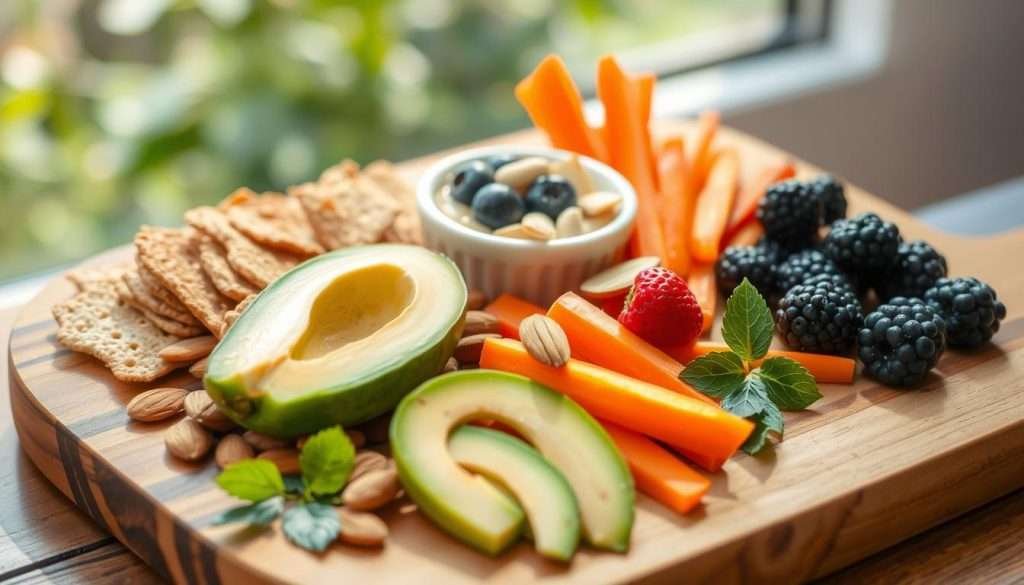
Choosing fiber-rich snacks between meals is beneficial. Try almonds for 3.5 grams of fiber per ounce or air-popped popcorn for 3.6 grams from 3 cups. These snacks help you stick to a high-fiber diet and keep you full.
Replace Refined Grains
Switching from refined grains to whole grain alternatives is key. Choose whole grain bread and pasta over white versions. Cooked pearled barley is a good choice, offering 6 grams of fiber per cup. It’s a tasty way to include more fiber in your meals.
Incorporate Vegetables in Every Meal
Adding vegetables to every meal boosts your fiber intake. For example, artichokes pack 10.3 grams of fiber each. Mix spinach into your omelette or have broccoli as a side. Small changes like these make a big difference in meeting fiber goals.
How to Gradually Introduce More Fiber into Your Diet
Adding fiber to your diet should be a slow process. If you switch from low to high fiber too fast, you might feel bloated and gassy. I’ll show you how to up your fiber intake and keep feeling good.
Increase Fiber Slowly to Avoid Discomfort
To avoid feeling bad, add fiber little by little. Jumping straight to a lot can upset your stomach. Begin with small amounts of beans, fruits, veggies, and grains. Watch how you feel and slowly eat more over weeks. Adults should get 25 to 30 grams of fiber daily from food, not pills, says the American Heart Association.
Prioritize Hydration
Drinking plenty of water is key when eating more fiber. Soluble fiber turns into a gel that helps digestion and stops constipation. Enough water keeps your digestion smooth and supports the diet changes. Aim to drink eight glasses of water daily to match your fiber intake. Staying hydrated is essential for adjusting to more fiber.
The Role of Fiber in Digestive Health and How to Increase Intake
Fiber is key for good digestive health. Sadly, folks in richer countries eat less fiber now, due to more processed foods. This lack of fiber leads to more digestive problems. While women need 25g and men need 38g of fiber a day, many only get 10-15g.
Fiber helps your digestion by making stool bulkier, which makes you go more regularly. It also acts as a prebiotic. Soluble fiber, like in oats and apples, lowers cholesterol and sugar levels. It also makes stools softer. Insoluble fiber, found in whole grains and veggies, makes stool bulkier for smoother movements.
To eat more fiber, start adding different fiber-rich foods to your diet slowly. Eating a mix of fibers is best for your health. For instance, almonds and seeds really up your fiber.
Remember to increase fiber gradually to avoid stomach upset. Drink plenty of water too. Too much fiber with not enough water can cause constipation.
| Food Type | Examples | Fiber Benefits |
|---|---|---|
| Soluble Fiber | Oats, Apples, Nuts | Lowers Cholesterol, Stabilizes Blood Sugar, Softens Stool |
| Insoluble Fiber | Whole Grains, Cauliflower, Carrots | Adds Bulk to Stool, Promotes Regular Bowel Movements |
To increase fiber, choose whole fruits over juice and pick whole grains over white ones. Add high-fiber snacks to your diet too. Check food labels for fiber and try beans instead of meat sometimes. Supplements can help but aren’t as good as real foods.
Fiber’s Impact on Weight Management
Fiber weight management is crucial because fiber helps you feel full longer. High-fiber foods take longer to eat and are more satisfying. Thus, you eat less during the day.
Fiber for Satiety and Reduced Caloric Intake
Studies show that fiber is key for controlling weight. Viscous fibers like those in oats form gels in your gut. This process makes you feel full and eat less. A 2019 study showed that more fiber leads to significant weight loss.
Slow Digestive Process for Prolonged Fullness
Fiber slows digestion, making you feel full longer. Soluble fibers, like those in konjac root, are especially good for weight loss. Foods like flaxseeds slow digestion too, helping control your appetite.
Unfortunately, only 5% of Americans eat enough fiber. Eating more fiber can lower the risk of obesity-related diseases. This shows fiber’s strong role in managing weight.
Benefits of Fiber Beyond Digestion
Fiber is known for helping with digestion, but it does much more. It can prevent heart disease and help keep your weight healthy. Let’s look at how fiber does more for us than just help with digestion.
Lower Risk of Heart Disease
Fiber plays a key role in preventing heart disease. It lowers ‘bad’ cholesterol by removing it from our body. This prevents harmful plaque in our arteries, reducing heart disease risk. People eating lots of fiber have a lower chance of heart disease.
Regulation of Blood Sugar Levels
Fiber also helps control blood sugar levels. It slows down digestion, which keeps blood sugar levels stable. This is good for preventing diabetes. Keeping blood sugar stable is a big step in avoiding type 2 diabetes.
Weight Management
Fiber is great for managing weight. It makes you feel full, which can help you eat less. This can make it easier to keep a healthy weight. Getting enough fiber every day is a smart way to control your weight.
- Daily Fiber Recommendations:
- Men 50 and younger: 38 grams
- Men older than 50: 30 grams
- Women 50 and younger: 25 grams
- Women older than 50: 21 grams
Besides aiding digestion, fiber helps prevent heart disease, manage blood sugar, and maintain a healthy weight. Remember to eat a variety of fiber-rich foods to meet your daily needs.
Prebiotics vs. Probiotics: What’s the Difference?
Prebiotics and probiotics are key to digestive health and a balanced gut. They work together to support our well-being. Understanding their differences is important.
Understanding Prebiotics and Their Sources
Prebiotics feed the good bacteria in our gut. They help with digestion, boost our immune system, and can ease depression and anxiety. Foods like bananas, onions, and asparagus are great prebiotic sources. Eating these can make your digestive system healthier.
The Role of Probiotics in Digestive Health
Probiotics are live bacteria found in yogurt, kimchi, and other fermented foods. They restore gut bacteria balance, especially after antibiotic use. Probiotics strengthen the immune system and may lower sickness risks. They are essential for a healthy gut.
Combining Prebiotics and Probiotics for Maximum Benefit
Using prebiotics and probiotics together improves gut health. Synbiotic foods like kefir have both prebiotic fibers and beneficial bacteria. They’re great for our digestive wellness. Supplements can help, but whole foods are best. A diet with both supports a robust gut microbiome, vital for our health.



Leave a Reply