
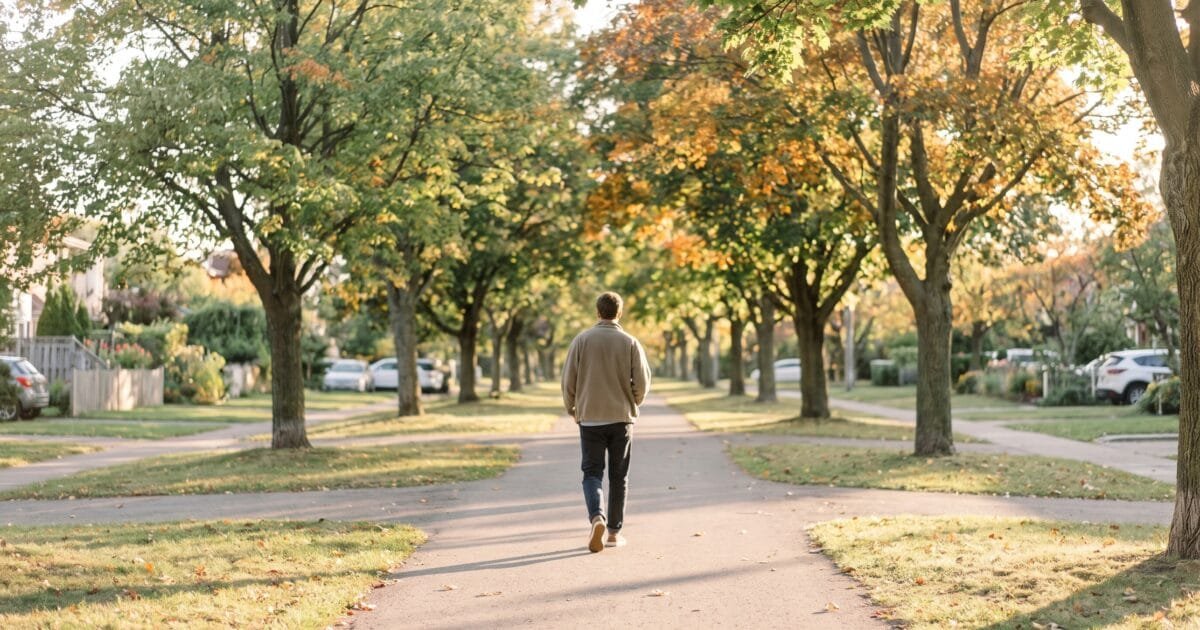
You’ve finished dinner. The plates are still on the table, and the couch is right there. Walking after eating asks you to put off sitting down for about ten minutes. Is that worth it?
Here’s the short version. The research on blood sugar is encouraging. The research on digestion is small but points the same way. The habit costs nothing and takes very little time. It isn’t a treatment for anything, though, and the studies have real limits. This guide covers what they found, where they fall short, and how to try a post-meal walk without making it one more chore.
Key takeaways: A short, easy walk after a meal may lower the blood sugar rise that follows eating. It may also help food leave your stomach sooner. Ten minutes is plenty. You don’t need to do it after every meal, and people who take glucose-lowering medication should talk with their doctor first.
What happens in your body after a meal
After you eat, your blood sugar rises. That happens to everyone, with or without diabetes. According to a diabetes educator at Cleveland Clinic, it usually peaks about 30 to 90 minutes after a meal. The rise is normal. It only becomes a concern when it climbs too high or stays up too long. (Cleveland Clinic)
The same Cleveland Clinic source says exercise affects blood sugar quickly, often within a few minutes. That’s the thinking behind a post-meal walk: catch the rise while it’s happening.
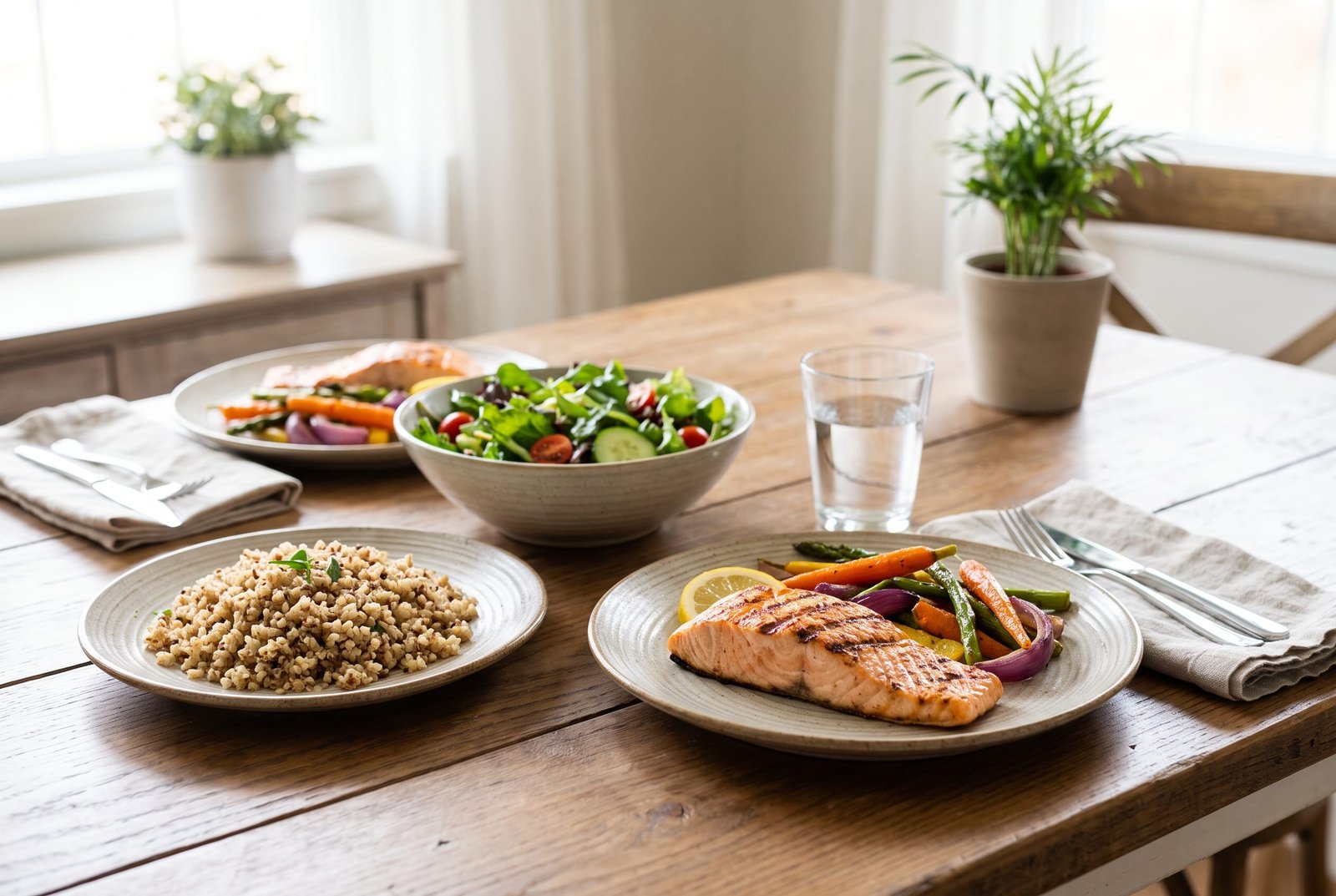
Does walking after eating lower blood sugar?
Two bodies of research are worth knowing about. One looks at people with type 2 diabetes. The other looks at adults who sat for a day and then broke up the sitting with light walking.
A trial in adults with type 2 diabetes
In a 2016 randomized crossover study, researchers in New Zealand followed 41 adults with type 2 diabetes. Their average age was 60. For two weeks, they were told to walk 30 minutes once a day, at any time. For another two weeks, they were told to walk 10 minutes after each main meal, starting within five minutes of finishing. The total walking time was the same either way. (Reynolds et al., Diabetologia, 2016)
Blood sugar after meals was about 12% lower during the post-meal walking weeks (95% CI 1% to 22%). The gap was biggest after the evening meal, where it was about 22% lower (95% CI 9% to 33%). The authors point out that dinner was the biggest carbohydrate meal of the day and the time people were most likely to be sitting.
The limits matter. Each period lasted only two weeks. Participants knew which advice they were following. And the study didn’t show that these lower after-meal readings added up to better long-term blood sugar control. Weight, blood pressure and cholesterol didn’t differ between the two periods.
Light walking breaks versus sitting
A 2022 review in Sports Medicine pooled seven one-day trials in adults, most of them with overweight or obesity. In each trial, people sat for long stretches on one visit and took short, light walking breaks on another. Light walking lowered blood sugar and insulin after meals compared with sitting the whole time. It also did better than standing breaks. (Buffey et al., Sports Medicine, 2022)
Keep in mind that these were short lab studies. They were about interrupting sitting, not strictly about walking after dinner. The review reports its results as standardized effect sizes rather than glucose numbers, so there’s no tidy “mg/dL” figure to quote. The takeaway is about direction: light movement after eating beat sitting still.
What clinicians say
Cleveland Clinic’s diabetes educator describes a short walk as a good habit that helps with blood sugar, and she’s clear that it isn’t a cure. She points to research suggesting that even two to five minutes can nudge blood sugar down a bit, and adds, “this isn’t a magical solution for diabetes.” (Cleveland Clinic) If you want the food side of the picture, our guide to balancing blood sugar through smart eating is a good companion.
Walking after eating and digestion
Blood sugar gets most of the attention, but digestion is the other reason people take a stroll after a big meal.
In an older study, researchers gave 10 healthy young men the same solid meal on three separate days. On one day they stood still. On the others they walked on a treadmill at 3.2 km/h (about 2 mph) or 6.4 km/h. Half the meal had left the stomach after about 73 minutes when standing, versus about 45 minutes at the slower walking pace. (Moore et al., Digestive Diseases and Sciences, 1990)
A Cleveland Clinic gastroenterologist says walking right after a meal can shorten the time food sits in the stomach, which may help with feeling overly full, reflux and belly pain. She suggests walking within 15 to 30 minutes of eating and says it’s especially useful after heavier meals. (Cleveland Clinic News Service)
There’s a catch. That treadmill study was small, it involved only men, and it used one type of meal. Faster emptying isn’t automatically better for every person or every digestive condition. Treat this as a reasonable thing to try, not a proven fix. If you have ongoing stomach symptoms, tell your doctor rather than relying on walks.
How long, how soon and how fast
The studies don’t agree on one perfect recipe, which is useful. It means you can stop hunting for it.
- How long: The 2016 trial used 10 minutes. Cleveland Clinic cites research on walks as short as two to five minutes.
- How soon: The 2016 trial started within five minutes of finishing. The gastroenterologist above says 15 to 30 minutes after eating can help. Nobody has compared those windows head to head here, so pick the one you’ll actually stick with.
- How fast: The studies above used easy walking. You should be able to hold a conversation. They didn’t test hard workouts right after a meal, so this article can’t speak to those.
- Which meal: Dinner showed the biggest effect in the 2016 trial. You don’t have to walk after every meal either. The Cleveland Clinic gastroenterologist says what matters more is doing it at all.
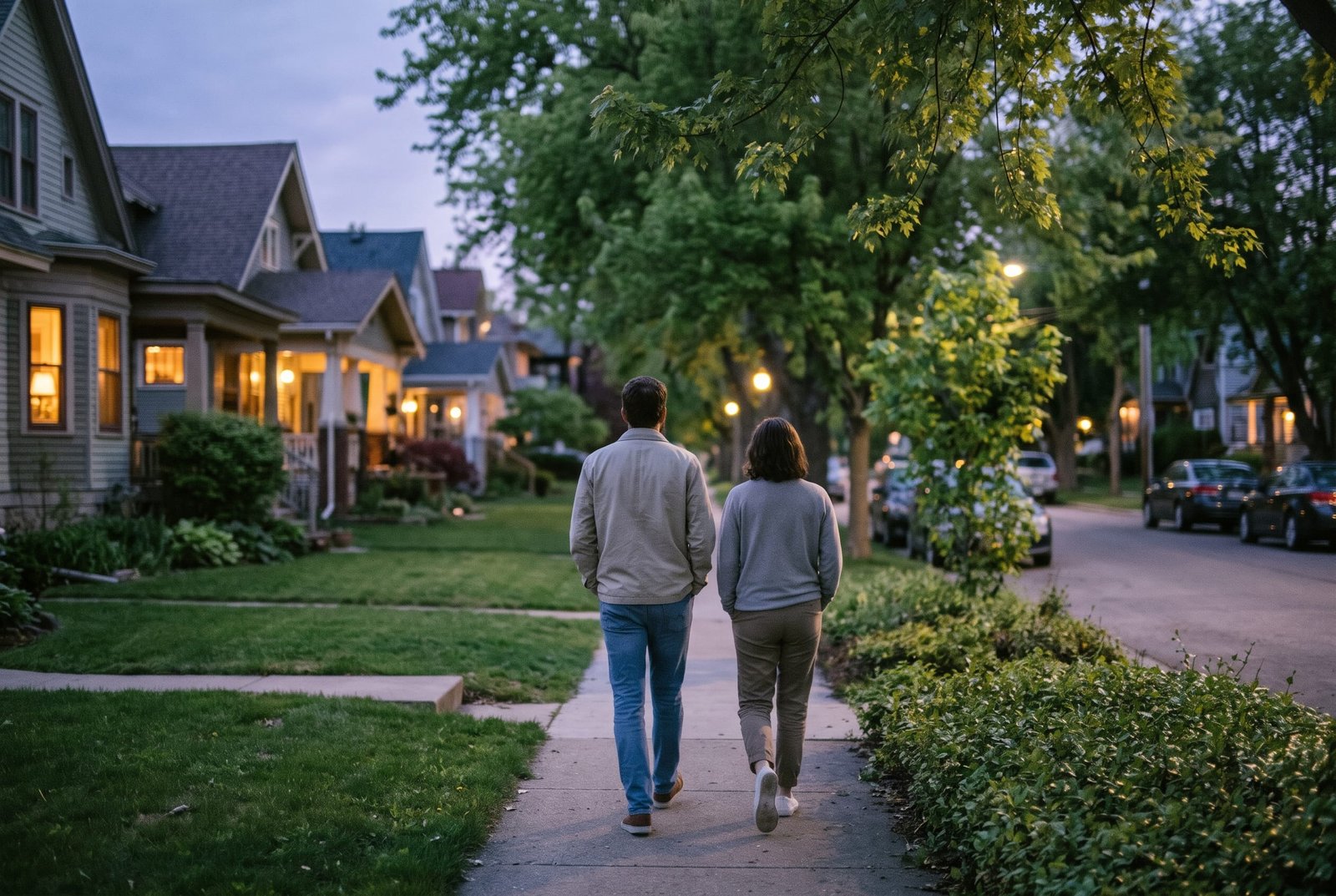
How a post-meal walk fits into your week
The CDC recommends that adults get at least 150 minutes of moderate-intensity activity a week, such as brisk walking, plus muscle-strengthening activity on two or more days. It also says you can break that into smaller chunks, and that some activity is better than none. (CDC) A 10-minute walk after dinner every day adds up to 70 minutes a week.
There’s a bonus here. Researcher James Levine describes NEAT, short for non-exercise activity thermogenesis, as the energy you spend on everything that isn’t sleeping, eating or sports-like exercise. Walking to work, yard work and fidgeting all count. (Levine, Best Practice & Research Clinical Endocrinology & Metabolism, 2002) A post-meal stroll is one more small piece of that daily movement.
Walking doesn’t replace strength work, though. If you haven’t started yet, our guide to strength training for women over 40 is a practical place to begin.
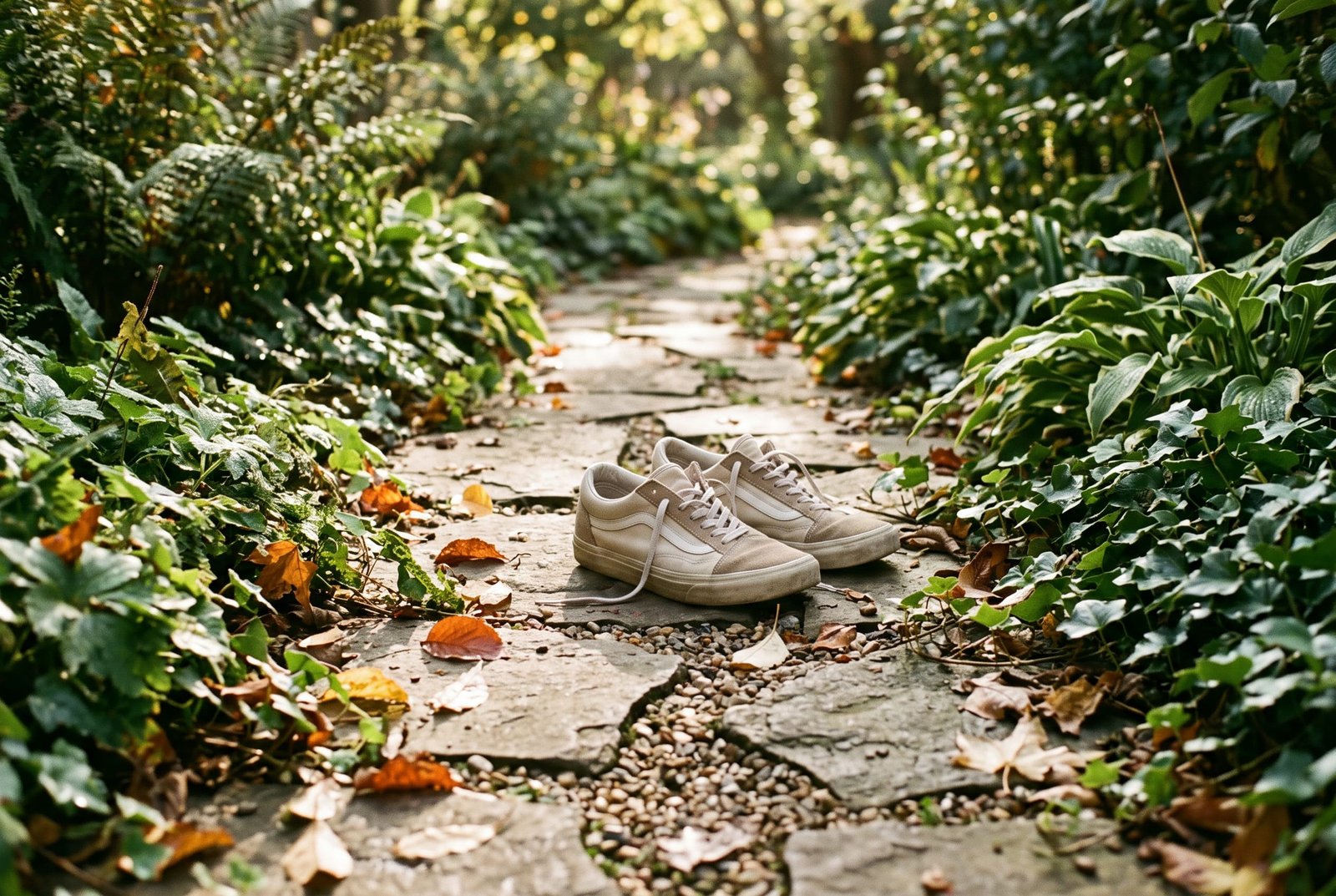
A simple 10-minute routine
- Finish eating. The dishes can wait.
- Put your shoes on. Keeping a pair by the door removes one excuse.
- Walk at an easy pace for five to ten minutes. Loop the block, or go back and forth in the yard.
- Leave your phone in your pocket if you can. If you tend to eat in a rush, our guide to mindful eating pairs well with this.
- Make it a signal that the day is winding down. If evenings are when your sleep starts to slip, our guide to falling asleep fast covers the rest of the routine.
On days when ten minutes isn’t realistic, three minutes still counts. A small habit you keep beats a bigger one you drop in week two.
Who should check with a doctor first
If you take medication that lowers blood sugar, exercise can push it too low. Cleveland Clinic notes that a short walk is unlikely to cause that, but a hard workout could, and it advises checking glucose before and after activity. Your care team can help you plan for it. (Cleveland Clinic) Please don’t change medication or your monitoring routine because of an article. Ask your doctor.
The same goes for pregnancy, ongoing reflux or other digestive problems, heart or joint conditions, and anything that makes you unsure. If a walk leaves you unusually dizzy or short of breath, stop and call your doctor.
If you can’t take a walk
Not everyone can walk around the block after a meal. The Cleveland Clinic gastroenterologist says studies suggest even a change in position can affect stomach emptying. Standing up from your chair, or walking around the house, may still help. (Cleveland Clinic News Service) Clearing the table and washing a few dishes standing up is a fair place to start.
FAQ
How long should I walk after eating?
Ten minutes is a solid target. The main trial above used 10 minutes, and Cleveland Clinic cites research on walks as short as two to five minutes. Longer is fine if you feel good.
Is it better to walk right after eating or wait?
The sources don’t settle this. One trial started walks within five minutes, and a gastroenterologist suggests 15 to 30 minutes. Choose the timing you can repeat.
Does walking after eating help with weight loss?
The studies here measured blood sugar and digestion, not weight. In the two-week 2016 trial, body measurements didn’t differ between the two walking plans. Walking in general is a useful part of weight management, according to Cleveland Clinic, but a post-meal walk alone isn’t a weight-loss plan.
Do I need to walk after every meal?
No. A Cleveland Clinic gastroenterologist says you don’t have to, and suggests focusing on heavier meals.
Is it safe to walk after eating if I have diabetes?
A short walk is generally gentle, but medication, blood sugar targets and other conditions vary a lot from person to person. Talk with your doctor or diabetes care team about the right plan for you.
Bottom Line
A short, easy walk after eating is a low-risk habit with promising support for blood sugar and a smaller body of evidence for digestion. The best-studied version is about ten minutes, started soon after you finish. It won’t treat a condition, and the research has limits. It does fit into almost any evening. Try it after dinner this week, keep it easy, and see whether you like how it feels.
Sources
- Reynolds AN, Mann JI, Williams S, Venn BJ. Advice to walk after meals is more effective for lowering postprandial glycaemia in type 2 diabetes than advice that does not specify timing. Diabetologia, 2016.
- Buffey AJ, et al. The acute effects of interrupting prolonged sitting time in adults with standing and light-intensity walking on biomarkers of cardiometabolic health. Sports Medicine, 2022.
- Moore JG, Datz FL, Christian PE. Exercise increases solid meal gastric emptying rates in men. Digestive Diseases and Sciences, 1990.
- Cleveland Clinic. How walking after eating impacts your blood sugar.
- Cleveland Clinic News Service. Take a stroll: benefits of walking after eating.
- Cleveland Clinic. The health benefits of walking.
- CDC. Adult activity: an overview.
- Levine JA. Non-exercise activity thermogenesis (NEAT). Best Practice & Research Clinical Endocrinology & Metabolism, 2002.
Want more practical, evidence-based guidance like this? Join the newsletter for new guides as soon as they’re published.
This article is for general education and isn’t medical advice. Talk with a doctor or other qualified healthcare professional about your own health, especially if you’re pregnant, nursing, taking medication, or managing a condition.

Leave a Reply