
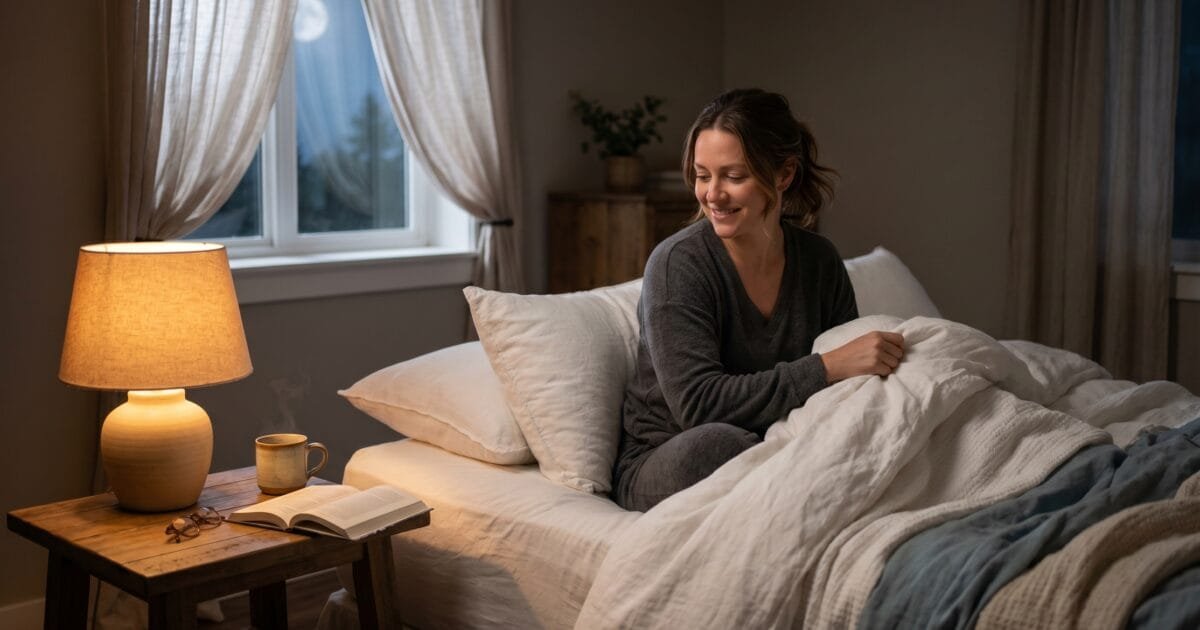
You’re exhausted. You’ve been looking forward to bed all day. And yet here you are — staring at the ceiling, doing mental math on how many hours you’ll get if you fall asleep right now… which, of course, only makes it harder.
Hi, I’m Sophia. I’ve spent more nights than I’d like to admit in that exact spot, and here’s the most freeing thing I learned: falling asleep faster isn’t about trying harder. Sleep is the one thing that runs away from effort. The real trick is setting up the conditions — light, temperature, your nervous system, your routine — so your body can do what it already knows how to do.
Below are 15 science-backed ways to fall asleep fast. Some work tonight; some build over a couple of weeks. None of them involve willpower or a perfect routine, because I don’t believe in those. Let’s get you to sleep.
First, what “falling asleep fast” actually means
Here’s a number that surprises people: it’s normal to take 10 to 20 minutes to fall asleep. That window even has a name — sleep latency. If you’re out in under five minutes every night, that can actually be a sign you’re sleep-deprived, not a sign you’re a great sleeper.
So the goal isn’t to knock out the instant your head hits the pillow. It’s to drift off comfortably within that 10–20 minute window, without the racing mind and the clock-watching. Keep that in your back pocket — it takes the pressure off, and less pressure is itself one of the best sleep aids there is.
The fast fixes (use these tonight)
1. Cool your bedroom to 65–68°F
Your core body temperature has to drop by about 1–2°F to trigger sleep — it’s one of the body’s main “time for bed” signals. A bedroom around 65–68°F (18–20°C) helps that happen. If you can’t control the thermostat, a warm shower 60–90 minutes before bed works through a clever back door: it pulls blood to your skin, and the rapid cool-down afterward mimics that natural temperature drop.
2. Try the 4-7-8 breath
Slow breathing is the fastest way I know to flip your nervous system from “alert” to “rest.” Breathe in through your nose for 4 counts, hold for 7, exhale slowly through your mouth for 8. Repeat four times. The long exhale activates your parasympathetic (“rest and digest”) system and slows your heart rate. It feels almost too simple — do it anyway.
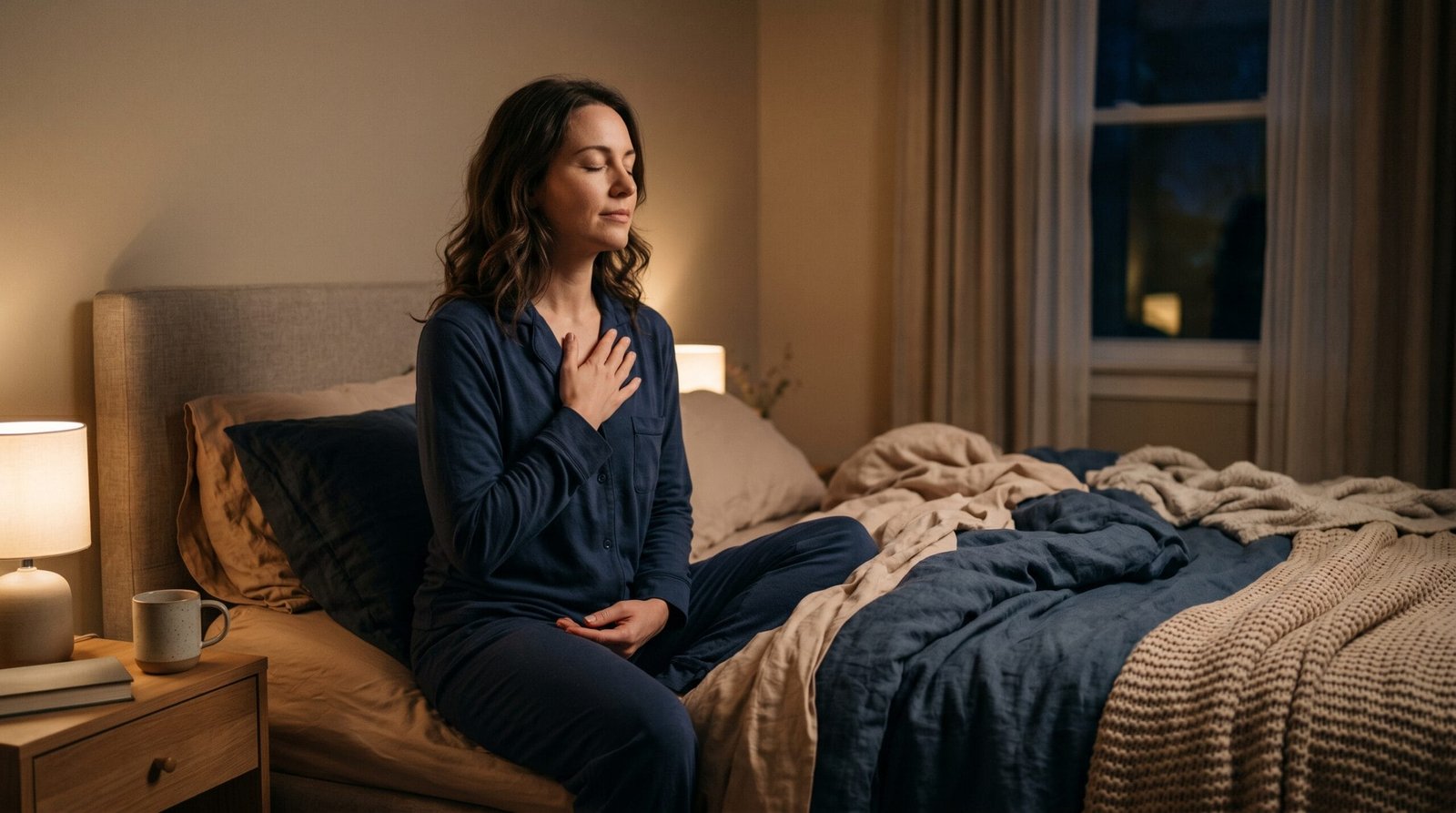
3. Do the military method
Reportedly used to help soldiers fall asleep in under two minutes, even sitting up. The steps:
- Relax your whole face, including your jaw, tongue, and the muscles around your eyes.
- Drop your shoulders and let your arms go loose at your sides.
- Exhale and relax your chest, then your legs, from thighs to feet.
- Clear your mind for 10 seconds — picture a calm scene, or just repeat “don’t think” gently.
It takes practice (give it a few weeks), but progressive muscle relaxation like this is genuinely well-studied for easing the transition to sleep.
4. Get your phone out of the bed
I know. But the issue isn’t only blue light — it’s that scrolling keeps your brain engaged exactly when it needs to power down. Put the phone across the room on “do not disturb.” If you use it as an alarm, that’s the perfect excuse to buy a $15 alarm clock and reclaim your nightstand.
5. Try “paradoxical intention”
This one sounds backwards, and that’s the point. Instead of desperately trying to sleep, lie comfortably and gently try to stay awake — eyes closed, no screens. By removing the performance anxiety around falling asleep, you often, well, fall asleep. Small studies suggest it can reduce the effort-driven insomnia that keeps so many of us up.
6. Use the 10-minute rule
If you’ve been lying awake for what feels like 20+ minutes and you’re getting frustrated, get out of bed. Go to another room, keep the lights dim, and do something boring and calming — read a few pages of a dull book, fold laundry — until you feel sleepy, then return. This protects the mental link between bed and sleep instead of teaching your brain that bed is where you lie awake and worry.
The wind-down (set the stage an hour before)
7. Dim the lights after sunset
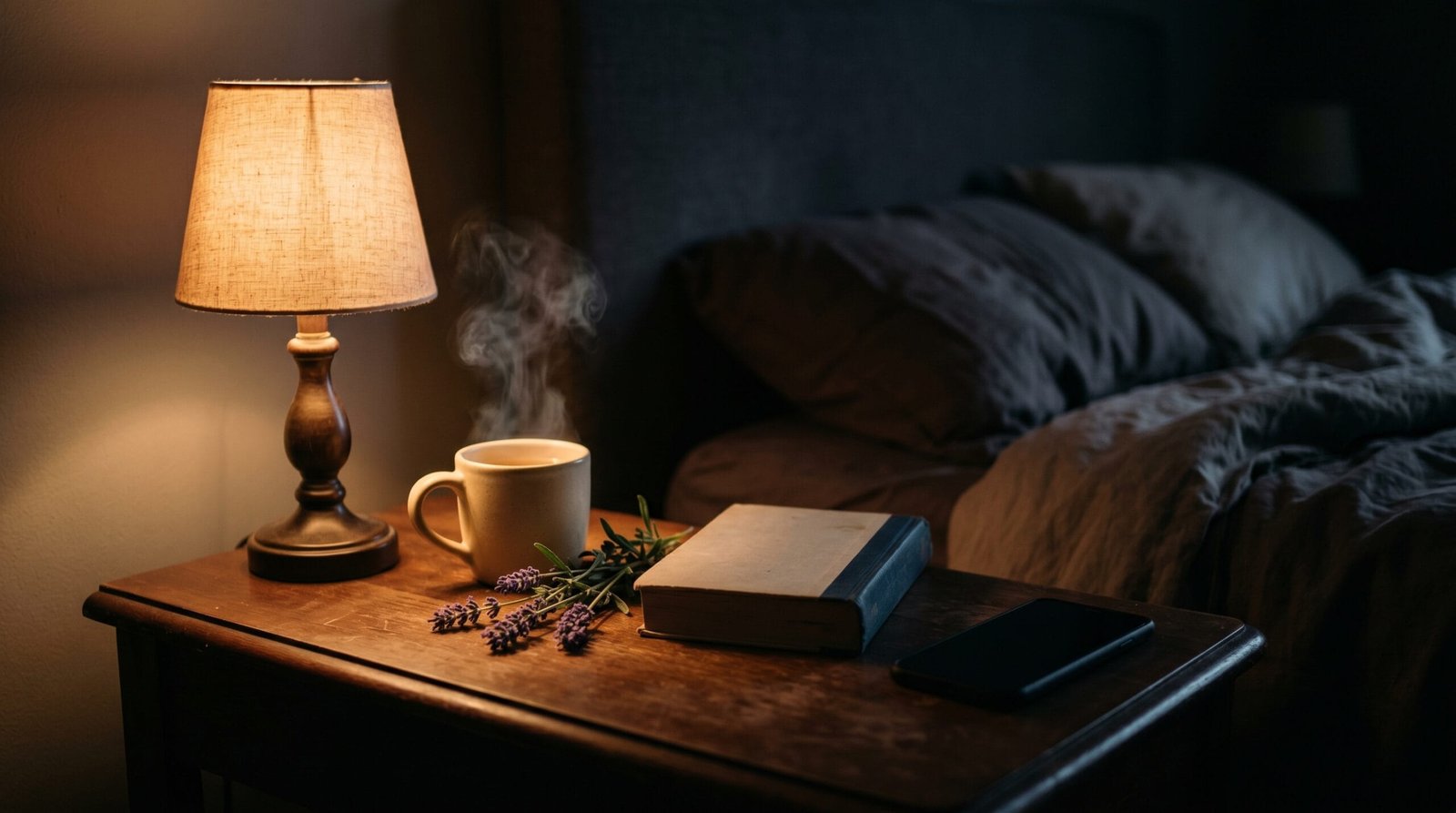
Bright light in the evening suppresses melatonin, the hormone that tells your brain it’s nighttime. About 60–90 minutes before bed, switch off overhead lights and use lamps. Warm, low light signals “the day is ending.” (Morning light matters just as much in the other direction — getting bright light early helps anchor the whole rhythm, which I cover in my circadian rhythm reset guide and my roundup of morning habits for all-day energy.)
8. Keep a consistent sleep and wake time
This is the least glamorous tip and one of the most powerful. Going to bed and — especially waking up at the same time every day, weekends included, strengthens your circadian rhythm so that sleepiness arrives on schedule. Within a week or two, you may find yourself getting drowsy at the right time without trying.
9. Watch caffeine and alcohol timing
Caffeine has a half-life of about 5–6 hours, so a 3 p.m. coffee can still have a quarter of its dose circulating at bedtime. Try a 2 p.m. cutoff and see what changes. Alcohol is sneakier: it can help you fall asleep faster but fragments the second half of your night, so you wake unrefreshed. That second-half rebound is one of the most common reasons people find themselves wide awake at 3am and unable to drift back off.
10. Have a light, sleep-friendly snack (if you’re hungry)
Going to bed starving makes it hard to settle, but a heavy late meal competes with sleep. If you need something, choose a small snack pairing carbs with a little protein or tryptophan — a few whole-grain crackers with turkey, a banana with a spoon of nut butter, or a small bowl of oatmeal. Foods rich in magnesium and antioxidants support relaxation too; I list my favorites in top antioxidant-rich foods.
11. Make your room a sleep cave
Dark, quiet, cool. Blackout curtains or an eye mask block stray light; earplugs or a fan or white-noise machine smooth over sudden sounds. Your brain reads darkness as safety and permission to fully let go.
The mind-quieting techniques (for the racing brain)
12. Try a “brain dump” before bed
If your mind starts cataloguing tomorrow’s to-dos the second you lie down, beat it to the punch. Spend five minutes earlier in the evening writing down everything on your plate and a rough plan. Research on this kind of “worry journaling” suggests it helps people fall asleep faster because the brain stops rehearsing what it’s afraid to forget.
13. Use guided imagery or a body scan
Instead of letting your thoughts wander to your inbox, give your mind a calm, absorbing place to be: picture a slow walk on a beach in vivid sensory detail, or mentally scan your body from toes to scalp, relaxing each part. This is mindfulness in its most practical form — and if anxiety is what keeps you up, my guide to overcoming anxiety with mindfulness has more tools you can use in bed. If you’d like a fuller, guided version of this same idea, yoga nidra walks you through a structured body scan and relaxation sequence step by step.
14. Address the stress underneath
If you’re wired-but-tired most nights, the culprit may be cortisol, your main stress hormone, staying elevated when it should be low. Chronically high evening cortisol makes it physically hard to wind down. Gentle daytime stress management — movement (a short yoga practice counts), boundaries, time outside — pays off at night. I walk through the specifics in how to lower cortisol naturally. It’s also worth knowing how closely your gut and mood are linked; the gut-brain connection and anxiety is more relevant to sleep than most people realize.
Quick comparison: which technique for which problem?
| If your problem is… | Try this first | How fast it helps |
|---|---|---|
| A racing, anxious mind | 4-7-8 breath, brain dump, body scan | Tonight |
| Too wired to settle | Cool room, warm shower, dim lights | Tonight |
| Lying awake, frustrated | The 10-minute rule, paradoxical intention | Tonight |
| Falling asleep fine, waking later | Cut evening alcohol, lower cortisol | Within 1–2 weeks |
| Drowsy at the wrong times | Consistent wake time, morning light | Within 1–2 weeks |
15. Consider a sleep-supporting supplement
I always say food, light, and routine come first — no capsule outperforms a consistent wake time and a dark, cool room. But a couple of well-studied, gentle supplements can give you a nudge while you build those habits.
Magnesium supports the nervous system and helps quiet the “wired” feeling; many of us run low on it. The most sleep-friendly, easy-on-the-stomach form is magnesium glycinate, taken in the evening. (I go deep on this in magnesium for sleep.)
5-HTP is a building block your body uses to make serotonin, which it then converts to melatonin — so it’s sometimes used for mood and sleep support. It’s more of a targeted tool than an everyday staple, and it can interact with antidepressants and other medications, so it’s especially important to clear with your doctor first.
The supplements I recommend
For an evening magnesium, I like Magnesium Glycinate Capsules from Attain Supplements ($27.99). It uses the highly absorbable glycinate form (gentle on digestion, unlike the cheaper oxide), it’s made for relaxation and deeper sleep, and one capsule in the evening fits easily into a wind-down routine.
If you and your doctor decide 5-HTP is a fit for you, Attain’s 5-HTP Capsules ($12.99) are a straightforward mood-and-sleep support option. Because 5-HTP affects serotonin, please don’t combine it with antidepressants or other serotonergic medications without medical guidance.
A gentle reminder: this is wellness education, not medical advice. Supplements aren’t right for everyone, and if you’re pregnant, nursing, on medication, or managing a health condition, check with your doctor before starting anything new. If you want a broader primer on choosing well, the adaptogen comparison in ashwagandha vs rhodiola is a good companion read.
Frequently asked questions
How can I fall asleep in 5 minutes?
The methods built for speed are the military method and the 4-7-8 breath, ideally in a cool, dark room. They work by relaxing your muscles and slowing your nervous system. That said, falling asleep in 10–20 minutes is healthy and normal — chasing “5 minutes” can backfire by adding pressure.
Why do I get so tired but can’t fall asleep?
“Tired but wired” usually points to an over-active stress response — elevated evening cortisol or adrenaline keeping your body alert even though your mind is exhausted. Too much evening light, late caffeine, screens in bed, and an irregular schedule all feed it. Start with dim lights, a consistent wake time, and a few minutes of slow breathing. If the pattern is worse in the two weeks before your period, hormones may be feeding it too — that timing is a classic sign of low progesterone — I break down exactly why in period insomnia.
What is the fastest home remedy to fall asleep?
There isn’t a magic one, but the most reliable fast remedies are free: lower the room temperature, dim the lights, do 4-7-8 breathing, and keep your phone out of reach. A warm shower 60–90 minutes beforehand and a small magnesium-rich snack can help too.
Should I just lie in bed until I fall asleep?
If you’ve been awake for roughly 20 minutes and you’re frustrated, no — get up, keep the lights low, and do something calm until you feel sleepy. This keeps your brain associating bed with sleep rather than with lying awake.
Do sleep supplements actually work?
Some have decent evidence (magnesium for relaxation, melatonin for shifting your body clock), but they work best alongside good sleep habits, not instead of them. They’re a nudge, not a cure — and they’re worth running past your doctor, especially if you take other medications.
The Bottom Line
Falling asleep fast comes down to one idea: stop chasing sleep and start creating the conditions for it. Cool, dark, quiet room. Lights down an hour before bed. A slow exhale to settle your nervous system. A consistent wake time so sleepiness shows up on schedule. And if you’d like a gentle assist, a quality magnesium in the evening can help.
You don’t need to do all 15 things tonight. Pick two or three that fit your life and try them this week — maybe the 4-7-8 breath, a cooler room, and getting your phone off the nightstand. Small, kind, consistent changes are what actually move the needle. You’ve got this, and better nights are closer than they feel.
This article is for educational purposes and isn’t a substitute for personalized medical advice. If you have persistent insomnia or suspect a sleep disorder, please talk with a qualified healthcare provider.




[…] hours of sleep to revitalize your immunity. If falling asleep is the sticking point, my guide on how to fall asleep fast has practical, science-backed […]
[…] else on this list — mood, weight, focus — I treat it as a top priority, and my guides on how to fall asleep fast and magnesium for sleep are good companions […]
[…] main issue, a technique with a longer exhale-to-inhale ratio (like the 4-7-8 breath in my guide on how to fall asleep fast) tends to be more specifically sedating than box breathing’s more neutral, alerting-but-calm […]
[…] fits better than a daily one, pairing this with a wind-down routine works well — my guide to how to fall asleep fast has other tools that stack naturally with this […]
[…] better mental clarity and focus in our daily lives. If sleep itself is the struggle, my guide on how to fall asleep fast covers science-backed ways to wind […]
[…] Trouble winding down at night, alongside the habits in my guide to falling asleep fast. […]
[…] available at 3 a.m., mindfulness for stress reduction is a good place to start, and my notes on how to fall asleep fast apply just as well mid-night as at […]
[…] Not getting quality sleep drops our ability to handle daily stress. This hits our mental and physical health hard, creating a bad cycle. By understanding the stress-insomnia link, we can work towards better sleep. Activities like exercise and mindfulness can boost our mood and energy, helping lessen stress and its effects on sleep. For tips on improving sleep, visit this guide on ways to get better sleep tonight. […]