

The winter blues are that heavy, low-energy feeling that tends to creep in as the days get shorter. Mornings stay dark, the sun sets before dinner, and suddenly your couch feels more appealing than anything on your calendar. If that sounds familiar, you have plenty of company, and there’s a lot you can do to make the season feel lighter.
Below you’ll find what the winter blues are, why less daylight can affect mood, how to tell everyday winter slumps apart from seasonal depression, and 10 gentle, evidence-informed ways to feel more like yourself between now and spring.
Key takeaways
- The winter blues describe a common, milder dip in mood and energy during fall and winter. It’s an everyday phrase, not a diagnosis.
- Shorter days mean less daylight, which can shift sleep timing, energy and mood for many people.
- Morning daylight, regular sleep, movement, social contact and planned enjoyable activities are simple habits with research behind them.
- Seasonal affective disorder (SAD) is a type of depression with a seasonal pattern. If low mood lasts most of the day for two weeks or more, or makes daily life hard, talk with a doctor or mental health professional.
- If you’re struggling or having thoughts of suicide, call or text 988 or chat at 988lifeline.org in the U.S. In an emergency, call 911.
What are the winter blues?
The National Institute of Mental Health puts it simply: many people feel “down” or have the “winter blues” when the days get shorter in the fall and winter, then feel better in spring when longer daylight returns.
For most people, the winter blues look something like this: you’re more tired than usual, it’s harder to get out of bed on dark mornings, you crave bread and pasta more than salads, and you’d rather stay in than make plans. Your mood may feel flatter, but you can still enjoy things, keep up with work and connect with the people you love.
That last part matters. The winter blues tend to be mild and manageable. They can make the season feel long, but they don’t usually stop you from living your life.
Why shorter days can affect your mood
Researchers are still working out the full picture, but a few pieces seem to fit together.
- Less light for your body clock. Morning light is one of the main signals that sets your internal clock. When sunrise slips to 7 or 7:30 a.m. and you head to work in the dark, that signal gets weaker, which can leave you groggy and out of sync. Our guide to resetting your circadian rhythm goes deeper on how this works.
- Melatonin and serotonin shifts. According to NIMH, research suggests sunlight affects molecules that help maintain serotonin, a brain chemical involved in mood, and that people with winter-pattern SAD may produce too much melatonin, the hormone that makes you sleepy. These ideas come from SAD research and may help explain milder winter slumps too.
- Less time outdoors. In a study of more than 400,000 UK Biobank participants, each extra hour spent in outdoor daylight was linked with lower odds of low mood, less tiredness and easier mornings. It’s observational, so it can’t prove cause and effect, but it lines up with what many people feel.
- Lifestyle changes that pile up. Cold weather often means less walking, fewer spontaneous plans and more evenings on the couch. Each change is small, and together they can quietly drain your energy.

Winter blues vs seasonal depression: how to tell the difference
The two exist on a spectrum, and only a health care provider can diagnose SAD. Still, it helps to know the general differences so you can tell when self-care is enough and when it’s time for more support.
Winter blues
- A mild dip in mood and energy that comes and goes.
- You still enjoy things, even if you need more of a push to get started.
- Sleep, appetite and focus shift a little but don’t disrupt daily life.
- Simple changes like more light, movement and plans usually help.
Seasonal affective disorder (SAD)
NIMH describes SAD as a type of depression with a recurring seasonal pattern, with symptoms lasting around four to five months of the year. Signs can include:
- Sad, anxious or “empty” mood most of the day, nearly every day, for at least two weeks.
- Losing interest or pleasure in hobbies and activities.
- Oversleeping, low energy or feeling slowed down.
- Overeating, especially carbohydrates, and weight gain.
- Pulling away from friends and family, a feeling like “hibernating.”
- Feelings of hopelessness, guilt or worthlessness, or thoughts of death or suicide.
A key difference is how much it affects your life. If winter turns into weeks of feeling unlike yourself, or the same pattern shows up winter after winter, that’s worth bringing to a doctor or therapist. SAD is treatable, and NIMH notes that people with a history of it may benefit from starting treatment before fall arrives.
It’s also worth knowing that SAD is different from the “holiday blues,” which come from the stress of a particular time of year rather than changes in daylight.
10 gentle ways to beat the winter blues
None of these needs to be done perfectly. Pick two or three that feel doable this week and build from there.
1. Get outside in the morning, even when it’s cloudy
Outdoor light is far brighter than indoor light, even on a gray day. A 10 to 20 minute walk soon after you wake up, coffee on the porch, or walking part of your commute can give your body clock a stronger morning signal. In the UK Biobank study, people who spent more time in daytime outdoor light reported less low mood and less tiredness, and found it easier to get up in the morning.
If mornings are rushed, a lunchtime walk still counts. The goal is simply more daylight than you’d otherwise get. You can fold it into a short set of morning habits for all-day energy so it becomes automatic.

2. Bring more light inside
Open every blind as soon as you’re up. Move your desk, reading chair or breakfast spot closer to a window. Keep bright overhead lights on in the morning and save dimmer lamps for evening. These are small tweaks, but you spend most winter hours indoors, so they add up.
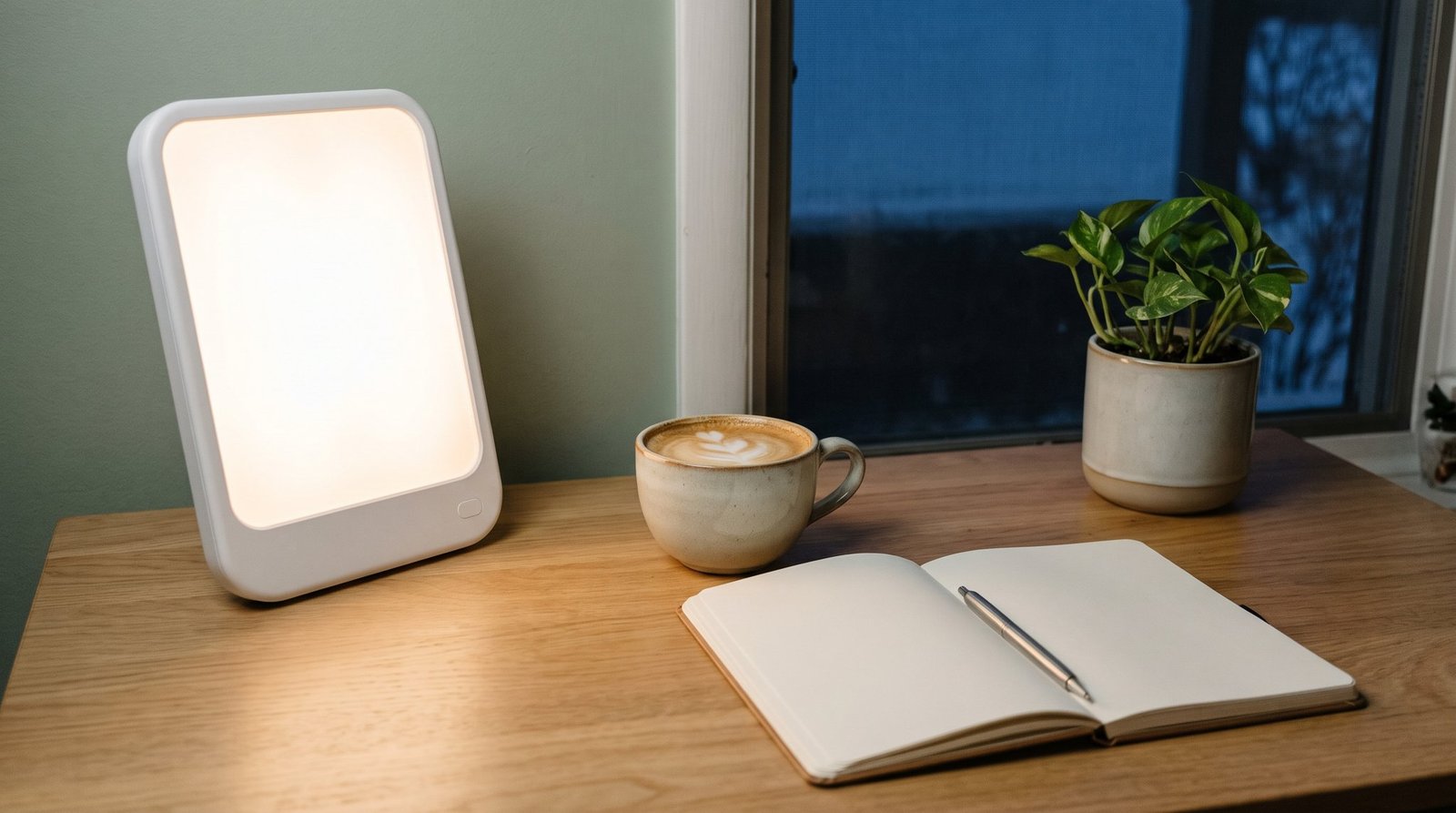
3. Ask about a light therapy lamp
Bright light therapy has been used for winter-pattern SAD since the 1980s. NIMH describes the typical approach as sitting in front of a 10,000-lux light box, about 20 times brighter than ordinary indoor light, for roughly 30 to 45 minutes each day, usually first thing in the morning, from fall to spring.
A 2020 meta-analysis of 19 randomized trials found light therapy worked better than placebo for SAD, though the studies were small and varied in quality. There’s less research on milder winter blues, so think of a light box as something that may help rather than a sure fix.
If you try one, choose a lamp that filters UV light and talk with your doctor first if you have an eye condition, bipolar disorder, or take medication that makes you more sensitive to light. Some people notice headaches, eye strain or feeling a bit wired, especially if they use it too late in the day.
4. Keep your sleep steady
Dark mornings make it tempting to sleep in, and dark evenings make 8 p.m. feel like midnight. Try to keep your wake-up time within about an hour of the same time every day, weekends included. Most adults need seven or more hours of sleep, but oversleeping and long naps can leave you groggier.
A consistent wake time paired with morning light is one of the simplest ways to keep your body clock anchored through winter.
5. Move your body most days
You don’t need a new workout plan. A brisk walk, a dance break in the kitchen, a yoga video or a few sets of squats while the kettle boils all count. A 2023 umbrella review covering hundreds of trials found that physical activity helped improve symptoms of depression, anxiety and distress across many groups of adults. We cover more on the benefits of exercise for mental health in a separate guide.
For extra credit, move outside. A walk at noon gives you activity and daylight in one go.
6. Put small, enjoyable things on the calendar
When energy dips, the first things to go are often the ones that make you feel good: hobbies, outings, calls with friends. Then life feels flatter, so you do even less. Therapists use an approach called behavioral activation to interrupt that loop by scheduling small, rewarding activities on purpose, before you feel like doing them. A meta-analysis of 26 trials found it helped with depression, though most of the studies were low quality. NIMH notes that the CBT program adapted for SAD uses this same idea.
Try planning one small thing for each week of winter: a Saturday farmers market, a new recipe, a library visit, a museum afternoon, a standing movie night. Write them down so you have something to look forward to.
7. Stay connected, even in small ways
Winter makes it easy to cancel plans and stay in. A little cozy time is lovely, but too much isolation can make low moods heavier. Keep connection simple and low effort: a weekly walk with a friend, a soup night with neighbors, a standing video call with family, or a class at the gym or community center where you’ll see the same faces.
If you don’t feel up to much, even a short text exchange or sitting in a busy coffee shop can help you feel less alone.

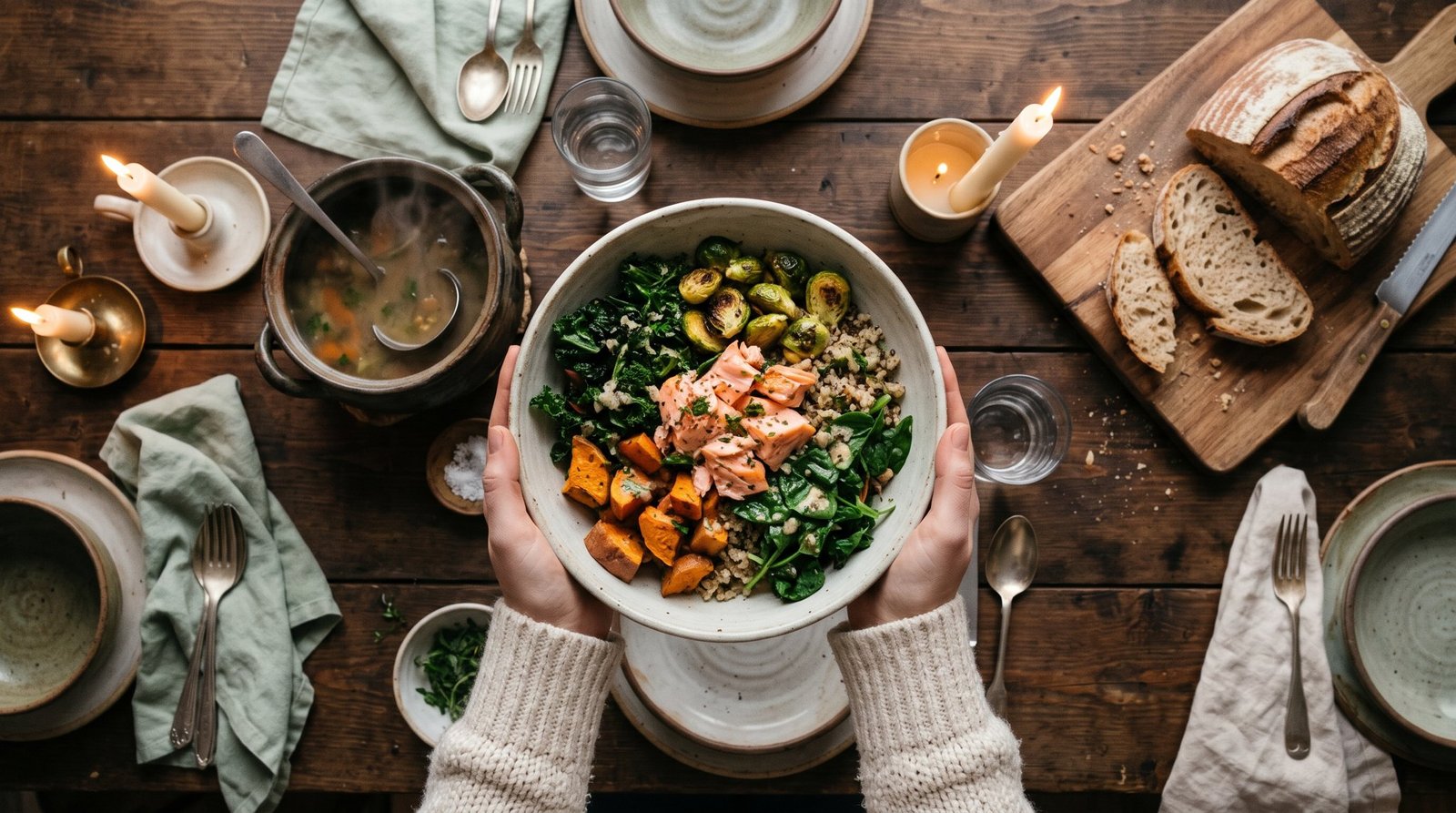
8. Eat regular, warming meals
Craving more carbs in winter is common, and it doesn’t mean you’re doing something wrong. Rather than fighting it, aim for steady, satisfying meals: soups with beans and vegetables, whole-grain bowls, oatmeal with nuts, roasted root vegetables, and fish like salmon or sardines a couple of times a week. Regular meals with protein and fiber can help keep your energy more even through the afternoon slump.
9. Check in on your vitamin D
Your skin makes vitamin D from sunlight, so levels can drop in winter, especially if you live farther north, have darker skin, or spend most of your time indoors. NIMH notes that many people with winter-pattern SAD have low vitamin D, but studies of vitamin D as a SAD treatment have shown mixed results.
A 2024 meta-analysis of 31 trials found vitamin D3 supplements slightly reduced depressive symptoms, with effects measured mostly over the short term. That’s encouraging but modest. The NIH Office of Dietary Supplements lists 600 IU a day for most adults (800 IU after age 70) and an upper limit of 4,000 IU a day unless a provider advises otherwise. Vitamin D can interact with some medications, so ask your doctor whether a blood test or supplement makes sense for you. Our guide to vitamin D deficiency signs and causes walks through the basics.
10. Make the season cozy on purpose
There’s a difference between hiding from winter and settling into it. Light a candle at dinner, keep a soft blanket and a good book by your favorite chair, try a new tea, or start a slow winter project like a puzzle, knitting or a photo album. Small rituals can make dark evenings feel inviting instead of empty.
A few minutes of reflection can help too. Some of our journaling prompts for stress work well for noticing what lifts your mood and what drains it. If your evenings feel tense, a few minutes of slow breathing or these simple vagus nerve exercises can help you wind down. And if you’d like a structure to hang it all on, our daily, weekly and monthly self-care routine is easy to adapt for winter.
A sample winter day that puts it together
- 7:00 a.m. Wake at your usual time, open the blinds and turn on bright lights.
- 7:30 a.m. Breakfast near a window, or 20 minutes with a light box if you and your doctor have decided to try one.
- 12:30 p.m. A 15-minute walk outside after lunch.
- 5:30 p.m. A short call or text with a friend on the drive or walk home.
- 6:30 p.m. A warm dinner, candles on, phone away.
- 8:30 p.m. Something you enjoy: a book, a puzzle, a bath, a show you’ve been saving.
- 10:00 to 10:30 p.m. Lights low and in bed at roughly the same time as other nights.
Shift the times to match your life. The pattern is what matters: light early, movement midday, connection and comfort in the evening, and a steady bedtime.
When the winter blues may be something more
Seasonal slumps are common, but they shouldn’t be brushed off when they start to take over. Consider reaching out to a doctor, therapist or counselor if:
- You’ve felt low, empty or hopeless most of the day, nearly every day, for two weeks or more.
- You’ve lost interest in things you usually enjoy.
- You’re sleeping far more or far less than usual, or your appetite has changed a lot.
- It’s hard to keep up with work, school or caring for yourself or others.
- You notice the same pattern returning winter after winter.
- You’re leaning on alcohol or other substances to get through.
Chronic stress can make all of this harder, so it’s worth knowing how chronic stress affects your health as well. A provider can also check for physical causes of fatigue, such as thyroid problems or anemia. Effective options for seasonal depression include light therapy, talk therapy such as CBT, and medication. In one randomized trial of 177 adults with SAD, CBT adapted for SAD and light therapy worked about equally well, and a follow-up study suggested the benefits of CBT may last longer over later winters.
If you’re in crisis or thinking about suicide, call or text 988 or chat at 988lifeline.org to reach the 988 Suicide & Crisis Lifeline in the U.S. It’s free and available 24/7. If you or someone else is in immediate danger, call 911.
FAQ
Are the winter blues real?
Yes. Many people notice lower mood and energy when daylight shrinks, and NIMH uses the phrase itself. The winter blues aren’t a medical diagnosis, but the feeling is common and worth taking care of.
When do the winter blues usually start?
For many people they show up in late fall, often around when clocks fall back and evenings get dark early, and ease in spring as days lengthen. Searches for “winter blues” climb steadily from October and peak in December and January.
What’s the difference between the winter blues and seasonal depression?
The winter blues are milder and don’t usually disrupt daily life. Seasonal affective disorder is a form of depression with symptoms most of the day, nearly every day, for at least two weeks, recurring in a seasonal pattern. Only a health care provider can diagnose it.
Do light therapy lamps help with the winter blues?
Light therapy has the best evidence for diagnosed SAD, where it’s a standard treatment. Less research looks at milder winter blues, but some people find a morning session helpful. Check with a doctor first if you have eye problems, bipolar disorder or take light-sensitizing medication.
Can vitamin D help the winter blues?
It may help some people, particularly if their levels are low, but research results are mixed and effects tend to be modest. Ask your doctor about testing before starting a supplement, and stay at or below 4,000 IU a day unless a provider tells you otherwise.
How do you beat the winter blues fast?
There’s rarely an instant fix, but the quickest wins for many people are getting outside in daylight soon after waking, moving your body, and making one plan with someone you like. Most people notice changes over days to weeks, not hours.
Bottom Line
The winter blues are common, and they usually respond to simple, steady care: more morning light, a consistent sleep schedule, regular movement, warm meals, small plans to look forward to and people to share them with. Start with one or two changes this week rather than all ten.
If your mood keeps sinking, lasts for weeks, or starts making daily life hard, that’s a signal to reach out, not something to push through alone. Talking with a doctor or therapist is a strong, practical step, and help is available.
Sources
- National Institute of Mental Health. Seasonal Affective Disorder (brochure).
- National Institute of Mental Health. Depression: overview and finding help.
- Pjrek E, et al. The efficacy of light therapy in the treatment of seasonal affective disorder: a meta-analysis of randomized controlled trials. Psychotherapy and Psychosomatics. 2020.
- Rohan KJ, et al. Randomized trial of cognitive-behavioral therapy versus light therapy for seasonal affective disorder: acute outcomes. American Journal of Psychiatry. 2015.
- Rohan KJ, et al. Outcomes one and two winters following cognitive-behavioral therapy or light therapy for seasonal affective disorder. American Journal of Psychiatry. 2016.
- Burns AC, et al. Time spent in outdoor light is associated with mood, sleep, and circadian rhythm-related outcomes: a cross-sectional and longitudinal study in over 400,000 UK Biobank participants. Journal of Affective Disorders. 2021.
- Singh B, et al. Effectiveness of physical activity interventions for improving depression, anxiety and distress: an overview of systematic reviews. British Journal of Sports Medicine. 2023.
- Ekers D, et al. Behavioural activation for depression; an update of meta-analysis of effectiveness and sub group analysis. PLoS One. 2014.
- Ghaemi S, et al. The effect of vitamin D supplementation on depression: a systematic review and dose-response meta-analysis of randomized controlled trials. Psychological Medicine. 2024.
- NIH Office of Dietary Supplements. Vitamin D: Fact Sheet for Consumers.
- Watson NF, et al. Recommended amount of sleep for a healthy adult: a joint consensus statement of the American Academy of Sleep Medicine and Sleep Research Society. Sleep. 2015.
- 988 Suicide & Crisis Lifeline.
Want more practical, evidence-based guidance like this? Join the newsletter for new guides as soon as they’re published.
This article is for general education and isn’t medical or mental health advice, and it can’t diagnose any condition. If you’re worried about your mood, energy or sleep, talk with a doctor, therapist or other qualified professional. If you’re in crisis in the U.S., call or text 988 (or chat at 988lifeline.org), or call 911 in an emergency.


Leave a Reply