

Hi, I’m Sophia. If the week before your period is reliably your worst week of sleep, you’re not imagining it. You toss and turn, wake up hot, and lie there wired even though you’re exhausted. It’s called period insomnia, it’s often linked to hormone shifts, and a few changes can help.
Here’s why it happens, what helps that week, and when to bring it up with a doctor.
What Happens to Your Sleep Before Your Period
The days before your period fall in the late luteal phase: the back half of your cycle, after ovulation and right before bleeding starts. Two shifts overlap here, and both may work against sleep.
First, progesterone rises through most of the luteal phase and then drops sharply right before your period. Progesterone’s breakdown products are thought to have a calming, sedative-like effect on the brain. Researchers describe them acting on GABA receptors in a benzodiazepine-like way (the same receptors that anti-anxiety medications target), so the late-cycle drop may remove something that was helping you sleep. Estrogen falls at the same time, and estrogen is among the ovarian hormones implicated in sleep, so the combined drop may make sleep more fragile for some people. How much this affects sleep varies from person to person.
Second, and less talked about: body temperature. A 2020 review of menstrual-cycle thermoregulation in the NIH’s PubMed Central archive reports that core body temperature runs about 0.3–0.7°C higher in the luteal phase than in the follicular phase before ovulation, most noticeably during sleep. A falling core temperature is part of how the body eases into sleep, so a warmer baseline can make it harder to drift off. The sleep research itself is mixed. A review of the studies found that some report less REM sleep in the luteal phase in healthy women while others find no differences between phases. Another NIH-archived review notes that objective sleep measures often stay unchanged across a regular, symptom-free cycle, while poorer premenstrual sleep is especially common in people with premenstrual symptoms or painful cramps. In plain terms, your body runs warmer right when it’s trying to cool down, and that mismatch may be part of why you’re staring at the ceiling.
Insomnia Before Period: What It Can Look Like
Trouble sleeping before your period doesn’t always mean lying awake all night. For many people it shows up in smaller, more irritating ways:
- Taking much longer than usual to fall asleep, even when you’re tired
- Waking in the middle of the night, often feeling warm or restless, and struggling to drop back off
- Waking earlier than planned and feeling unrefreshed
- A wired-but-tired feeling in the evening, sometimes with irritability or anxious thoughts
- Light, broken sleep that leaves you foggy the next day
According to Cleveland Clinic, premenstrual syndrome (PMS) symptoms generally begin one to two weeks before your period, and trouble sleeping is among the symptoms it lists (as does ACOG). Those symptoms usually go away once your period starts. That timing is the clue. If your sleep reliably falls apart in the days before bleeding and improves soon after it starts, your cycle may be a big part of the story. If you also tend to wake in the small hours, our post on why you wake up at 3 a.m. covers other common causes.
How Common Is Period Insomnia?
Estimates vary, and there’s no firm number for how many people sleep worse before their period. Almost half of people who menstruate report at least one PMS symptom, according to Cleveland Clinic, and one NIH-archived review notes that poorer premenstrual sleep is common in people with premenstrual symptoms. Insomnia is also a listed symptom of premenstrual dysphoric disorder (PMDD), a more severe form of PMS, and a review of the research describes sleep disturbances during the symptomatic luteal phase. If that sounds like you, see when to see a doctor below.
Cleveland Clinic lists hormonal changes, monthly and at major life stages, alongside depression, anxiety and sleep disorders among the issues that can affect women’s sleep. If your sleep is changing in your 40s, our perimenopause symptoms guide may help. Either way, period insomnia isn’t a personal failing.
A Practical Plan for Luteal-Phase Sleep
You can’t stop the hormone shift, but you can work with your body’s temperature and stress response instead of against it. Here’s where to start:
1. Cool Your Room Down That Week
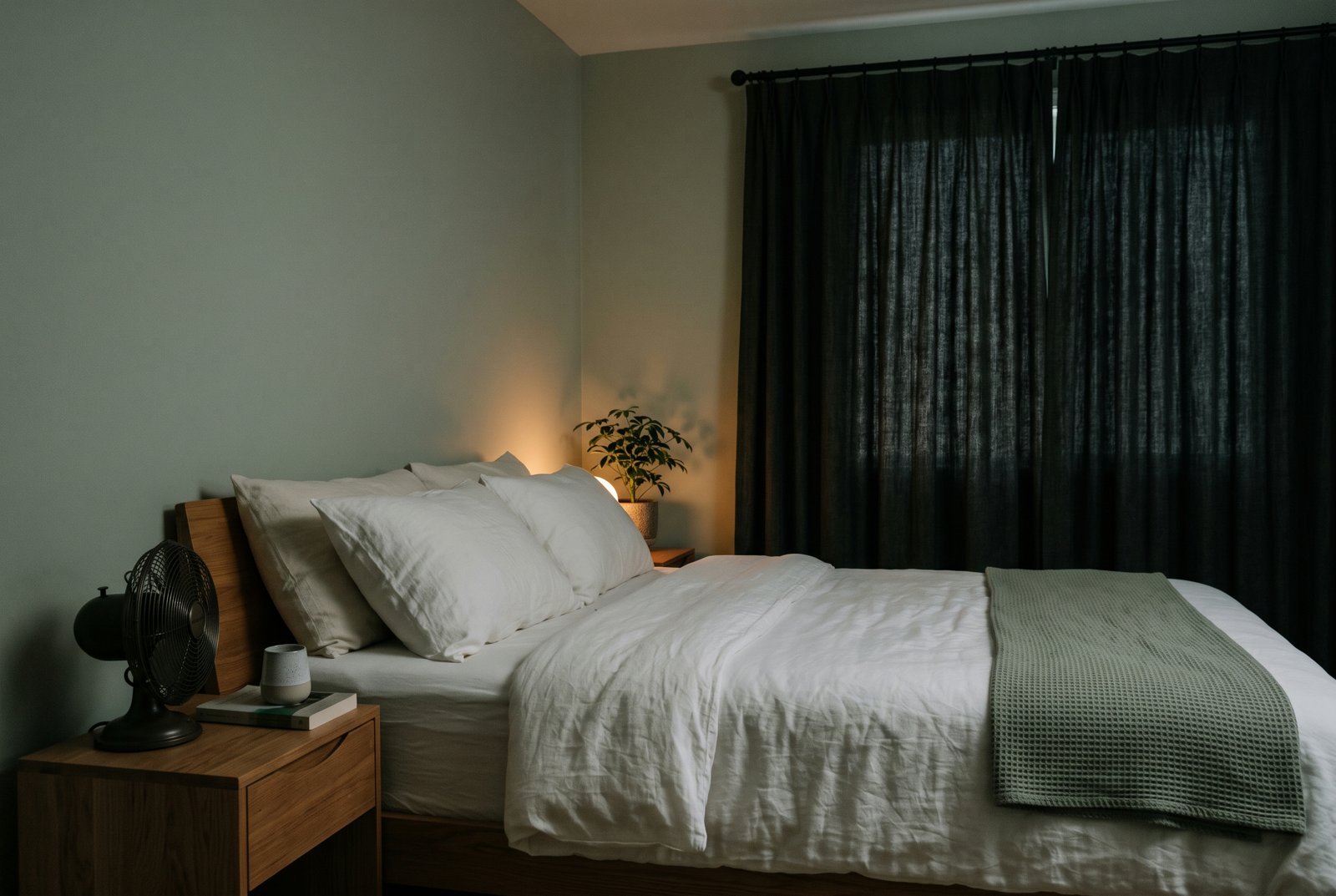
Your baseline body temperature is already higher, so the usual “cool, dark room” advice may matter even more here (the NHS lists a room that’s too hot or cold among the common causes of insomnia). Drop the thermostat a degree or two lower than usual, use breathable cotton or linen sheets instead of synthetics, and consider a cooling pillow or mattress topper if night sweats are part of your pattern. A 2019 review of studies found that a warm (not hot) shower or bath 1–2 hours before bed was linked with falling asleep faster and better self-rated sleep, probably because your body cools down afterward. A lukewarm shower an hour or so before bed is a low-risk thing to try.
2. Protect Your Wind-Down Time
With less progesterone-driven calm to lean on that week, the things that deliberately trigger relaxation may matter more. Try slow, long-exhale breathing (the 4-7-8 breath is one popular option; NCCIH describes the evidence for stress relief as preliminary but promising), dim the lights an hour before bed, and put your phone out of arm’s reach. The NHS suggests relaxing for at least an hour before bed and avoiding screens right before it. Our breathing exercises for anxiety work well in bed, and a yoga nidra script for sleep is another gentle option. We cover the full toolkit in 15 science-backed ways to fall asleep fast; nearly all of it applies, so lean on it harder in the days before your period. Keeping a steady wake time helps too, as our guide to resetting your circadian rhythm explains.
3. Track the Pattern So It Stops Feeling Random
Much of the distress around period insomnia comes from how random it feels. Track your cycle for a couple of months with a free app or a paper calendar (ACOG suggests keeping a daily symptom record if you want to talk with a doctor about PMS). It often reveals that sleep gets rough on roughly the same days each cycle. Once you can see it coming, you can plan around it with lighter evening plans, an earlier wind-down and less caffeine that week. It’s the same logic behind cycle syncing, which extends this kind of pattern-awareness to food and movement.

4. Watch Evening Caffeine and Alcohol That Week
Both can interfere with sleep on any night. The NHS advises avoiding caffeine and alcohol for at least 6 hours before bed, and Cleveland Clinic suggests cutting back on caffeine and alcohol in the two weeks before your period to help with PMS symptoms. If you don’t want to cut them entirely, an earlier cutoff (caffeine by early afternoon, alcohol several hours before bed) is a reasonable middle ground.
5. Consider Magnesium (Talk to Your Doctor First)
Magnesium is involved in nerve and muscle function, and ACOG notes that magnesium supplements may help with bloating, breast tenderness and mood symptoms of PMS, though the evidence is limited and ACOG advises talking with your ob-gyn before taking any PMS supplement. It won’t fix the underlying hormone shift. If you’re curious, ask your doctor or pharmacist first, especially if you have kidney issues or take medication; NIH sets an upper limit of 350 mg a day for supplemental magnesium in adults. We cover dosing and forms in magnesium for sleep.
6. Move Earlier in the Day
Cleveland Clinic lists regular exercise, consistent sleep habits, and relaxation techniques like yoga, meditation and breathing among the lifestyle approaches that can help ease PMS symptoms. For sleep, timing matters. A walk or moderate workout earlier in the day may help you feel tired at night, while a very intense session late in the evening can leave some people more wired. The NHS advises exercising regularly during the day but not in the 4 hours before bed. If you’re low on energy before your period, gentle movement still counts.
Can’t Sleep on Your Period? Why the First Few Days Can Be Rough Too
For some people, sleep improves once bleeding begins. For others, the trouble just changes shape. Insomnia on your period is often more physical than hormonal:
- Cramps and pain. Lower abdominal and back pain is often strongest at the start of a period and eases after the first few days, and it’s hard to ignore when you’re lying still.
- Feeling too warm or uncomfortable. Bloating, heaviness and restless legs or hips can make it hard to settle into a position.
- Worry about leaks. Even a light worry about staining the sheets can keep your brain half-alert.
A few practical things can help:
- Use gentle heat earlier in the evening. A warm bath or a heating pad on your lower abdomen or back for a while before bed may ease cramping (ACOG lists heat as a soothing option). Don’t fall asleep with a heating pad on, and avoid very hot water right before bed, since you want your body to cool down as you drift off.
- Time any pain relief thoughtfully. If you use an over-the-counter pain reliever for cramps, ask your doctor or pharmacist which is right for you, and follow the label for dose and timing. ACOG notes that over-the-counter NSAIDs generally work best when taken at the first sign of pain, so taking one at a sensible time in the evening can be easier than waiting until pain wakes you.
- Find a comfortable position. A pillow between the knees when lying on your side, or under the knees when lying on your back, can take pressure off the lower back and abdomen.
- Plan for peace of mind. Overnight pads, period underwear, or a dark towel on the bed can quiet the leak worry so you can relax.
- Try a slow wind-down. A few minutes of long-exhale breathing or a gentle body scan can help take your focus off the discomfort.

If painful periods are the main reason you’re losing sleep, tell your doctor. Severe period pain is treatable.
When It’s More Than Just Period Insomnia
Severe insomnia, sleep that doesn’t improve once your period starts, or intense mood symptoms call for more than sleep habits. The signs to watch for are below. If low progesterone itself is a concern beyond sleep, our guide to low progesterone symptoms walks through the fuller picture and how it’s tested.
When to See a Doctor
Make an appointment with a healthcare provider if you notice any of the following:
- Insomnia that lasts most of the two weeks before your period, or that continues well after your period starts
- Mood symptoms like intense irritability, rage, hopelessness or panic that disrupt your relationships or work
- Very heavy bleeding, such as soaking through a pad or tampon every hour for several hours, or passing clots as big as a quarter or larger
- Period pain that isn’t eased by over-the-counter options or that keeps you from normal activities
- Loud snoring, gasping or pauses in breathing during sleep (see NHLBI on sleep apnea), or heavy daytime sleepiness
- Sleep trouble that isn’t linked to your cycle and has gone on for several weeks
Severe sleep and mood symptoms in the two weeks before your period may point to PMDD, a recognized, treatable condition. Cleveland Clinic reports that PMDD affects up to 10% of people who have periods (estimates vary; its PMS page puts it closer to 3%), that its symptoms appear in the week or two before a period and ease within a few days of it starting, and that treatment options can include medications like SSRIs or hormonal birth control, along with diet changes, exercise and stress management. ACOG says SSRIs can be taken for the two weeks before symptoms start or throughout the cycle. A doctor can walk you through the options. If you ever have thoughts of harming yourself, please don’t wait for your next appointment. In the U.S., call or text 988 to reach the Suicide & Crisis Lifeline at any time.
Period Insomnia: Frequently Asked Questions
Why can’t I sleep before my period?
Falling progesterone and estrogen and a warmer body temperature may make it harder to fall asleep and stay asleep. Stress and discomfort from PMS symptoms can add to it.
Is insomnia before a period a sign of pregnancy or something wrong?
Sleep changes can happen with both PMS and early pregnancy, so insomnia alone can’t tell you which it is. If your period is late or you think you might be pregnant, a home pregnancy test is a simple next step. If other symptoms worry you, check in with a healthcare provider.
How long does period insomnia last?
For most people with PMS, symptoms start one to two weeks before the period and ease once it begins, according to Cleveland Clinic. If it lasts well beyond that, or comes with intense mood symptoms, bring it up with a doctor.
Why can’t I sleep on my period?
Cramps, discomfort and worry about leaks are common culprits, and poor sleep before your period can carry over. The tips in the section above can help.
Can PMDD cause insomnia?
Yes. Cleveland Clinic lists insomnia among the symptoms of PMDD, a severe form of PMS. See when to see a doctor for signs and treatment options.
The Bottom Line
Period insomnia is common and seems to have a hormonal component: falling progesterone and estrogen, plus a body temperature that runs warmer in the luteal phase. You can’t override the hormones, but a cooler room, a protected wind-down and knowing the pattern is coming can take real pressure off. If it derails two weeks of every month, talk to a doctor rather than pushing through quietly.
Want more evidence-based guidance like this? Join the newsletter for new guides as soon as they’re published.
Related Reading
- How to Fall Asleep Fast: 15 Science-Backed Ways to Drift Off
- Why Do I Wake Up at 3 a.m.?
- Cycle Syncing: How to Eat and Move With Your Phases
- Perimenopause Symptoms Guide
- Low Progesterone Symptoms: Signs, Causes, and What Actually Helps
- High Cortisol Symptoms: 12 Warning Signs Your Stress Hormone Is Too High
Sources
- Cleveland Clinic: Premenstrual Syndrome (PMS)
- Cleveland Clinic: Premenstrual Dysphoric Disorder (PMDD)
- Cleveland Clinic: Why Women Need More Sleep Than Men
- ACOG: Premenstrual Syndrome (PMS) FAQ
- ACOG: Painful Periods (Dysmenorrhea) FAQ
- ACOG: Heavy Menstrual Bleeding FAQ
- NIH PubMed Central: Temperature regulation in women: Effects of the menstrual cycle (2020)
- NIH PubMed Central: Sleep, Hormones, and Circadian Rhythms throughout the Menstrual Cycle in Healthy Women and Women with PMDD (2010)
- NIH PubMed Central: The Menstrual Cycle and Sleep (2023)
- NIH PubMed Central: Role of Ovarian Hormones in the Modulation of Sleep in Females Across the Adult Lifespan (2020)
- PubMed: Before-bedtime passive body heating by warm shower or bath to improve sleep: a systematic review and meta-analysis (2019)
- NHS: Insomnia
- NIH NCCIH: Stress
- NIH Office of Dietary Supplements: Magnesium
- NIH NHLBI: Sleep Apnea
⚕️ Disclaimer: This article is for general education and isn’t medical advice. Talk with a doctor or other qualified healthcare professional about your own health, especially if you’re pregnant, nursing, taking medication, or managing a condition. If your symptoms are severe or persistent, please don’t wait to get care. Read our full medical disclaimer.



Leave a Reply