
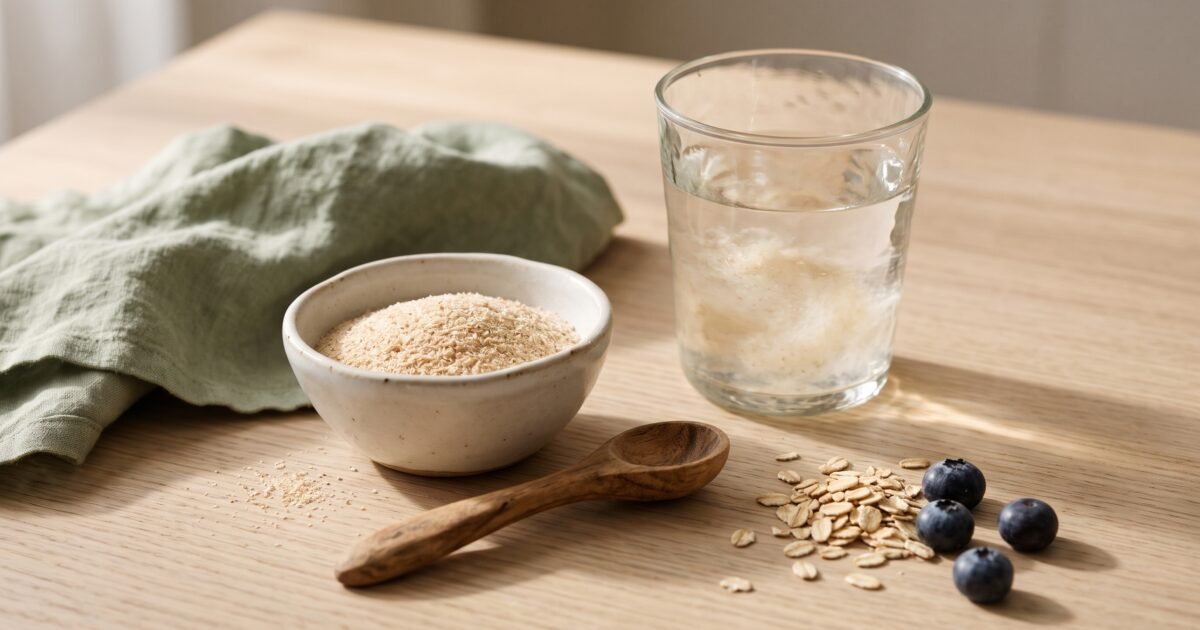
Psyllium husk shows up in a lot of “best fiber supplement” lists for a reason. It is a soluble, gel-forming fiber from the seed husks of Plantago ovata, and it is one of the few fiber powders with a fairly clear research story for LDL cholesterol and regularity.
This guide covers the main psyllium husk benefits the research supports, how to take psyllium husk without the common mistakes, what the cholesterol evidence looks like, and how it compares with inulin. It is powder-and-supplement focused, not a food-fiber roundup.
Key takeaways
- Psyllium is a viscous soluble fiber. Mixed with enough liquid, it forms a gel that can soften stool and slow how quickly some nutrients leave the stomach.
- A 2018 meta-analysis of 28 trials found about 10 grams a day was linked with lower LDL cholesterol by roughly 0.33 mmol/L (about 13 mg/dL).
- FDA allows a qualified health claim that soluble fiber from psyllium husk, as part of a diet low in saturated fat and cholesterol, may reduce the risk of heart disease when you get at least 7 grams of psyllium soluble fiber a day.
- For chronic constipation, fiber supplements (especially psyllium at doses above 10 g/day for at least 4 weeks) improved response rates and stool frequency in a 2022 meta-analysis, with notable study-to-study variation.
- Always mix powder with a full glass of liquid, start low, and separate oral medicines by about 1 to 2 hours. Dry powder is a choking risk.
What is psyllium husk?
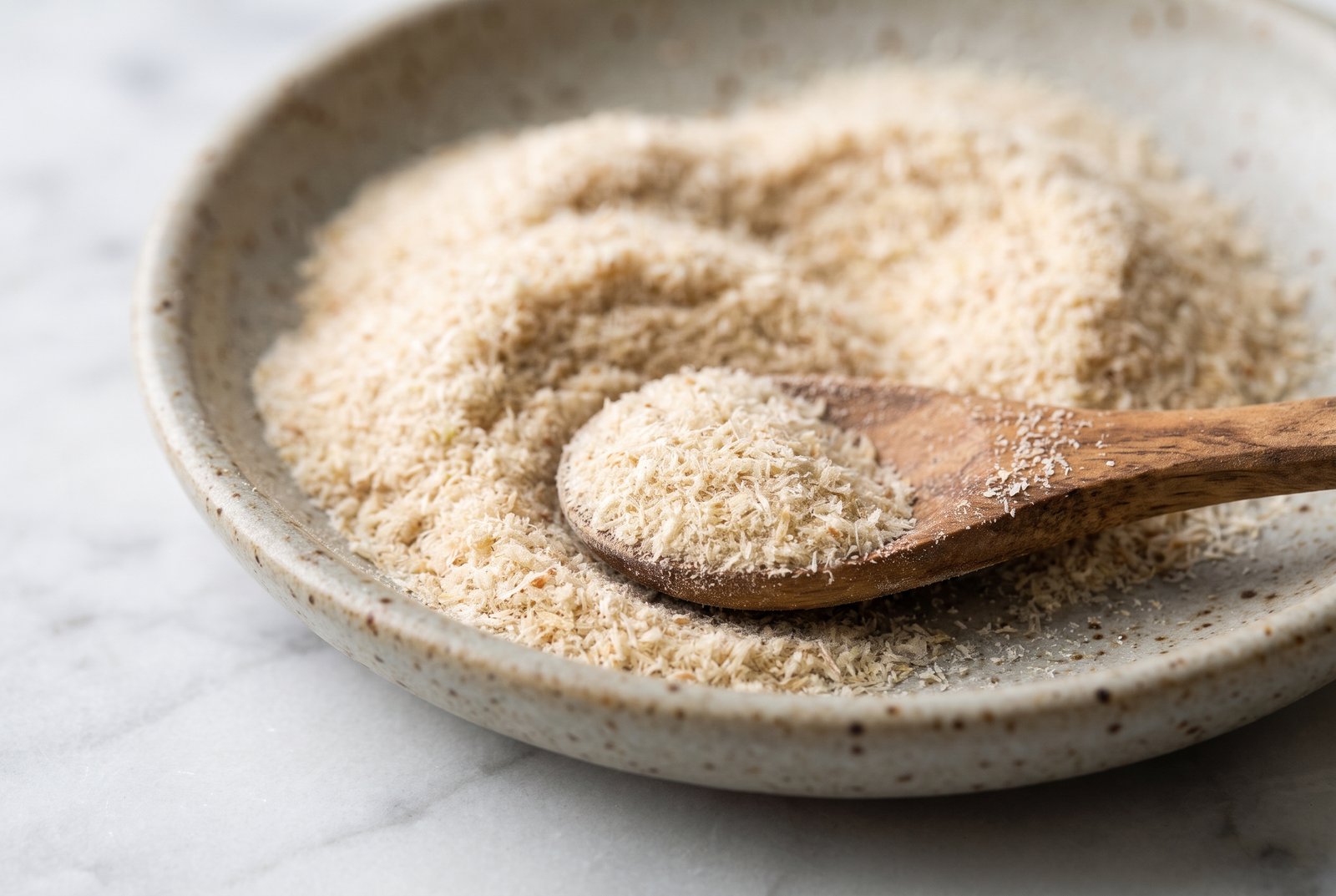
Psyllium husk is the outer coat of blond psyllium seeds. Most supplement powders and capsules use purified husk. When it meets water, the soluble fiber absorbs liquid and swells into a thick gel. That gel is the main reason it can change stool form and slow digestion of a meal.
A typical rounded teaspoon of powder provides about 3 to 3.4 grams of psyllium husk, though brands vary. Capsules hold much less per pill, so people chasing higher daily grams often end up taking many capsules or switching to powder. Check the Nutrition Facts or Supplement Facts panel for grams of psyllium per serving, not just “fiber” marketing language.
Psyllium is mostly not fermented in the large intestine, which is one reason it tends to produce less gas than highly fermentable fibers such as inulin. That difference matters if bloating is your main complaint. For how prebiotic fibers feed gut bacteria more broadly, see our guide to prebiotics vs probiotics.
Psyllium husk benefits the research supports
LDL cholesterol (the strongest evidence)
This is where psyllium husk for cholesterol earns its reputation. In a systematic review and meta-analysis of 28 randomized trials with 1,924 people, a median dose of about 10.2 grams of psyllium a day reduced LDL cholesterol by 0.33 mmol/L, with similar drops in non-HDL cholesterol and apolipoprotein B (Jovanovski and colleagues, 2018). Effects showed up in people with and without high cholesterol at baseline.
An earlier pooled analysis of eight trials using 10.2 grams a day on top of a low-fat diet found about a 7% drop in LDL relative to placebo (Anderson and colleagues, 2000). A separate meta-analysis also reported time- and dose-dependent lipid effects in mild-to-moderate hypercholesterolemia (Wei and colleagues, 2009).
The U.S. Food and Drug Administration authorizes a health claim linking soluble fiber from psyllium husk with reduced risk of coronary heart disease when it is eaten as part of a diet low in saturated fat and cholesterol, and when daily intake reaches at least 7 grams of soluble fiber from psyllium husk (21 CFR 101.81). That is a labeling claim with conditions, not a guarantee for any one person. Psyllium is a helper next to diet pattern, movement and whatever plan you already have with your clinician, not a stand-alone fix.
Regularity and constipation
As a bulk-forming fiber, psyllium pulls water into the stool and can make bowel movements easier to pass for many people with chronic constipation. A 2022 systematic review and meta-analysis of 16 randomized trials (1,251 adults) found fiber supplements raised treatment response versus control, and subgroup analyses favored psyllium and pectin, especially at doses above 10 grams a day for at least four weeks (van der Schoot and colleagues, 2022). Flatulence was more common with fiber, and the studies were fairly heterogeneous, so results are encouraging rather than definitive.
Over-the-counter labels often note that an effect can show up within 12 to 72 hours. MedlinePlus describes psyllium as a bulk-forming laxative that absorbs liquid, swells and forms a softer, bulkier stool (MedlinePlus). If constipation is new, severe, or lasts more than a week, that is a reason to talk with a clinician rather than keep raising the dose on your own.
Blood sugar after meals
Viscous fiber can blunt post-meal glucose rises for some people. In a meta-analysis spanning decades of trials, multiweek psyllium use before meals in people with type 2 diabetes was linked with lower fasting glucose and HbA1c, with little glucose-lowering effect in people who already had normal blood sugar (Gibb and colleagues, 2015). That pattern makes sense: the bigger the baseline glucose challenge, the more room there is to see a change.
If you take diabetes medication, ask your care team before adding a large fiber dose, because any change that affects glucose or absorption needs a coordinated plan. For everyday meal structure that supports steadier energy, our guide to balancing blood sugar through smart eating covers food-first steps.
Satiety and appetite (weaker evidence)
A gel that slows gastric emptying can leave some people feeling fuller after a meal or drink. That is a plausible mechanism, but satiety trials for psyllium alone are smaller and less consistent than the cholesterol data. Treat fullness as a possible bonus, not the main reason to use it. Fiber still sits inside the broader picture of protein, carbs and fat; our macronutrients guide explains how those pieces fit together.
How to take psyllium husk
The most important rule for how to take psyllium husk is liquid, liquid, liquid. Put the dose in an empty glass, add at least 8 ounces (240 mL) of water or another cool liquid, stir and drink right away. If it thickens, add more liquid. Taking dry powder or mixing it with too little fluid can cause the fiber to swell in the throat or esophagus and lead to choking. Product labels and MedlinePlus both stress this warning.
- Start slow. New users often begin with one serving a day, then build toward the label dose over several days as your gut adjusts.
- Typical adult powder dose for regularity: about one rounded teaspoon (around 3.4 g husk) in 8 ounces of liquid, up to three times daily, following the product you buy.
- For cholesterol-oriented intakes: research doses often land near 7 to 10+ grams of psyllium a day, split with meals. That usually means more than one teaspoon. Match the label and your clinician’s advice.
- Timing with medicines: bulk-forming fiber can reduce absorption of some oral drugs. A common practical rule is to take psyllium about 1 to 2 hours before or after other oral medications; MedlinePlus notes a 3-hour separation for digoxin, salicylates (aspirin) and nitrofurantoin. Ask a pharmacist if you take multiple medicines.
- Capsules vs powder: capsules are convenient but deliver less fiber per pill. Powder is usually the practical route for higher gram targets.
- Do not take it dry, and do not take it right before bed without a full glass of liquid and time to drink more water afterward.
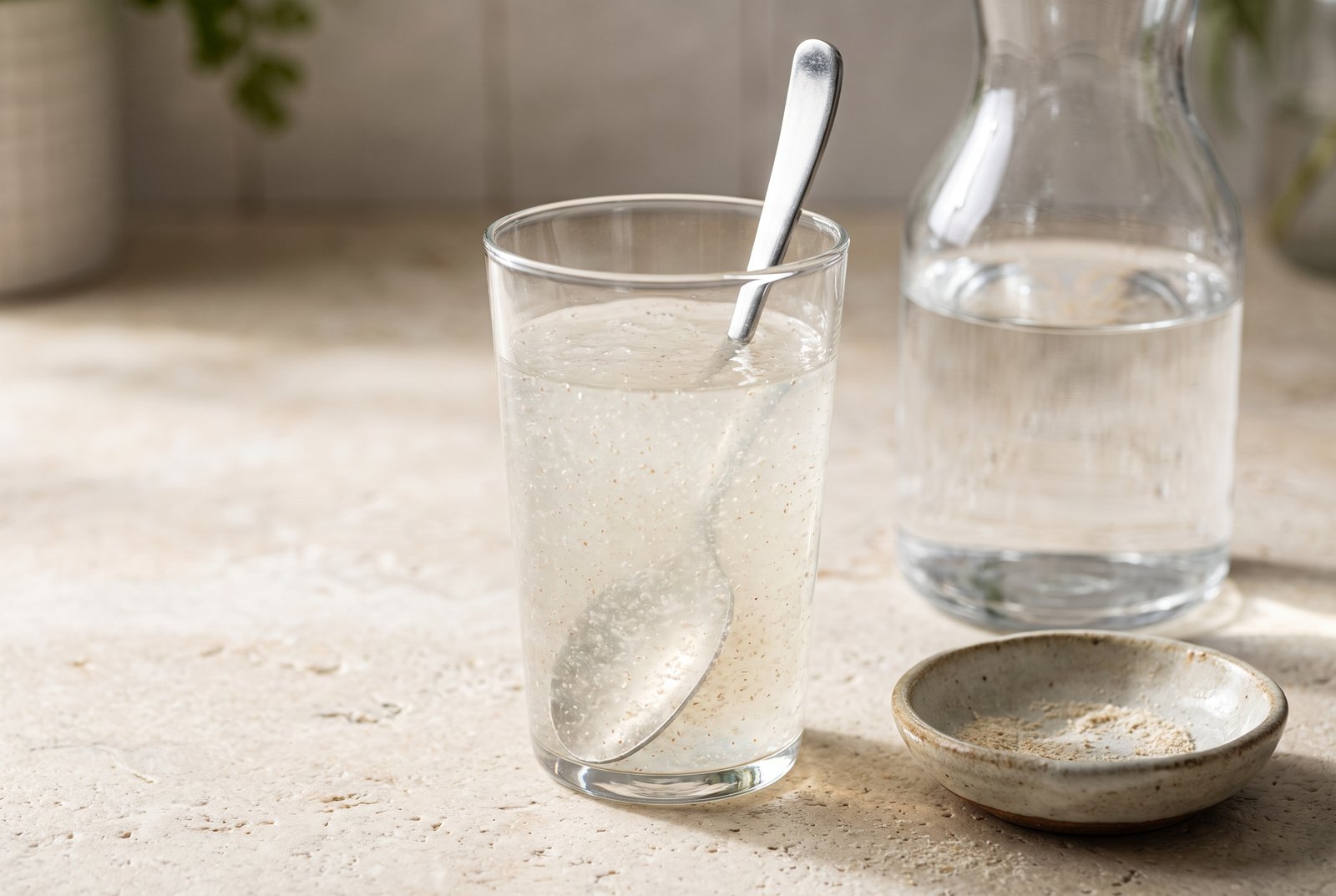
Drink extra water across the day while you are increasing fiber. Mild bloating or a change in stool pattern for the first week is common. If you get chest pain, vomiting, or trouble swallowing or breathing after a dose, seek emergency care.
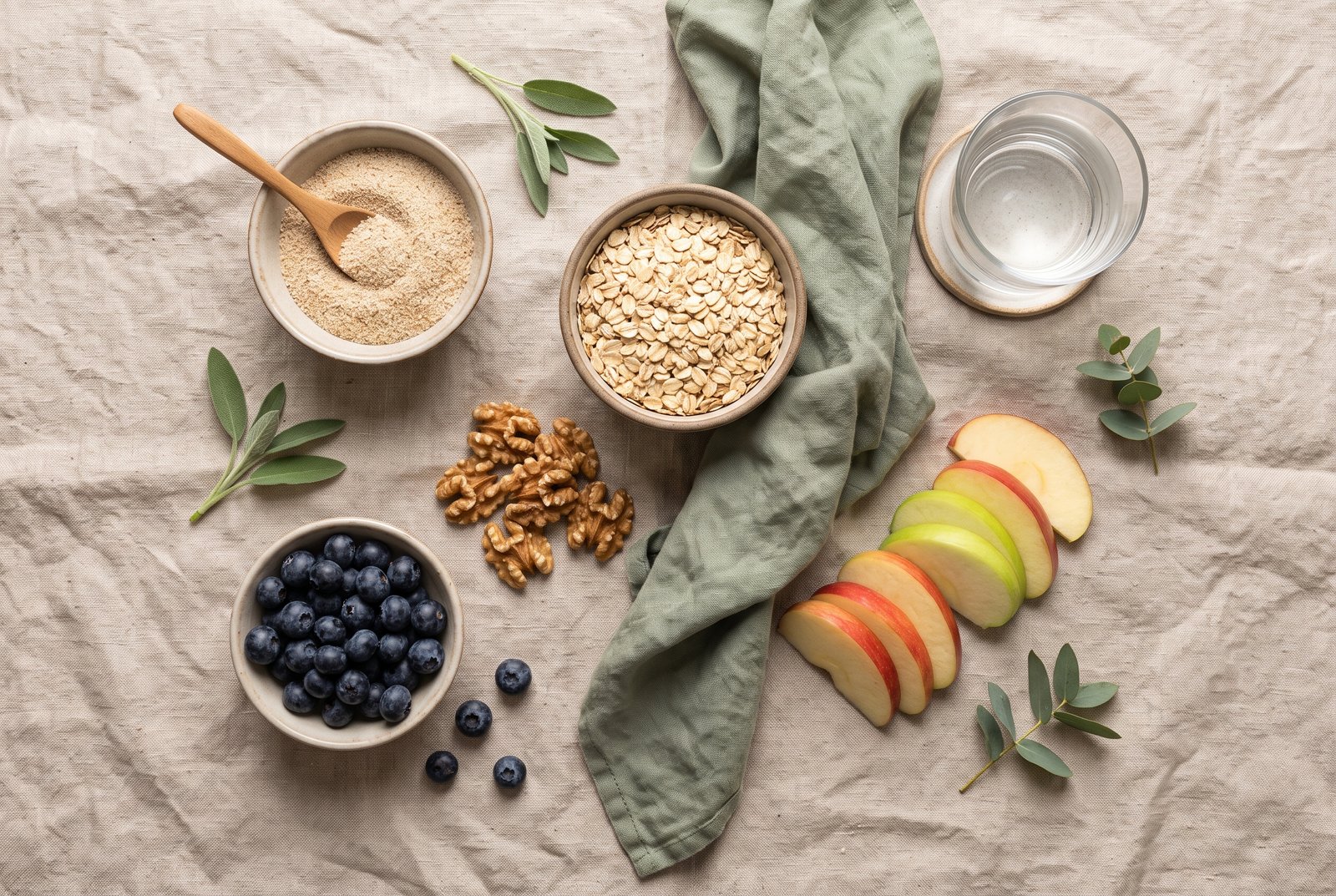
Food still matters. Pairing a supplement with oats, beans, fruit and vegetables gives you a mix of fiber types. Our gut health and nutrition guide and anti-inflammatory foods list are useful companions if you want the plate to do more of the work.
Psyllium vs inulin
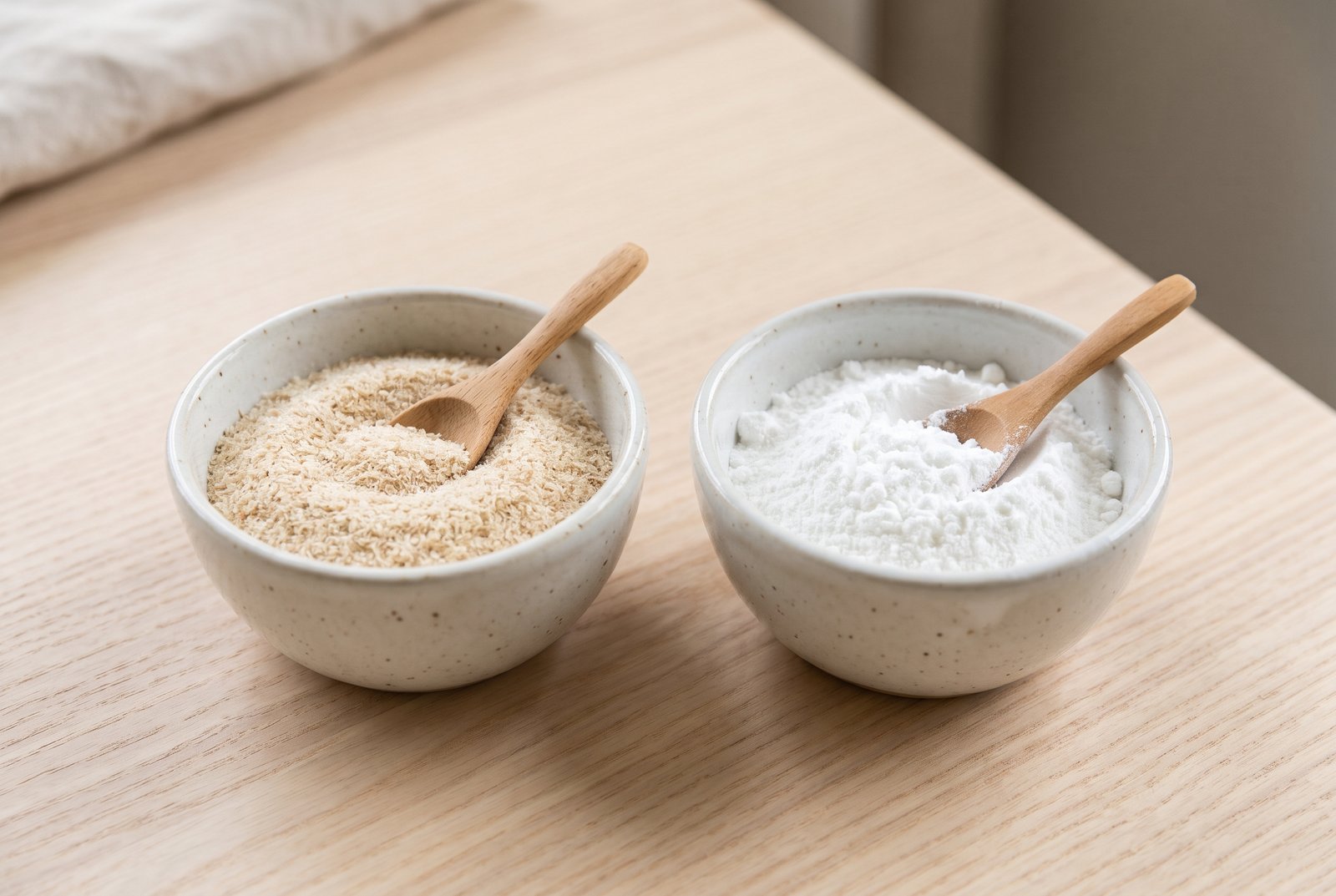
People often shop these two as if they were interchangeable “fiber powders.” They are not.
- Psyllium: viscous, gel-forming, mostly poorly fermented. Stronger evidence for LDL lowering and stool form. Often better tolerated for constipation goals when gas is a problem.
- Inulin: a fermentable prebiotic fiber (usually from chicory root). It feeds certain gut bacteria and can raise gas and bloating, especially at higher doses. Evidence for cholesterol is weaker than for psyllium.
- Best use case: choose psyllium when regularity or LDL support is the goal. Consider inulin when you specifically want a fermentable prebiotic and your gut already handles FODMAP-type fibers well.
- You can use both, but introduce one at a time so you know which one caused symptoms.
If your main interest is the microbiome conversation around prebiotics, start with prebiotics vs probiotics before stacking powders.
Who should be careful
- Difficulty swallowing or a history of esophageal narrowing: do not use bulk-forming powders. The choking warning is real.
- Sudden change in bowel habits, rectal bleeding, or constipation lasting more than a week: stop and contact a clinician.
- IBS, IBD or a sensitive gut: some people do well with psyllium; others feel more bloated. Start with a very small dose and go slowly, ideally with clinician guidance.
- Kidney disease, diabetes medicines, or many daily oral drugs: check timing and dose with your care team or pharmacist.
- Pregnancy or nursing: ask your obstetric or primary clinician before starting a new supplement routine.
- Psyllium allergy: rare, but inhaled powder can trigger reactions in sensitive people. Mix carefully and avoid breathing the dust.
- Children: follow pediatric dosing on the label or a clinician’s advice; this article is written for adults.
Frequently asked questions
What are the main psyllium husk benefits?
The clearest benefits in human trials are lower LDL cholesterol at roughly 7 to 10 grams a day and improved stool frequency and consistency for many people with chronic constipation. Blood sugar effects look more meaningful in people with type 2 diabetes than in people with normal glucose. Satiety support is possible but less firmly proven.
How much psyllium should I take per day?
Follow your product label. For regularity, adults often use about 3 to 10+ grams a day in divided doses with plenty of water. Cholesterol studies frequently used around 10 grams a day. More is not always better if your gut is still adapting.
Can I take psyllium every day?
Many adults use it daily for months in research settings and in over-the-counter practice. If you need a laxative for more than a week, MedlinePlus advises checking with a doctor so you are not masking another problem.
Is psyllium the best fiber supplement?
“Best” depends on the job. For viscous, gel-forming support aimed at LDL and stool form, psyllium is one of the best-studied options. For feeding beneficial bacteria, a fermentable prebiotic such as inulin may fit better if you tolerate it. Food fiber from plants should still be the foundation.
Does psyllium help with weight loss?
Not on its own. Any help with fullness is modest and secondary. Weight change still comes down to overall eating pattern, activity and sleep, not a single powder.
Can I mix psyllium into yogurt or a smoothie?
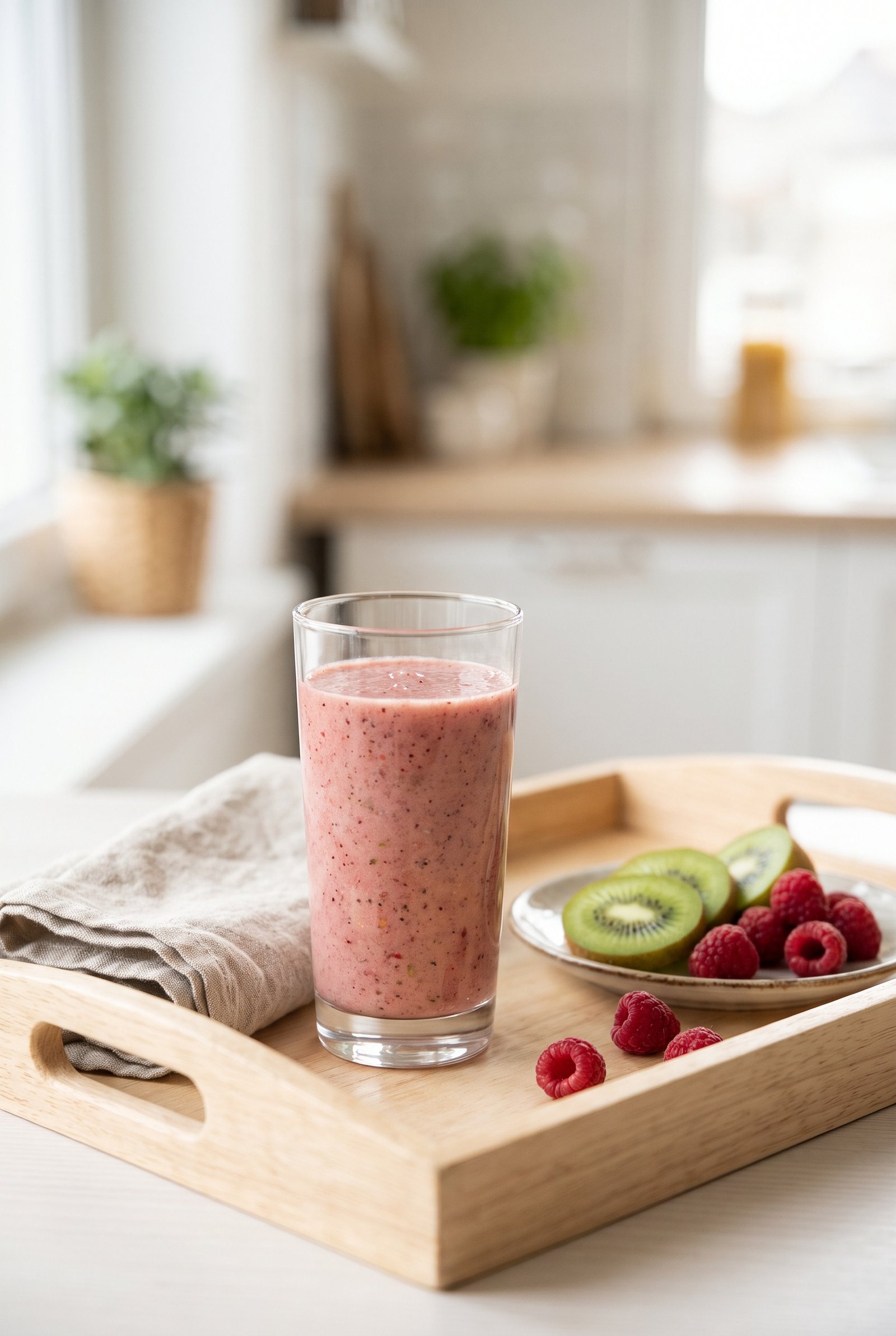
Yes, if there is enough liquid for it to stay drinkable or spoonable and you consume it promptly before it turns to a stiff gel. Water or juice remains the simplest method when you are learning your dose.
Bottom line
Psyllium husk benefits are grounded in a sticky gel that softens stool and can nudge LDL cholesterol down when you take enough of it, consistently, with plenty of fluid. The cholesterol data and the FDA labeling claim are unusually clear for a fiber supplement. Regularity evidence is also supportive, especially around 10 grams a day for several weeks.
Start low, mix with a full glass of liquid every time, keep oral medicines 1 to 2 hours away, and treat it as one tool next to a fiber-rich plate. If you have swallowing problems, complex medication lists, or ongoing gut symptoms, get personalized advice before you scale up.
Sources
- Jovanovski E, et al. Effect of psyllium (Plantago ovata) fiber on LDL cholesterol and alternative lipid targets, non-HDL cholesterol and apolipoprotein B: a systematic review and meta-analysis of randomized controlled trials. American Journal of Clinical Nutrition. 2018.
- Anderson JW, et al. Cholesterol-lowering effects of psyllium intake adjunctive to diet therapy in men and women with hypercholesterolemia: meta-analysis of 8 controlled trials. American Journal of Clinical Nutrition. 2000.
- Wei ZH, et al. Time- and dose-dependent effect of psyllium on serum lipids in mild-to-moderate hypercholesterolemia: a meta-analysis of controlled clinical trials. European Journal of Clinical Nutrition. 2009.
- U.S. Food and Drug Administration. 21 CFR 101.81: Health claims: soluble fiber from certain foods and risk of coronary heart disease (CHD).
- van der Schoot A, et al. The effect of fiber supplementation on chronic constipation in adults: an updated systematic review and meta-analysis of randomized controlled trials. American Journal of Clinical Nutrition. 2022.
- MedlinePlus (U.S. National Library of Medicine). Psyllium: drug information.
- Gibb RD, et al. Psyllium fiber improves glycemic control proportional to loss of glycemic control: a meta-analysis of data in euglycemic subjects, patients at risk of type 2 diabetes mellitus, and patients being treated for type 2 diabetes mellitus. American Journal of Clinical Nutrition. 2015.
Want more practical, evidence-based guidance like this? Join the newsletter for new guides as soon as they’re published.
⚕️ Disclaimer: This article is for general education and isn’t medical advice. Talk with a doctor or other qualified healthcare professional about your own health, especially if you’re pregnant, nursing, taking medication, or managing a condition. Read our full medical disclaimer.

Leave a Reply