
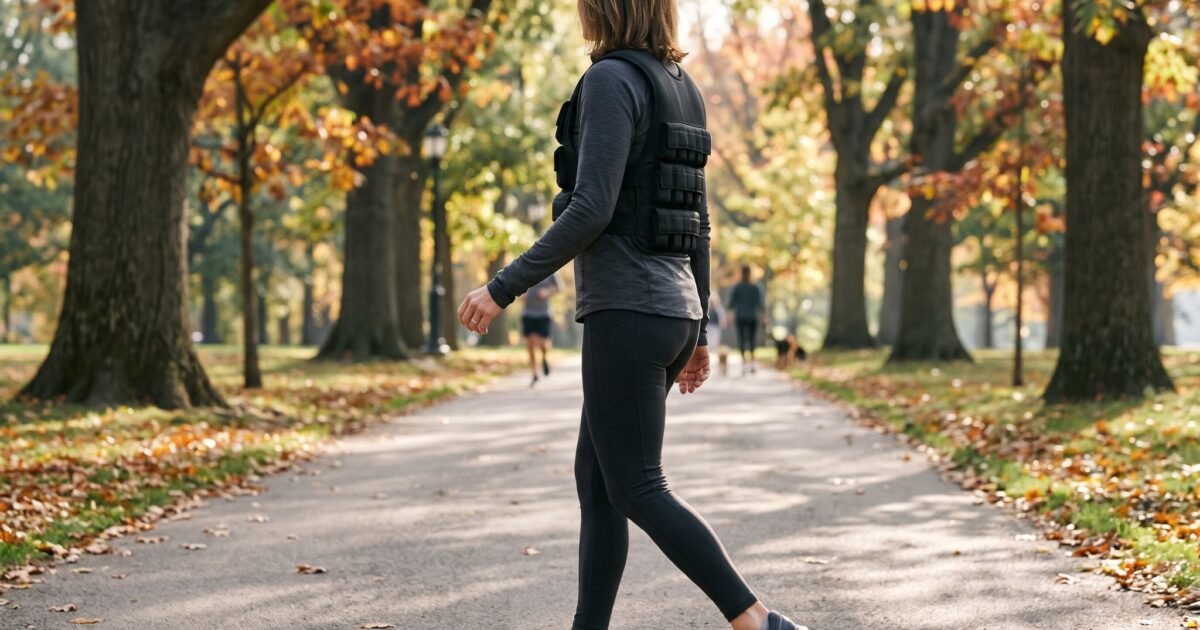
Weighted vest walking is exactly what it sounds like: you put on a snug vest with a few pounds of weight tucked into it and go for your usual walk. It has become one of the most talked-about fitness trends for women in midlife, and it’s easy to see why. You don’t need a gym, a class or new skills, just a vest and a pair of shoes you already own.
The research is more mixed than the buzz suggests, though. Some studies in older women show real gains in leg strength and hip bone density, while others found little change when people simply wore a light vest around the house. Here’s what the evidence shows, how heavy to go and who should check with a doctor first.
Key takeaways
- A weighted vest makes walking harder by adding load close to your center of mass, which raises energy cost and the force your bones and muscles handle with each step.
- The strongest results come from vests paired with structured exercise. In a 2026 meta-analysis of nine randomized trials, vest-plus-exercise programs improved hip and spine bone density compared with usual activity.
- Simply wearing a light vest during the day, without a training plan, showed little benefit in older adults.
- Start light. A recent research review suggests beginning around 1 to 5% of your body weight and building slowly, with structured sessions often landing around 5 to 10%.
- If you have joint or back pain, pelvic floor symptoms, osteoporosis with a past fracture, heart or blood pressure concerns, or you’re pregnant, talk with your doctor before adding a vest.
What is weighted vest walking?
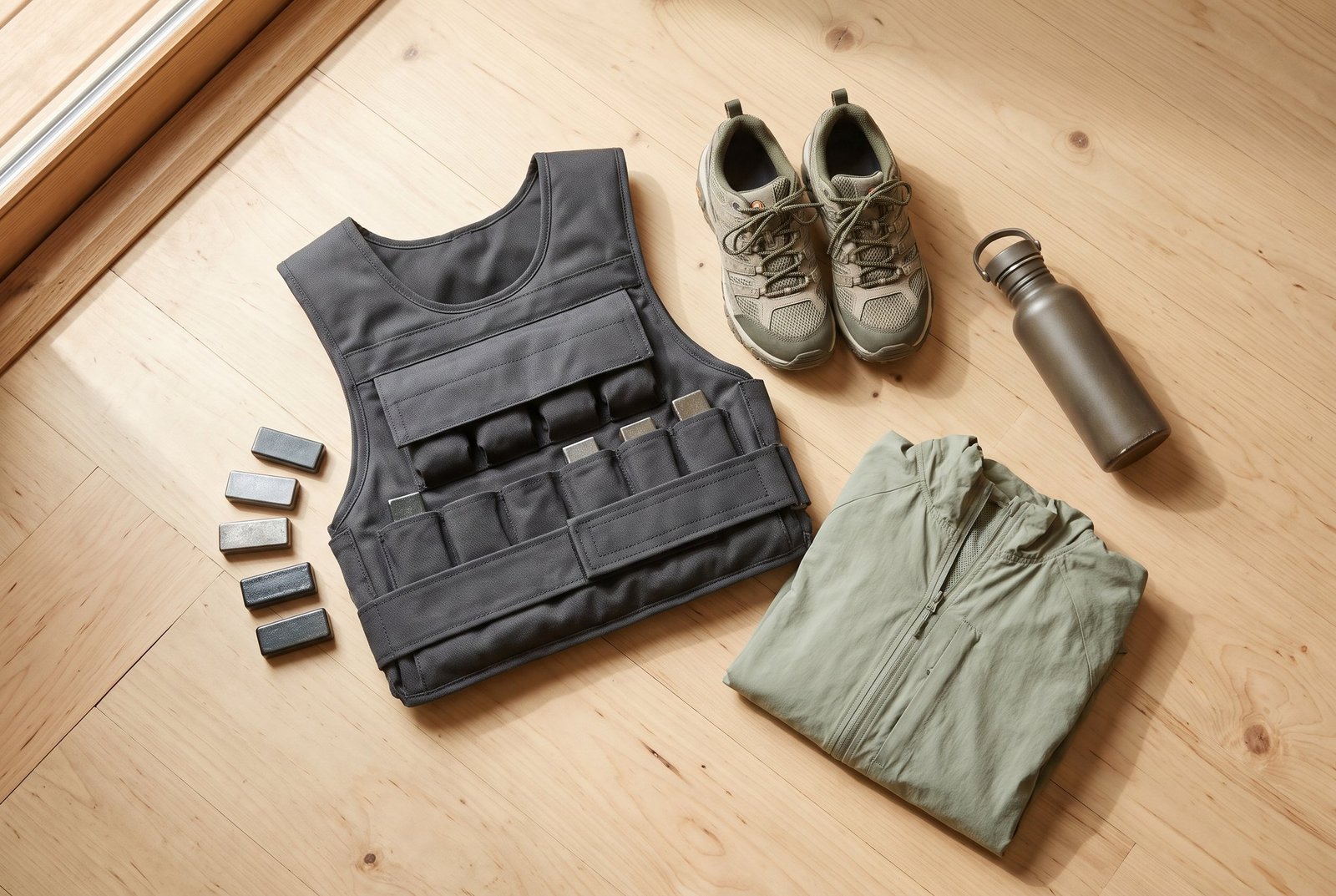
A weighted vest is a fitted garment that holds weight around your chest, back and sides, usually in small pockets you can fill or empty. Because the load sits close to your trunk, it changes your walk less than a backpack or ankle weights would.
That placement matters. A classic review of military load carriage found that keeping a load close to the body’s own center of mass gives the lowest energy cost and keeps posture closer to normal walking, while each kilogram added to the feet raises energy cost by 7 to 10% (Knapik and colleagues). In a small study of nine women, a vest and a rucksack produced similar peak oxygen use and heart rate on a treadmill test, but the women kept going significantly longer in the vest (Gerhart and colleagues).
Weighted vest walking benefits
A harder walk without walking faster
In a lab study, 10 young adults walked on a treadmill wearing vests loaded to 0, 10, 15 and 20% of their body mass. Every vest condition raised oxygen use compared with no vest, and the vest also increased the ground reaction forces that travel up through the legs (Puthoff and colleagues). The jump in relative effort was significant mainly at faster speeds, so an easy stroll adds less challenge.
In everyday terms, a vest can turn your regular 30-minute loop into a slightly tougher workout without running.
Bone density support, mostly alongside exercise
Bone responds to load, which is a big reason midlife women are curious about vests. A 2026 systematic review and meta-analysis pooled nine randomized trials with 368 middle-aged and older adults. Programs that combined a vest with exercise improved bone mineral density at the femoral neck (part of the hip) and the lumbar spine compared with usual activity (Wang and colleagues).
There’s an important catch in the same paper. When researchers compared exercise with a vest against the same exercise without one, adding the vest didn’t produce a significant extra bone benefit, though that comparison rested on a single study. The certainty for bone outcomes was rated low to moderate.
One early long-term study is encouraging. Postmenopausal women who did weighted vest exercise plus jumping three times a week, for 32 weeks a year over five years, kept their hip bone density steady, with femoral neck density up 1.54% on average. Women who didn’t join the program lost about 3.4 to 4.4% across hip sites (Snow and colleagues). It was small, with only 18 women.
Stronger legs and steadier balance
In a 9-month trial, 44 postmenopausal women aged 50 to 75 did lower-body exercises three times a week, adding weight to a vest gradually. Compared with women who kept their usual routine, they gained 16 to 33% in lower-body strength, 13% in power and 3.5% in leg lean mass, and they improved on tests of side-to-side stability (Shaw and Snow). Hip bone mass didn’t change in that shorter study.
Notice that these women did squats, lunges and step work in the vest, not walking alone. If strength is your goal, our guide to strength training for women over 40 is a good companion to vest walks.
Body composition, with modest effects
A Swedish research group has tested heavy vests (11% of body weight) against very light ones (1%) worn eight hours a day in adults with obesity. After three weeks, the heavy-vest group lost 1.37% more body weight and 4.04% more fat mass than the light-vest group (Ohlsson and colleagues). In a five-week follow-up trial, the heavy vest lowered fat mass by 2.60%, raised lean mass by 1.40% and trimmed waist size by 2.26%, with no change in body weight. Sedentary time was 4.69% higher in the heavy-vest group, though (Bellman and colleagues).
These signals are small, short and limited to one group, so a vest won’t replace eating well, staying active and sleeping enough.
What the research doesn’t show (yet)
- Light, wear-only routines underdeliver. In a 27-week trial, 62 adults with an average age of 74 wore vests at 3% or 5% of body weight for two hours a day, four days a week, with no set exercise. Strength, physical performance, bone turnover markers and quality of life didn’t improve, and the authors concluded the stimulus was too low (Greendale and colleagues).
- A vest may not protect bone during weight loss. In the 12-month INVEST trial, 150 older adults with obesity (about 75% women) lost roughly 10% of their weight. One group wore a vest about seven hours a day to replace lost weight. Hip bone density still dropped by 1.2 to 1.9% across all groups, and neither the vest nor resistance training prevented it (Beavers and colleagues).
- Resistance training seems better for muscle. A follow-up analysis of the same trial found resistance training improved thigh muscle size and quality, while the vest showed only a trend at the trunk (Lynch and colleagues).
- Most studies are small. Many trials included only a few dozen people.
So the fair takeaway is this: a vest can be a helpful tool inside a well-rounded routine. It’s less convincing as a stand-alone fix.
How heavy should a weighted vest be?
There’s no official guideline for weighted vest walking, so we lean on what the studies used. Research loads range from about 3% of body weight at the light end to 20% in short lab tests. A 2026 review of weighted vest research in older adults suggested starting at 1 to 5% of body mass, closer to 1 to 3% for first-time or frailer users. It noted that 5 to 10% of body mass typically provided enough stimulus in structured sessions, and it suggested increasing by only about 1 to 2% of body mass per week when you’re handling the current load well (Luo and colleagues).
In everyday numbers:
- Body weight 130 pounds: 5% is about 6.5 pounds, and 10% is about 13 pounds.
- Body weight 160 pounds: 5% is about 8 pounds, and 10% is about 16 pounds.
- Body weight 190 pounds: 5% is about 9.5 pounds, and 10% is about 19 pounds.
We’d treat about 10% as a sensible upper range for regular walks unless a physical therapist who knows you suggests otherwise. The 15 to 20% loads were short lab tests, and impact forces climbed as the vest got heavier.
How to start weighted vest walking
Choose a vest that fits well
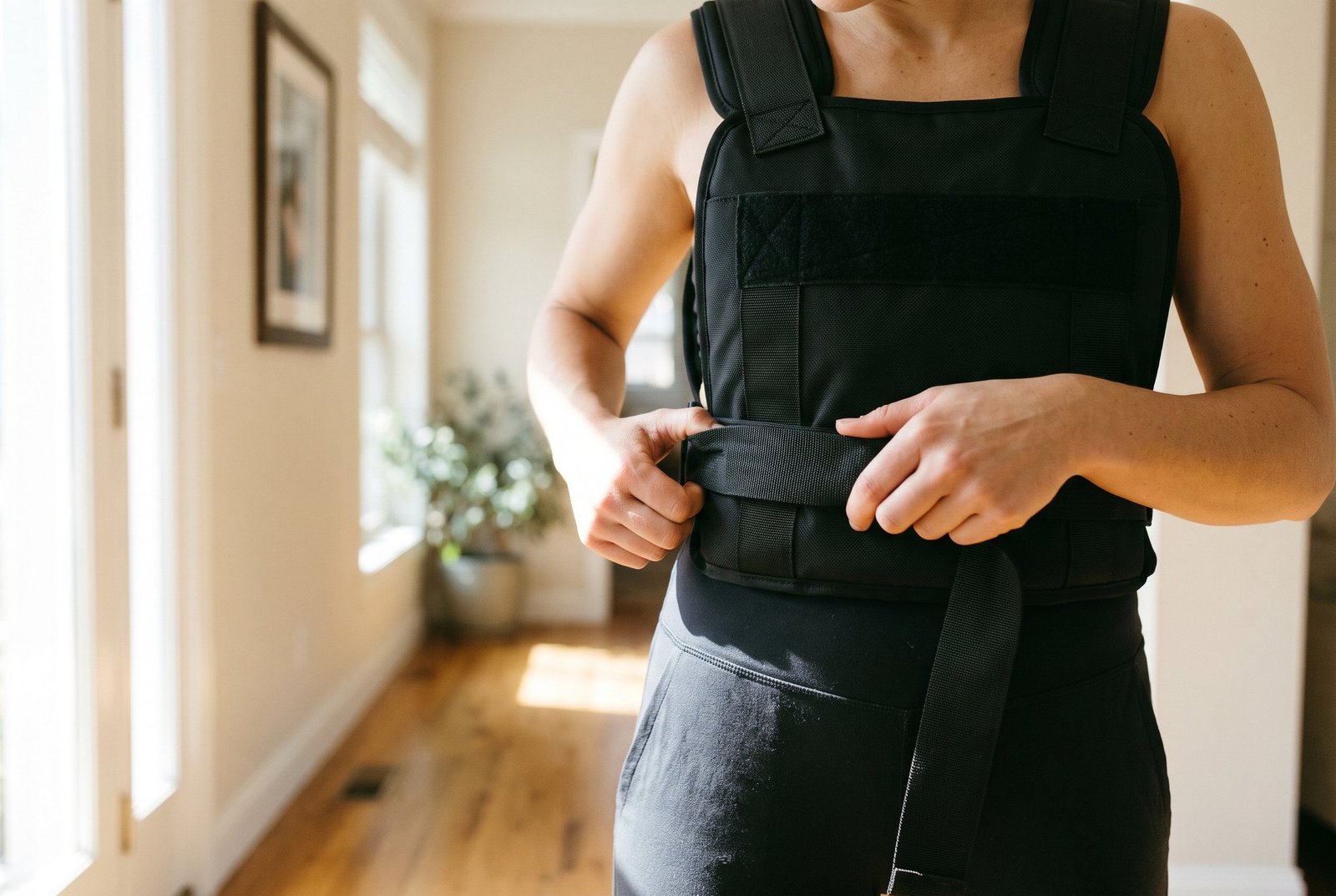
- Look for a vest that sits snugly against your torso and doesn’t bounce when you walk briskly.
- Adjustable weight pockets let you add small amounts over time instead of jumping up in big steps.
- Check that straps don’t dig into your chest, neck or shoulders.
- Practice putting it on and taking it off at home. In one trial, about half of older participants had trouble with this, which the researchers linked to skipping a gradual start (Luo and colleagues).
A gentle four-week plan
- Week 1: Walk 10 to 15 minutes in the vest at your lightest load, then finish your walk without it. Stick to flat ground.
- Week 2: Extend vest time to 20 minutes if you feel good the next day.
- Week 3: Work up to 30 minutes, or add a small amount of weight, but not both in the same week.
- Week 4: Keep building time first, then load. Add gentle hills only once flat walks feel easy.
The Luo review suggests a simple order: increase time first, then pace, then load. Keep your posture tall and your pace conversational. If you can’t talk in full sentences, ease off.
Fit it into your week
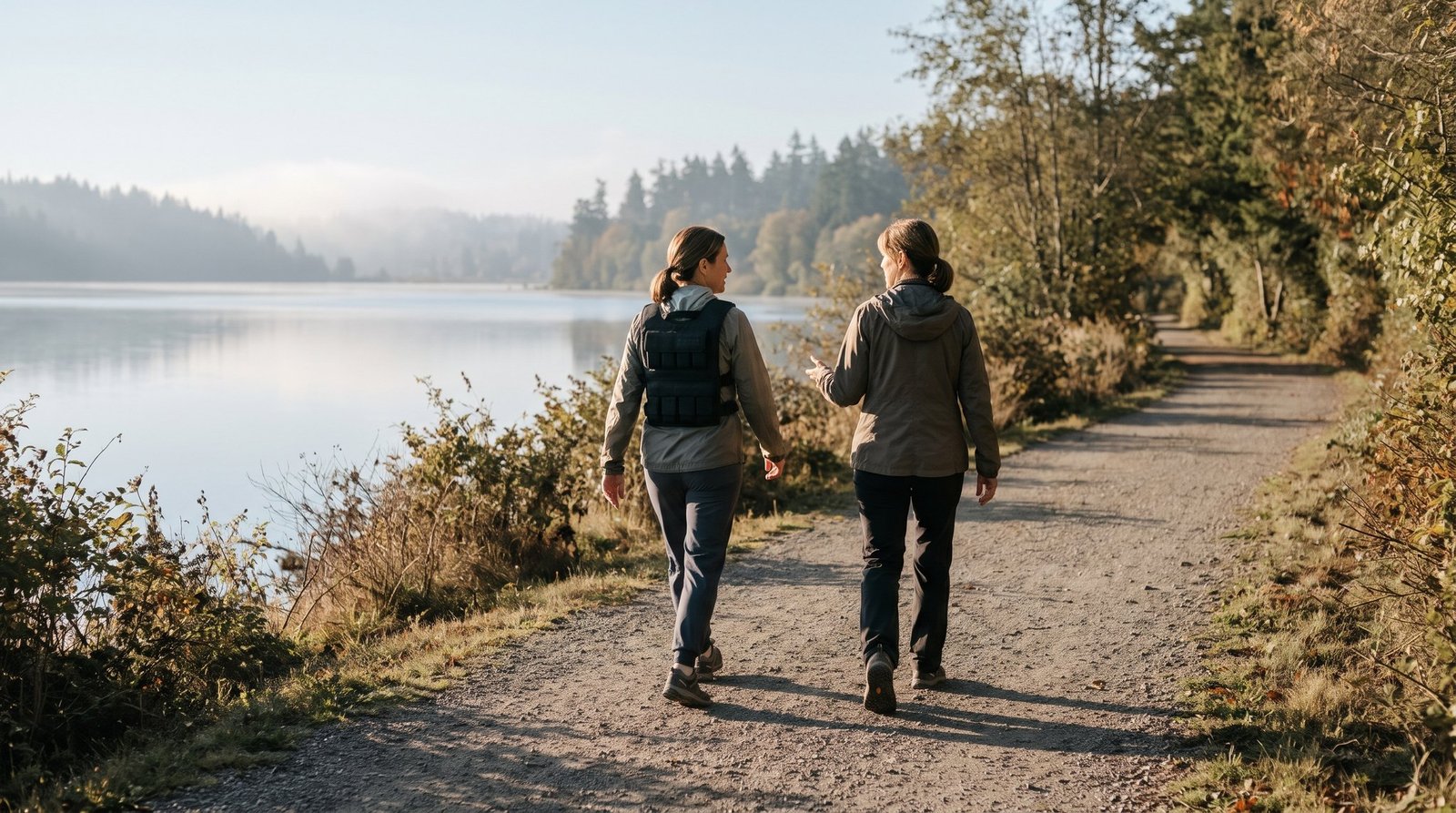
The CDC recommends at least 150 minutes of moderate activity a week, such as brisk walking, plus muscle-strengthening on two or more days (CDC). Vest walks can count toward the first goal. Two or three vest walks a week, mixed with regular walks, is a reasonable start. Leave room for rest days and recovery, and a short hip mobility routine afterward can help your hips feel looser.
Weighted vest for women: midlife and menopause notes
Weighted vests are especially popular with women in their 40s, 50s and beyond, which makes sense since bone and muscle both tend to decline with age. If you’re working through that transition, our menopause symptoms guide covers the bigger picture.
The NIH’s National Institute of Arthritis and Musculoskeletal and Skin Diseases lists weight-bearing exercise such as walking as one of the ways to help prevent osteoporosis and fractures (NIAMS). A vest adds a bit more load to that same weight-bearing activity.
Bone and muscle need more than one kind of exercise, though. The Bone Health and Osteoporosis Foundation recommends both weight-bearing and muscle-strengthening exercise for building and keeping bone (BHOF). For women with osteoporosis, an international expert panel strongly recommended a program that includes resistance and balance training, not aerobic exercise alone (Giangregorio and colleagues). Getting enough protein, calcium and vitamin D helps support the work you’re putting in.
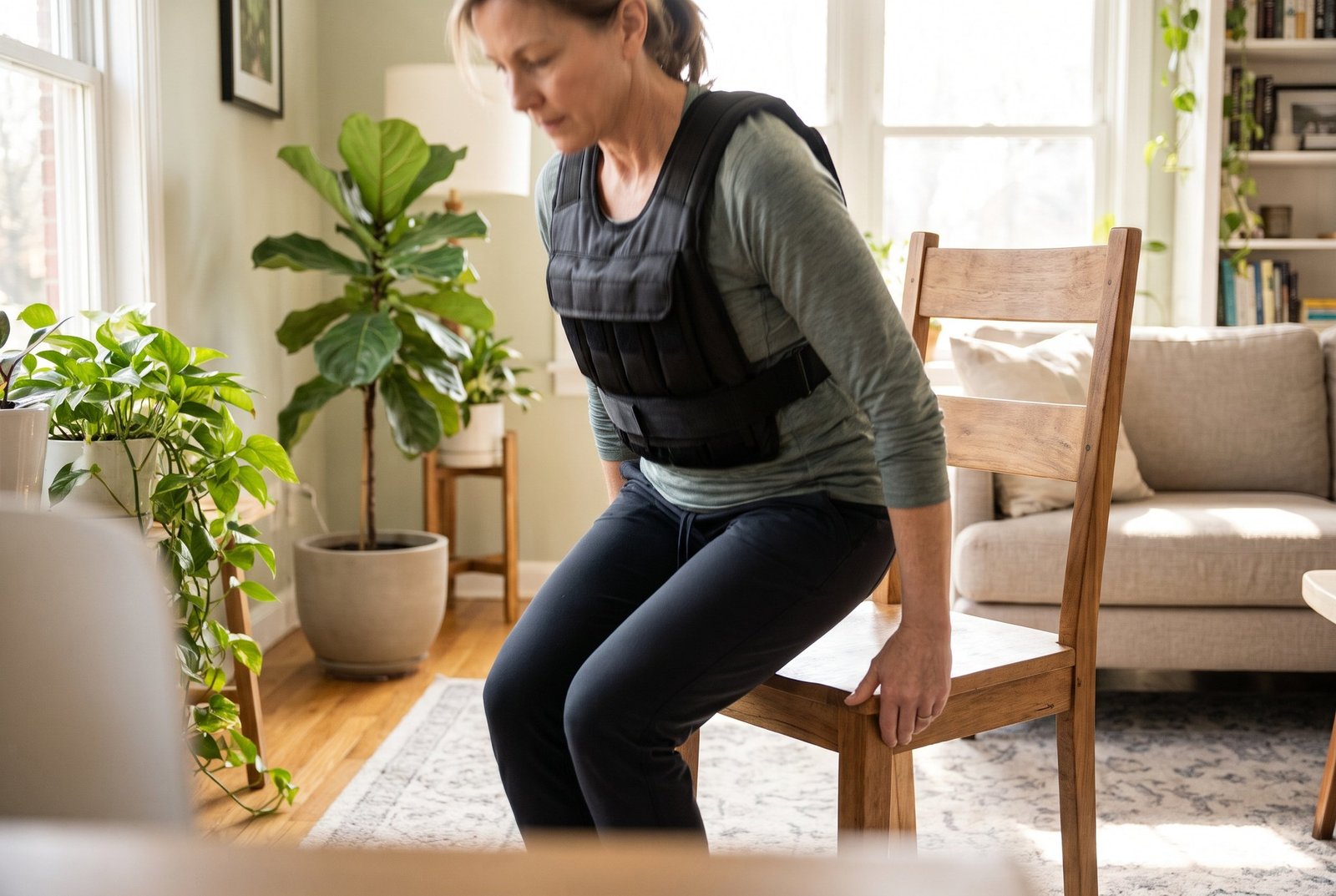
Who should skip it or check first
Extra load isn’t right for everyone. A recent review found adverse events were generally mild, but some people reported back pain or soreness, and one trial recorded more falls in the vest group (14) than in the diet-only (10) or resistance training (7) groups. That trial wasn’t designed to test falls, so the authors treated it as a safety signal rather than proof (Luo and colleagues). Here’s who we’d suggest talks with a doctor or physical therapist first.
Joint pain or arthritis
More weight means more force through your feet, knees and hips with every step. If you live with knee, hip or foot pain, a physical therapist can help you decide whether a vest makes sense and how light to start. Load-carriage research links prolonged heavy carrying to issues like foot blisters, stress fractures, back strains and knee pain (Knapik and colleagues).
Back or neck problems
A vest puts weight on your shoulders and spine. With a history of disc problems or back or neck pain, get personal advice first and stop if pain shows up.
Pelvic floor symptoms
The NIH’s National Institute of Child Health and Human Development lists heavy lifting among the factors that can contribute to pelvic floor disorders (NICHD). If you notice leaking, pressure or a feeling of heaviness, or you’ve been told you have prolapse, a pelvic floor physical therapist can help you figure out whether adding load is a good idea right now.
Pregnancy
Walking is one of the activities the American College of Obstetricians and Gynecologists lists as safest during pregnancy, and ACOG suggests avoiding activities that raise the risk of being hurt (ACOG). ACOG doesn’t specifically address weighted vests. Pregnancy already adds weight and changes balance, so we’d skip the vest unless your obstetric provider gives you the go-ahead.
Osteoporosis or past fractures
Weight-bearing exercise is generally encouraged for bone health, but BHOF notes that people who have broken a bone due to osteoporosis or who are at risk of breaking one may need to avoid high-impact exercise, and should take care to avoid spine injuries (BHOF). If you have osteoporosis, especially with a vertebral fracture, please talk with your doctor or a physical therapist before adding a vest.
Heart or blood pressure concerns
A vest makes your heart work harder. In a 2026 study of 51 adults with obesity, wearing a vest at 11% of body weight raised heart rate and lowered heart rate variability during the hours the vest was worn, with more consistent effects in women (Bellman and colleagues). The American College of Sports Medicine’s pre-exercise screening approach looks at your current activity level, any symptoms, and known heart, metabolic or kidney disease (Riebe and colleagues). If any of that applies to you, check in with your doctor first.
Whoever you are, stop and rest if you feel chest discomfort, dizziness, unusual shortness of breath, new or sharp pain, or you feel unsteady on your feet.
Frequently asked questions
Is walking with a weighted vest good for you?
For many healthy adults, yes, as long as you start light and build slowly. Studies link vest-based exercise to better leg strength, balance measures and, alongside structured exercise, hip and spine bone density. Benefits are smaller or absent with light, wear-only routines.
How long should I walk with a weighted vest?
Start with 10 to 15 minutes at a light load, then build toward 30 minutes over a few weeks if you feel good the next day. Increase time before you increase weight.
Does a weighted vest help with weight loss?
It may help a little. Short trials found modest drops in fat mass with heavy vests, but the effects were small, and body weight didn’t change in one of them. The bigger wins still come from overall activity, food and sleep habits.
Bottom line
Weighted vest walking is a simple, low-cost way to make walks more challenging, and the research on bone density and leg strength in midlife and older women is promising when the vest is part of a structured plan that also includes strength and balance work.
Start light, at around 5% of your body weight or less, build slowly and listen to your joints, back and pelvic floor. If you’re pregnant, have osteoporosis with a fracture history, or have heart, joint or pelvic floor concerns, talk with your doctor or a physical therapist before you strap one on.
Sources
- Wang X, et al. Effects of weighted vest on bone health and body fat in middle-aged and older adults: a systematic review and meta-analysis. Osteoporosis International. 2026.
- Beavers KM, et al. Weighted vest use or resistance exercise to offset weight loss-associated bone loss in older adults: a randomized clinical trial. JAMA Network Open. 2025.
- Lynch SD, et al. Weighted vest use or resistance exercise to offset muscle loss in older adults: secondary findings from the INVEST in bone health RCT. Journals of Gerontology: Series A. 2026.
- Luo H, et al. Weighted vest interventions in older adults: a mini-review of implementation, benefits, and limitations. Frontiers in Public Health. 2026.
- Puthoff ML, et al. The effect of weighted vest walking on metabolic responses and ground reaction forces. Medicine and Science in Sports and Exercise. 2006.
- Gerhart HD, et al. The effects of a loaded rucksack and weighted vest on metabolic cost and stride frequency in female adults. Ergonomics. 2020.
- Shaw JM, Snow CM. Weighted vest exercise improves indices of fall risk in older women. Journals of Gerontology: Series A. 1998.
- Snow CM, et al. Long-term exercise using weighted vests prevents hip bone loss in postmenopausal women. Journals of Gerontology: Series A. 2000.
- Greendale GA, et al. A randomized trial of weighted vest use in ambulatory older adults: strength, performance, and quality of life outcomes. Journal of the American Geriatrics Society. 2000.
- Ohlsson C, et al. Increased weight loading reduces body weight and body fat in obese subjects: a proof of concept randomized clinical trial. EClinicalMedicine. 2020.
- Bellman J, et al. Effects of increased weight-loading on body composition in adults with obesity: a randomized controlled trial. BMC Medicine. 2025.
- Bellman J, et al. Short-term effects of weight-loading on heart rate variability in obese adults. Physiological Reports. 2026.
- Knapik JJ, et al. Soldier load carriage: historical, physiological, biomechanical, and medical aspects. Military Medicine. 2004.
- Giangregorio LM, et al. Too Fit To Fracture: exercise recommendations for individuals with osteoporosis or osteoporotic vertebral fracture. Osteoporosis International. 2014.
- Riebe D, et al. Updating ACSM’s recommendations for exercise preparticipation health screening. Medicine and Science in Sports and Exercise. 2015.
- Centers for Disease Control and Prevention. Adult Activity: An Overview.
- National Institute of Arthritis and Musculoskeletal and Skin Diseases (NIH). Osteoporosis.
- Bone Health and Osteoporosis Foundation. Exercise and Safe Movement.
- Eunice Kennedy Shriver National Institute of Child Health and Human Development (NIH). What causes pelvic floor disorders?
- American College of Obstetricians and Gynecologists. Exercise During Pregnancy (FAQ).
Want more practical, evidence-based guidance like this? Join the newsletter for new guides as soon as they’re published.
⚕️ Disclaimer: This article is for general education and isn’t medical advice. Talk with a doctor or other qualified healthcare professional about your own health, especially if you’re pregnant, nursing, taking medication, or managing a condition. Read our full medical disclaimer.


Leave a Reply