
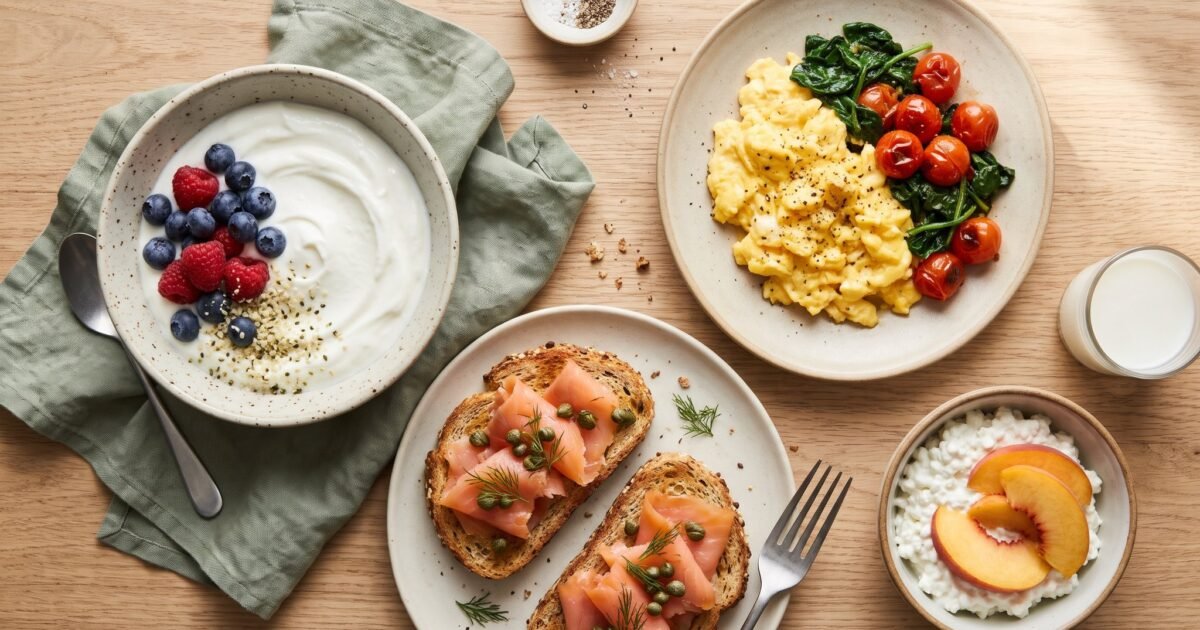
If your usual breakfast is toast and coffee, you’re far from alone, and it’s probably why you’re hungry again by 10. These high protein breakfast ideas give you 15 easy options with roughly 17 to 31 grams of protein each, built from everyday foods like eggs, Greek yogurt, cottage cheese, tofu and leftovers. No protein shakes or powders required.
We’ve listed approximate grams for every option so you can pick what fits your morning, your appetite and your grocery list. The numbers come from USDA FoodData Central, so treat them as close estimates and check your labels, since brands vary.
Key takeaways
- Many adults eat most of their protein at dinner and very little at breakfast. Spreading it out more evenly may help with fullness and muscle upkeep.
- A practical breakfast target for many adults is about 20 to 30 grams of protein, depending on body size, appetite and goals.
- The newest Dietary Guidelines for Americans suggest 1.2 to 1.6 grams of protein per kilogram of body weight per day, adjusted to your calorie needs.
- You don’t need powder. Eggs, Greek yogurt, cottage cheese, tofu, tempeh, fish and leftovers get you there with real food.
- If you have kidney disease or have been told to limit protein, check with your doctor or dietitian before you change your intake.
How much protein should breakfast have?
There’s no single magic number, but there are some useful markers. The Dietary Guidelines for Americans, 2025-2030 tell us to prioritize protein foods at every meal and set a daily goal of 1.2 to 1.6 grams per kilogram of body weight, adjusted for your calorie needs. That’s higher than the long-standing RDA of 0.8 grams per kilogram from the National Academies, which is meant as a minimum to cover basic needs. Harvard’s Nutrition Source puts that RDA another way: just over 7 grams for every 20 pounds of body weight.
Here’s what that looks like for someone who weighs 150 pounds (about 68 kg). The RDA works out to about 54 grams a day. The newer DGA range is about 82 to 109 grams a day. Split across three meals, that’s roughly 27 to 36 grams per meal.
Research on muscle points the same way. A review in Current Opinion in Clinical Nutrition and Metabolic Care suggested about 25 to 30 grams of high-quality protein per meal to support muscle protein synthesis, with responses blunted in older adults when a meal had less than about 20 grams. So a breakfast in the 20 to 30 gram range is a sensible place to aim. If you’re smaller or less hungry in the morning, 15 to 20 grams is still a solid upgrade over the typical 5 to 10.
If you’d like a refresher on how protein fits next to carbs and fat, our guide to macronutrients covers the basics.
Why protein at breakfast may help
Most of us skew our protein late in the day. In a small crossover study published in The Journal of Nutrition, healthy adults ate the same total protein either spread evenly (about 30 grams at each meal) or skewed toward dinner (about 11 grams at breakfast and 63 at dinner). Muscle protein synthesis over 24 hours was about 25% higher with the even pattern. It was only eight people, so it’s a signal rather than a final answer, but it’s a useful nudge to move some protein to the morning.
Fullness is the other piece. In a study of young women who usually skipped breakfast, a 35 gram protein breakfast increased fullness, shifted appetite hormones and reduced evening snacking on high-fat foods compared with skipping, while a 13 gram cereal breakfast did less (Leidy et al., 2013). A broader review in the American Journal of Clinical Nutrition describes the satiety effect of higher-protein meals as modest, so think of protein as a helpful lever rather than a fix.
Protein also slows a meal down a little. Pair it with fiber and some fat and you get a breakfast that tends to feel steadier than a pastry and juice, which is the same idea behind our guide to balancing blood sugar through smart eating.
High protein breakfast ideas with eggs
A large egg has about 6 grams of protein, so eggs are an easy anchor. Add a second protein (cheese, beans, cottage cheese) and you’re into the 20s quickly.
1. Veggie scramble with toast (about 23 g)
Scramble 3 eggs (about 19 g) with spinach, cherry tomatoes and whatever peppers are in the fridge. Serve it with a slice of whole-wheat toast (about 4 g). Want more? Stir in a quarter cup of cottage cheese for another 6 grams and an extra-creamy texture.
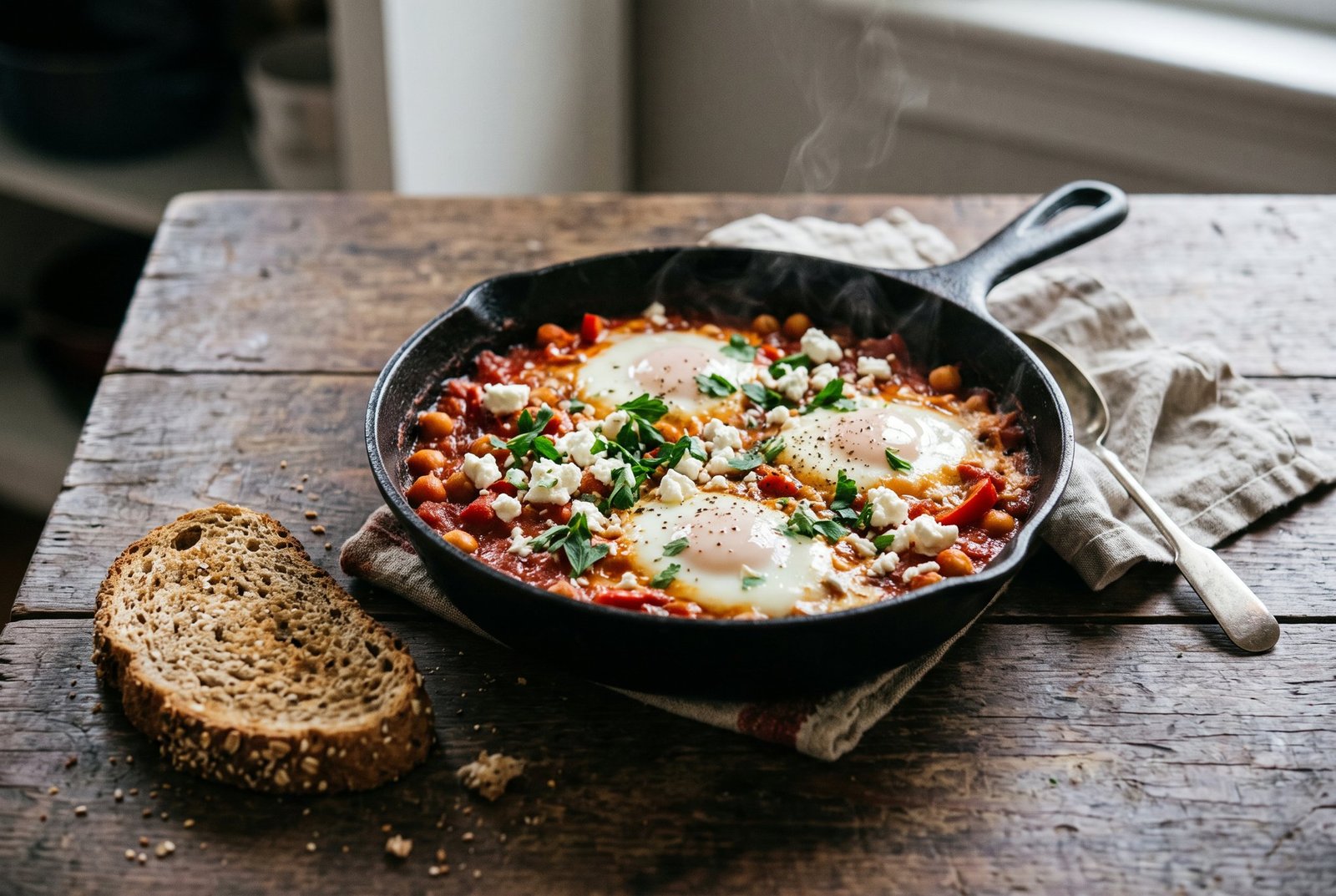
2. Shakshuka with chickpeas and feta (about 24 g)
Simmer a can of crushed tomatoes with garlic, cumin and paprika, add half a cup of chickpeas (about 7 g), then crack in 2 eggs (about 13 g) and cover until set. Finish with an ounce of crumbled feta (about 4 g). It’s a good weekend breakfast and the leftover sauce keeps for a couple of days.
3. Bean and egg breakfast burrito (about 31 g)
Fill a whole-wheat tortilla (usually 4 to 6 g, check the label) with 2 scrambled eggs (about 13 g), half a cup of black beans (about 8 g) and an ounce of cheddar (about 7 g). Add salsa and avocado. Make a batch, wrap them in foil and freeze; they reheat in a few minutes.
4. Make-ahead egg bites (about 20 g per 4 bites)
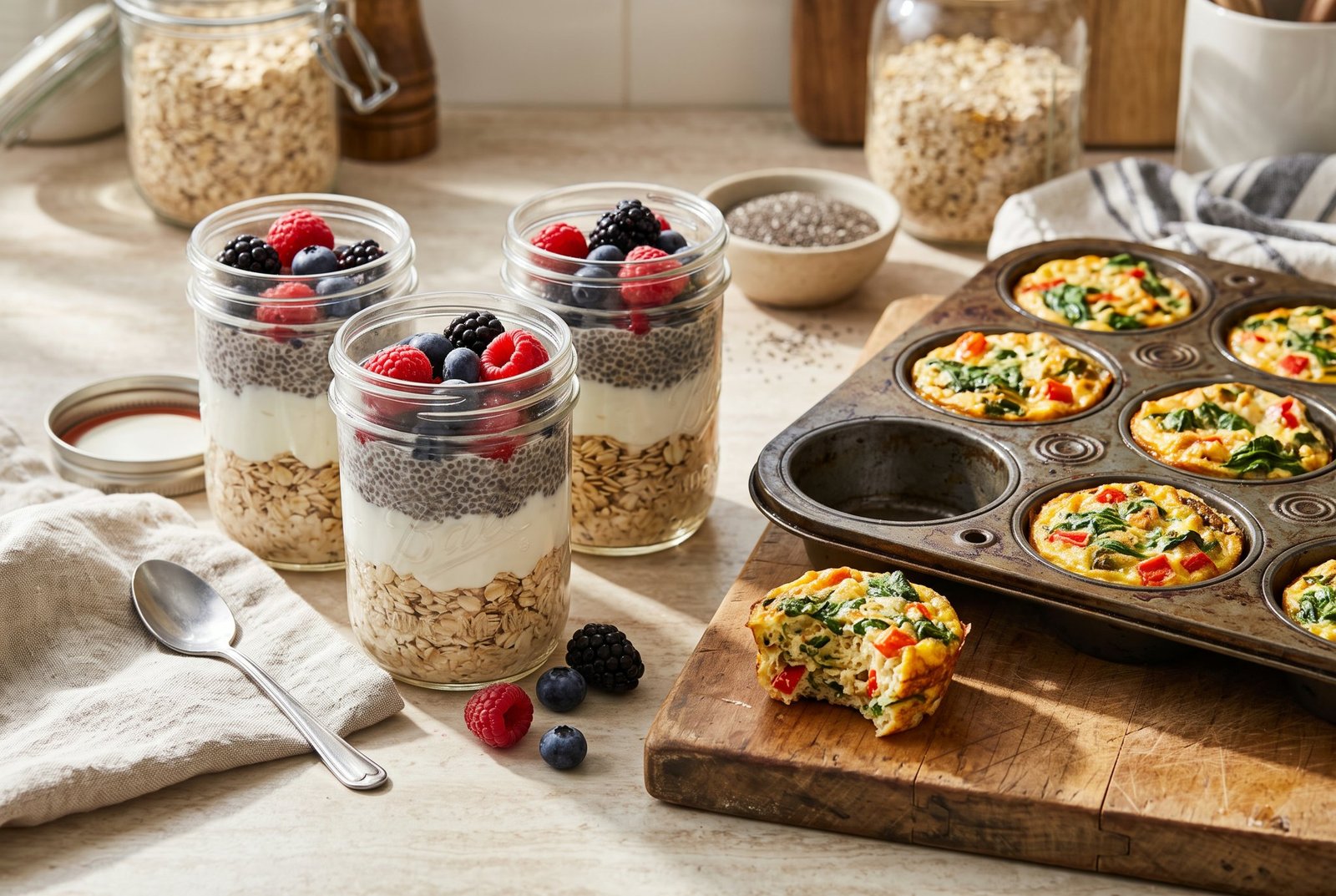
Whisk 6 eggs with 1 cup of cottage cheese, chopped spinach and red pepper, pour into a 12-cup muffin tin and bake at 350°F for about 20 to 25 minutes. Four bites come to about 20 grams. They keep in the fridge for about four days and travel well.
High protein breakfast without eggs
Eggs aren’t for everyone, and you don’t need them. Dairy, fish and leftovers can match or beat an egg breakfast.
5. Greek yogurt bowl with berries and hemp seeds (about 28 g)
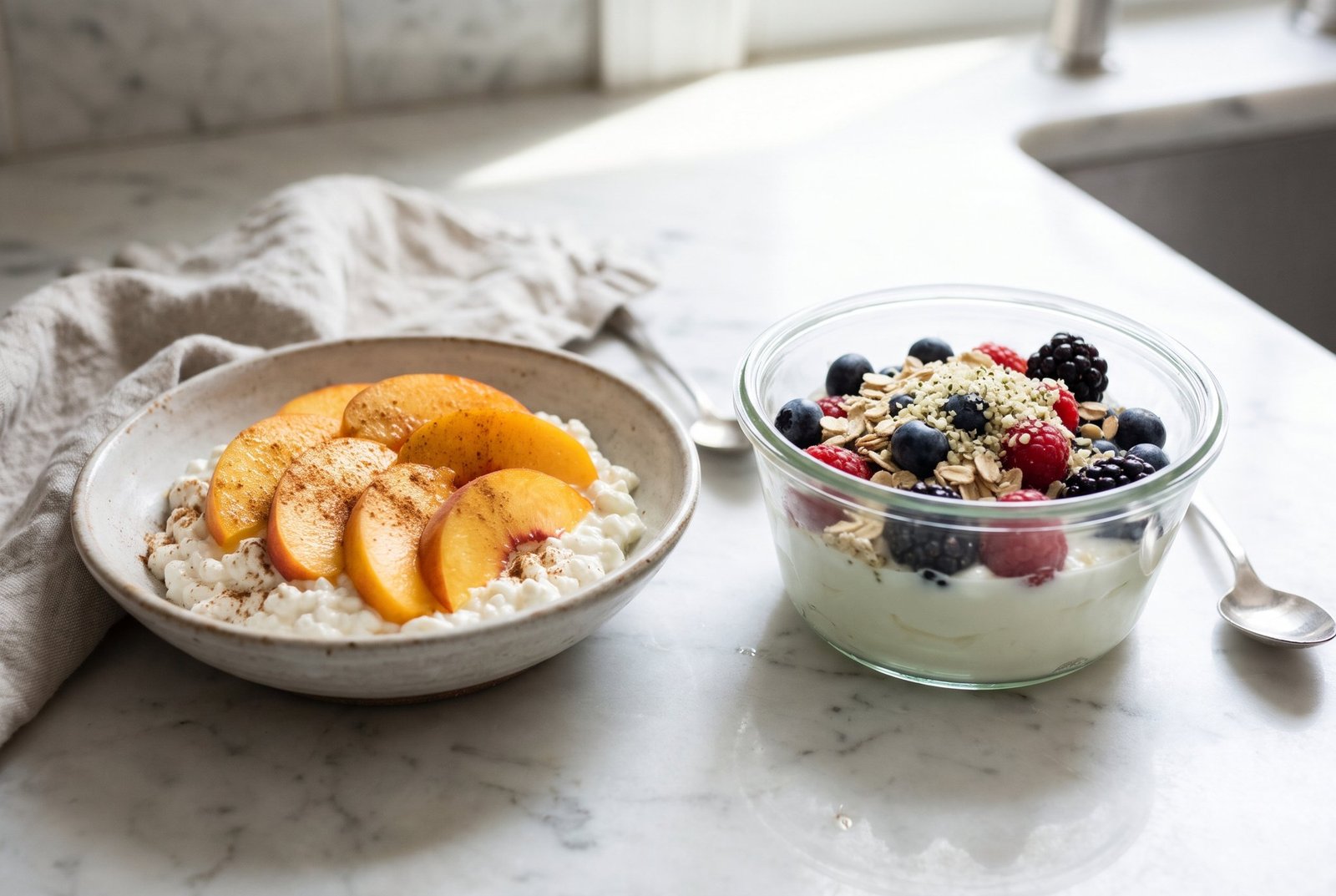
Start with 1 cup of plain Greek yogurt (about 22 g) and top it with berries and 2 tablespoons of hemp seeds (about 6 g). Plain yogurt lets you control the sweetness; a small drizzle of honey or a spoon of nut butter is plenty.
6. Cottage cheese bowl, sweet or savory (about 24 g)
A cup of low-fat cottage cheese has about 24 grams of protein. Go sweet with sliced peaches and cinnamon, or savory with cherry tomatoes, cucumber, olive oil and black pepper. If the texture puts you off, blend it smooth first.
7. Smoked salmon toast (about 24 g)
Two slices of whole-wheat toast (about 8 g) with 3 ounces of smoked salmon (about 16 g), a thin layer of cream cheese, capers and dill. Smoked salmon is salty, so this is a nice option to rotate in rather than eat every day if you watch your sodium.
8. Ricotta toast with berries (about 22 g)
Spread half a cup of part-skim ricotta (about 14 g) over two slices of whole-wheat toast (about 8 g) and top with berries and lemon zest. It feels like a treat and still lands in the low 20s.
9. Peanut butter toast and a glass of milk (about 23 g)
Two slices of whole-wheat toast (about 8 g) with 2 tablespoons of peanut butter (about 7 g), plus a cup of milk or unsweetened soy milk (about 8 g). It’s simple, cheap and fast, which is the point on a busy weekday.
10. Leftover chicken grain bowl (about 30 g)
Who says breakfast has to look like breakfast? Warm up 3 ounces of cooked chicken breast (about 26 g) with half a cup of quinoa (about 4 g), a handful of greens and a spoon of salsa or pesto. Add a fried egg if you want to push it past 35 grams.
High protein vegetarian and vegan breakfasts
Plant proteins work well in the morning too. You may need slightly larger portions or a mix of sources, and our guide to getting more plant-based protein has more ideas for the rest of the day.

11. Tofu scramble with black beans (about 23 to 30 g)
Crumble about a third of a block of firm tofu (around 130 g, roughly 15 to 22 g depending on the brand) into a hot pan with turmeric, garlic, spinach and peppers, then fold in half a cup of black beans (about 8 g). Nutritional yeast adds a cheesy flavor and a little extra protein.
12. Tempeh breakfast hash (about 17 to 23 g)
Brown 3 ounces of cubed tempeh (about 17 g) with diced potatoes, onion and smoked paprika. It’s fully vegan as is; top it with a fried egg if you eat eggs for about 6 grams more.
13. Chia pudding with soy milk and hemp (about 18 g)
Stir 2 tablespoons of chia seeds (about 4 g) and 2 tablespoons of hemp seeds (about 6 g) into a cup of soy milk (about 8 g) the night before. In the morning, add fruit. Soy milk has far more protein than almond or oat milk, so the swap matters here. If you eat dairy, a half cup of Greek yogurt on top takes it near 30 grams.
Make-ahead and on-the-go options
The best high-protein breakfast is the one you’ll eat on a hectic Tuesday. A little prep on Sunday helps, and our meal prep strategies make the batch cooking easier.
14. Protein overnight oats, no powder (about 22 g)
In a jar, combine half a cup of rolled oats (about 5 g), half a cup of milk (about 4 g), half a cup of plain Greek yogurt (about 11 g) and a tablespoon of chia seeds (about 2 g). Leave it in the fridge overnight and add fruit in the morning. You get protein and fiber in one jar you can grab on the way out.
15. Savory oats with an egg (about 23 g)
Cook half a cup of oats in a cup of milk (about 13 g together), season with salt, pepper and a pinch of garlic powder, then top with a soft fried egg (about 6 g) and 2 tablespoons of grated Parmesan (about 4 g). If sweet oatmeal leaves you hungry by mid-morning, this version is worth a try.
Short on time and out of options? Two hard-boiled eggs and a cheese stick, or a single-serve Greek yogurt with a handful of nuts, will get you 15 to 20 grams in a pinch. Our list of healthy snack ideas has more grab-and-go protein picks.
Quick comparison: protein per option
| Breakfast | Protein (approx. g) | Egg-free? | Make-ahead? |
|---|---|---|---|
| 1. Veggie scramble with toast | 23 | No | No |
| 2. Shakshuka with chickpeas and feta | 24 | No | Sauce only |
| 3. Bean and egg breakfast burrito | 31 | No | Yes (freezer) |
| 4. Make-ahead egg bites (4) | 20 | No | Yes |
| 5. Greek yogurt bowl with hemp seeds | 28 | Yes | No |
| 6. Cottage cheese bowl | 24 | Yes | No |
| 7. Smoked salmon toast | 24 | Yes | No |
| 8. Ricotta toast with berries | 22 | Yes | No |
| 9. Peanut butter toast and milk | 23 | Yes | No |
| 10. Leftover chicken grain bowl | 30 | Yes | Yes |
| 11. Tofu scramble with black beans | 23 to 30 | Yes | No |
| 12. Tempeh breakfast hash | 17 (23 with egg) | Yes | Yes |
| 13. Soy milk chia pudding with hemp | 18 | Yes | Yes |
| 14. Overnight oats with Greek yogurt | 22 | Yes | Yes |
| 15. Savory oats with an egg | 23 | No | No |
How to build your own high-protein breakfast
Once you know the pattern, you don’t need recipes. Try this simple formula:
- Pick a protein anchor (15 to 25 g): eggs, Greek yogurt, cottage cheese, tofu, tempeh, fish or leftover chicken.
- Add a fiber source: oats, whole-grain toast, beans, berries or vegetables.
- Add a little fat for staying power: avocado, nuts, seeds, olive oil or cheese.
- Top up if needed: hemp seeds, a glass of milk or soy milk, or a spoon of cottage cheese stirred in.
If you strength train, a protein-forward breakfast is an easy way to support recovery; our guides to strength training for women over 40 and workout recovery go deeper. And a good breakfast pairs nicely with the other morning habits for all-day energy.
Who should check with a doctor first
For most healthy adults, a protein-rich breakfast is a low-risk change. A few groups should get personal advice before increasing protein:
- People with chronic kidney disease. The NIDDK notes that some people with CKD need to moderate protein and should work with a dietitian to get the balance right.
- Anyone told by a clinician to follow a specific protein, sodium or calorie target.
- People who are pregnant, nursing or managing a health condition, since needs can differ.
- Anyone with a food allergy to eggs, milk, soy, fish or peanuts, which covers a lot of this list. Swap freely.
FAQ
How much protein should I eat for breakfast?
For many adults, about 20 to 30 grams is a practical target. It depends on your size, appetite and goals. The 2025-2030 Dietary Guidelines suggest 1.2 to 1.6 grams per kilogram per day in total, so dividing your daily goal across meals is a simple way to find your number.
Can I get enough protein at breakfast without eggs or protein powder?
Yes. A cup of Greek yogurt (about 22 g) or cottage cheese (about 24 g) gets you most of the way on its own. Tofu, tempeh, smoked salmon, ricotta, soy milk and leftovers all work too.
Is a high-protein breakfast good for weight loss?
It may help some people feel fuller and snack less later, but the effect in studies is modest and depends on the rest of your day. Total calories, food quality, sleep and consistency still matter most. Our realistic guide on how to lose 25 pounds covers the bigger picture.
What’s the best high-protein breakfast on the go?
Overnight oats with Greek yogurt, make-ahead egg bites, a frozen breakfast burrito or a single-serve cottage cheese cup. Prep them on the weekend and they’re ready when you are.
Is too much protein at breakfast a problem?
For healthy adults, a 30 to 40 gram breakfast isn’t a concern. Your body uses protein from meals across the day, so you don’t need to cap it at a strict number. If you have kidney disease or another condition, follow your care team’s guidance.
Bottom Line
A high-protein breakfast doesn’t need a blender or a tub of powder. Aim for roughly 20 to 30 grams from foods you already like, rotate a few favorites from this list, and prep one or two on the weekend so busy mornings take care of themselves. Small, steady changes like this tend to stick far better than a dramatic overhaul.
Sources
- U.S. Department of Agriculture and U.S. Department of Health and Human Services. Dietary Guidelines for Americans, 2025-2030.
- Institute of Medicine. Dietary Reference Intakes for Energy, Carbohydrate, Fiber, Fat, Fatty Acids, Cholesterol, Protein, and Amino Acids. National Academies Press. 2005.
- Harvard T.H. Chan School of Public Health. The Nutrition Source: Protein.
- Paddon-Jones D, Rasmussen BB. Dietary protein recommendations and the prevention of sarcopenia. Current Opinion in Clinical Nutrition and Metabolic Care. 2009.
- Mamerow MM, et al. Dietary protein distribution positively influences 24-h muscle protein synthesis in healthy adults. The Journal of Nutrition. 2014.
- Leidy HJ, et al. Beneficial effects of a higher-protein breakfast on the appetitive, hormonal, and neural signals controlling energy intake regulation in overweight/obese, “breakfast-skipping,” late-adolescent girls. American Journal of Clinical Nutrition. 2013.
- Leidy HJ, et al. The role of protein in weight loss and maintenance. American Journal of Clinical Nutrition. 2015.
- U.S. Department of Agriculture, Agricultural Research Service. FoodData Central (SR Legacy entries for eggs, Greek yogurt, cottage cheese, tofu, tempeh, smoked salmon, oats, milk, soy milk, chia and hemp seeds, beans, chickpeas, ricotta, feta, peanut butter, chicken breast, quinoa and whole-wheat bread).
- National Institute of Diabetes and Digestive and Kidney Diseases. Eating right for chronic kidney disease.
Want more practical, evidence-based guidance like this? Join the newsletter for new guides as soon as they’re published.
This article is for general education and isn’t medical advice. Talk with a doctor or registered dietitian about your own needs, especially if you’re pregnant, nursing, taking medication, or managing a condition such as kidney disease, diabetes or a food allergy.



Leave a Reply