
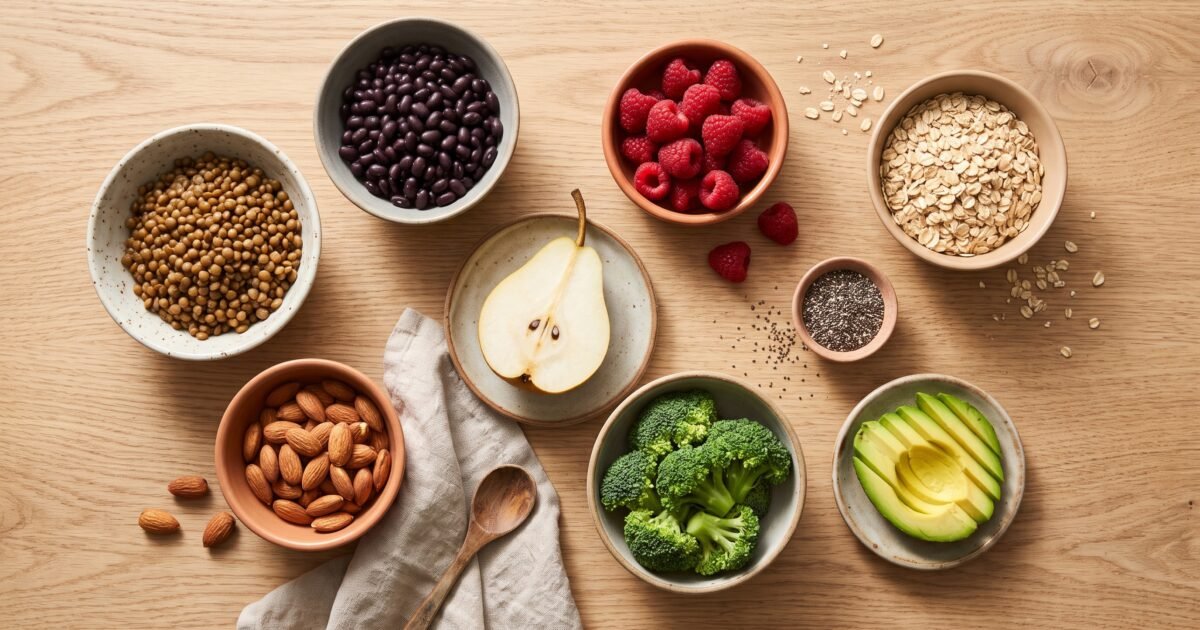
Fibermaxxing is the social media name for a simple idea: eat a lot more fiber, on purpose, and track it. Videos show chia puddings, bean-heavy bowls and daily totals of 40, 50 or even 60 grams. The goal behind the trend makes sense, since most of us fall well short on fiber. The execution is where people get into trouble, usually in the form of gas, cramps and a belly that feels like a balloon by 3 p.m.
We like the spirit of fibermaxxing. The smarter version just looks slower and a lot less dramatic than what’s on your feed.
Key takeaways: Most adults need roughly 22 to 34 grams of fiber a day, depending on age and sex. Very few of us get there. Adding about 5 grams a week, drinking more fluids and mixing fiber types may help you close the gap with far less gas and discomfort.
What is fibermaxxing?
The word borrows from internet “maxxing” culture, where people push one habit as far as it will go. With fiber, that means high-fiber foods at every meal, seeds or powders in drinks, and a posted daily gram count.
There’s a real problem under the trend. The Dietary Guidelines for Americans, 2020-2025 report that more than 90% of women and 97% of men don’t meet recommended fiber intakes (Dietary Guidelines for Americans). Harvard’s Nutrition Source puts the typical American intake at about 15 grams a day (Harvard T.H. Chan School of Public Health). So for most people, “more fiber” is good advice.
Where fibermaxxing can go sideways is the “max” part. Harvard Health notes that going far beyond recommended amounts hasn’t been shown to bring extra benefit, and that boosting fiber carefully works better than a sudden jump (Harvard Health Publishing). A Cleveland Clinic dietitian made a similar point on the Butts & Guts podcast, cautioning against shoving it all in at once (Cleveland Clinic).
How much fiber do you need?
The common benchmark is 14 grams of fiber for every 1,000 calories you eat. That figure comes from the Institute of Medicine’s Dietary Reference Intakes, and it was set at levels linked with lower risk of coronary heart disease (National Academies). Translated into daily targets, the 2020-2025 guidelines suggest:
- Women 19 to 30: about 28 grams
- Women 31 to 50: about 25 grams
- Women 51 and older: about 22 grams
- Men 19 to 30: about 34 grams
- Men 31 to 50: about 31 grams
- Men 51 and older: about 28 grams
Cleveland Clinic lays out the same numbers by age and sex (Cleveland Clinic). The newer 2025-2030 guidelines keep the emphasis on fiber-rich whole grains and fewer refined carbs, though they don’t list a new gram target (Dietary Guidelines for Americans, 2025-2030).
Why bother hitting the number? A large 2019 analysis in The Lancet, which pooled 185 prospective studies and 58 clinical trials, found that people who ate the most fiber had a 15% to 30% lower risk of dying from any cause and of developing heart disease, stroke, type 2 diabetes and colorectal cancer than people who ate the least. The biggest risk reductions showed up at about 25 to 29 grams a day (Reynolds et al., 2019). These are observational links, so they can’t prove fiber alone did the work.
Fiber is a carbohydrate your body can’t digest. For how it fits next to protein and fat, see our guide to what macronutrients are.
Soluble vs. insoluble fiber
Fiber comes in two broad types, and most plant foods contain some of each.
Soluble fiber
Soluble fiber dissolves in water and forms a gel. It may help lower LDL cholesterol and slow the rise in blood sugar after a meal. You’ll find it in oats, chia seeds, beans, lentils, apples and blueberries (Harvard T.H. Chan School of Public Health). That slower digestion is one reason fiber shows up so often in advice on balancing blood sugar through smart eating.
Insoluble fiber
Insoluble fiber doesn’t dissolve. It adds bulk and helps food move along, which is why it’s tied to regularity. Wheat bran, whole wheat bread, brown rice, quinoa, leafy greens, nuts and fruit skins are good sources.
Fermentable fiber and your gut bacteria
Some fibers are fermentable, meaning your gut bacteria break them down and make short-chain fatty acids that help nourish the lining of your colon (Makki et al., 2018). These are the fibers people mean when they talk about prebiotics. Our explainer on prebiotics vs. probiotics covers how they differ, and our broader guide to gut health and nutrition looks at how your whole diet shapes your microbiome.
One detail worth knowing: fermentation produces gas. That’s normal, and it’s also a big reason a fast jump in fiber can leave you bloated.
Why fiber bloating happens
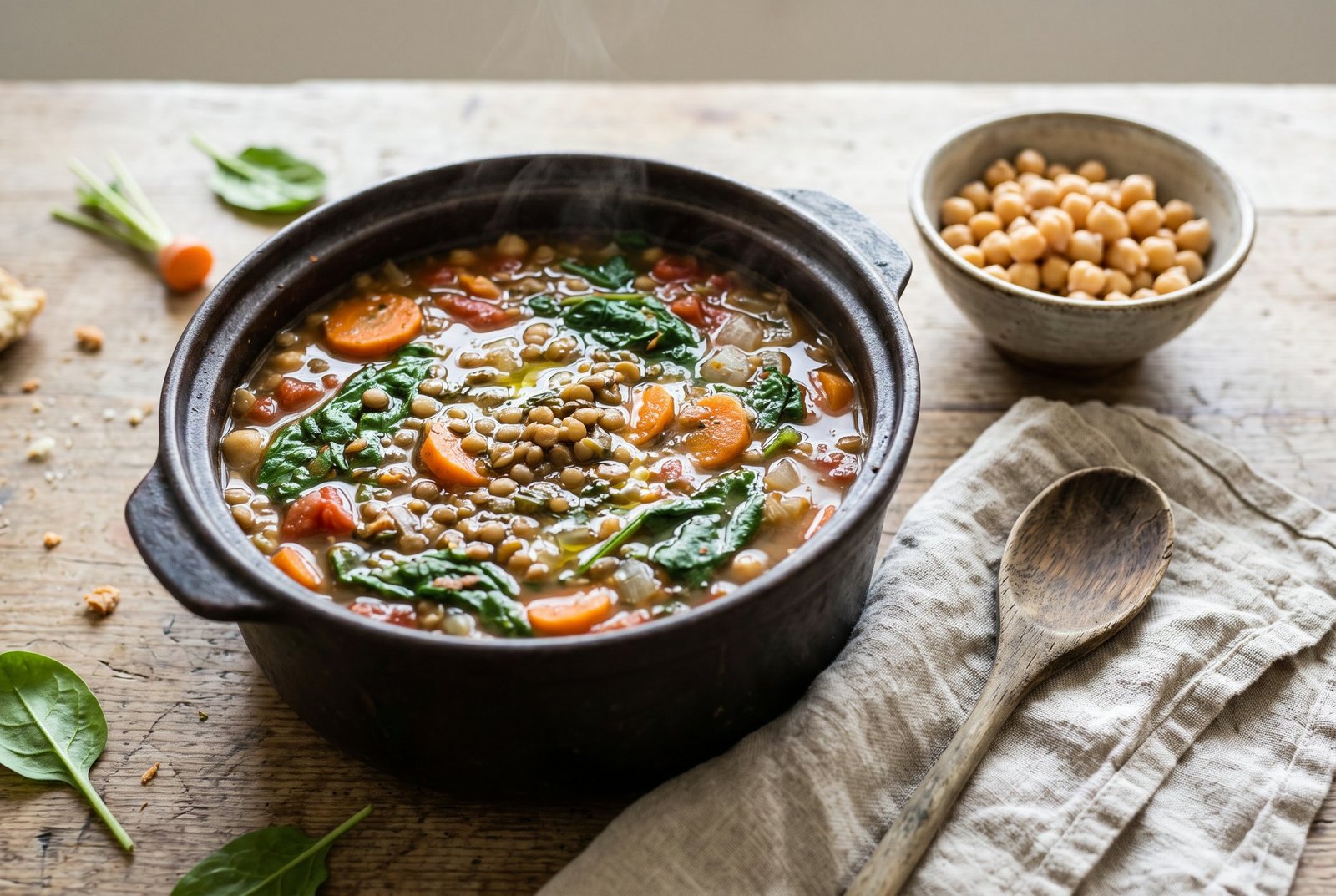
Fiber bloating usually comes down to speed. Your gut bacteria adjust to what you feed them. When you go from 15 grams to 45 grams overnight, they get a sudden flood of fermentable material, and gas is the byproduct.
The National Institute of Diabetes and Digestive and Kidney Diseases lists several fiber-rich foods that commonly cause gas, including beans, lentils, peas, broccoli, cauliflower, kale, apples, pears and whole wheat (NIDDK). You don’t need to avoid these healthy foods. Just ease into them.
A few other things can add to it:
- Fiber powders, bars and “high-fiber” snacks that pack 10 grams or more into one serving
- Sugar alcohols such as sorbitol, xylitol and maltitol, which often appear in fiber bars
- Not drinking enough fluid, since fiber pulls water into the gut
- Eating large meals quickly, which means swallowing more air
If you have irritable bowel syndrome, certain fermentable carbs called FODMAPs can be a bigger trigger. Monash University, which developed the low FODMAP diet, notes that it’s best followed with a dietitian and isn’t meant to be a forever diet (Monash University).
How to do fibermaxxing without the bloat
Think of this as fibermaxxing on a slower schedule. You still get there, just over a few weeks.
Add about 5 grams a week
Cleveland Clinic suggests adding no more than 5 grams of fiber per week until you reach your goal (Cleveland Clinic). NIDDK’s guidance for people with IBS is even gentler, at 2 to 3 grams a day (NIDDK). In practice, 5 grams is about one pear, or a half cup of black beans tossed into a salad. Add one of those this week, then another next week.
Spread it across the day
A 40-gram smoothie at breakfast is a lot for your gut to handle at once. Aim for roughly 8 to 10 grams per meal and a few more from a snack. Harvard Health recommends spreading fiber through the day for this reason.
Drink more water as you go
Fiber works best with fluid. Without it, more fiber can mean harder stools instead of easier ones. There’s no single magic number for everyone, so our guide on how much water you should drink a day is a good place to start. A simple habit: have a glass of water with every high-fiber meal.

Favor whole foods over powders
Whole foods give you a mix of soluble and insoluble fiber, plus vitamins, minerals and plant compounds. Supplements can help some people, and a Cleveland Clinic dietitian points to research on psyllium for lowering LDL cholesterol, but powders are easy to overdo. If you use one, start with a small dose and talk with your doctor if you take medications, since fiber supplements can affect how some drugs are absorbed.
Eat slowly and rinse your beans
Rinsing canned beans and cooking vegetables instead of eating them raw may make the transition easier. NIDDK also suggests eating slowly and sitting down to eat, which cuts down on swallowed air.
Don’t crowd out protein and fat
Fiber is filling. If every plate becomes beans and bran, you can end up short on protein, calcium or healthy fats.
High fiber breakfast ideas
Breakfast is the easiest meal to upgrade, which may be why “high fiber breakfast” is such a popular search. A few options, with rough fiber counts:
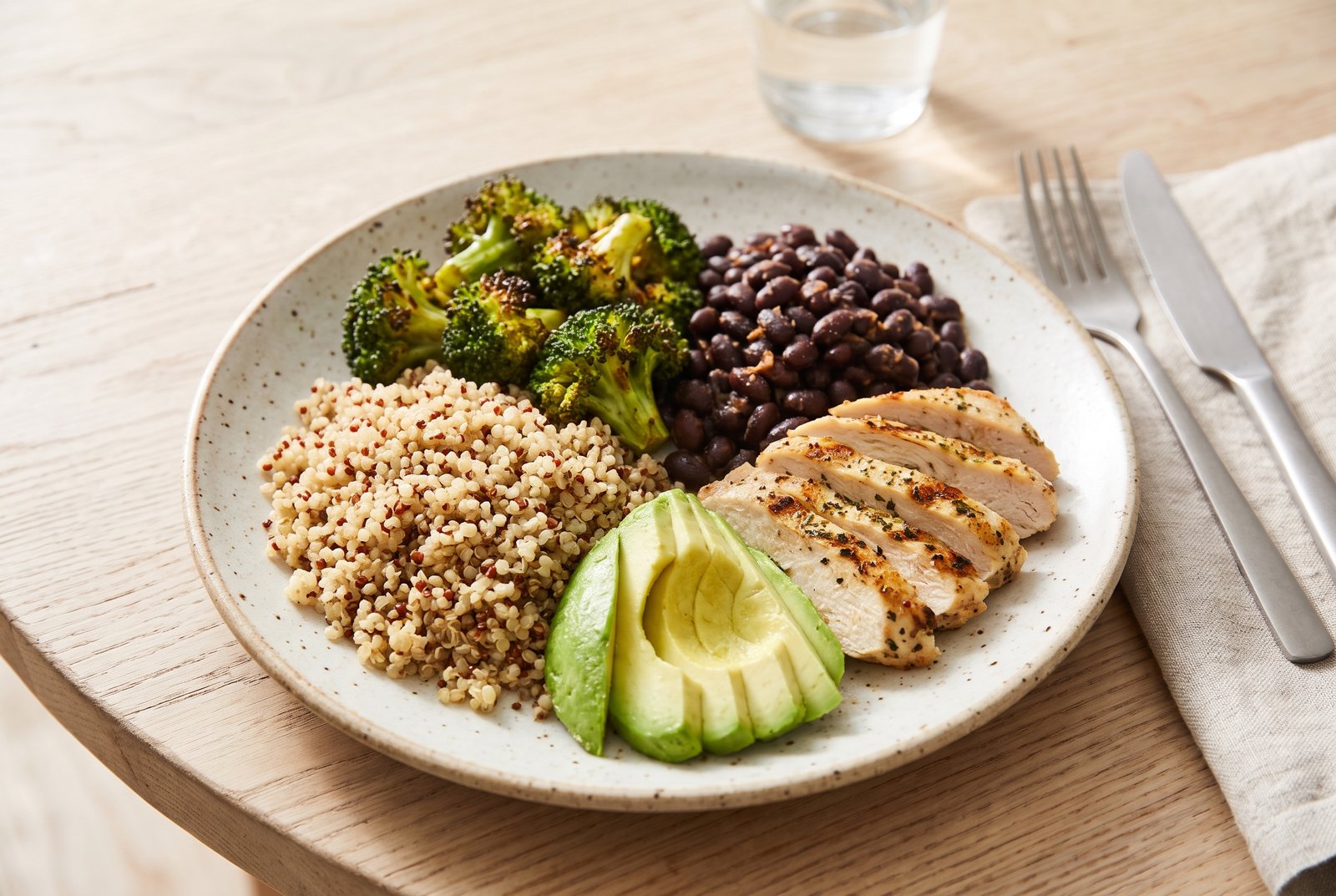
- Oats with berries and chia: A half cup of dry rolled oats (about 4 grams), a cup of raspberries (about 8 grams) and a tablespoon of chia seeds (about 4 grams) gets you roughly 16 grams.
- Avocado toast on whole grain bread: Two slices of whole grain bread (about 4 to 6 grams) plus half an avocado (about 5 grams) lands near 10 grams.
- Chia pudding: Two tablespoons of chia seeds have roughly 8 to 10 grams. Soak them overnight in milk or a soy alternative and top with sliced pear.
- Greek yogurt bowl: Plain yogurt brings protein, then add 2 tablespoons of ground flaxseed (about 4 grams), a sliced apple with the skin (about 4 grams) and a few walnuts.
- Breakfast burrito: A whole wheat tortilla with eggs, a half cup of black beans (about 7 to 8 grams) and salsa.
Fiber counts vary by brand and serving size, so check the label. Harvard Health suggests looking for packaged foods with at least 5 grams of fiber per serving.
Easy high-fiber swaps for the rest of the day
Small swaps add up:
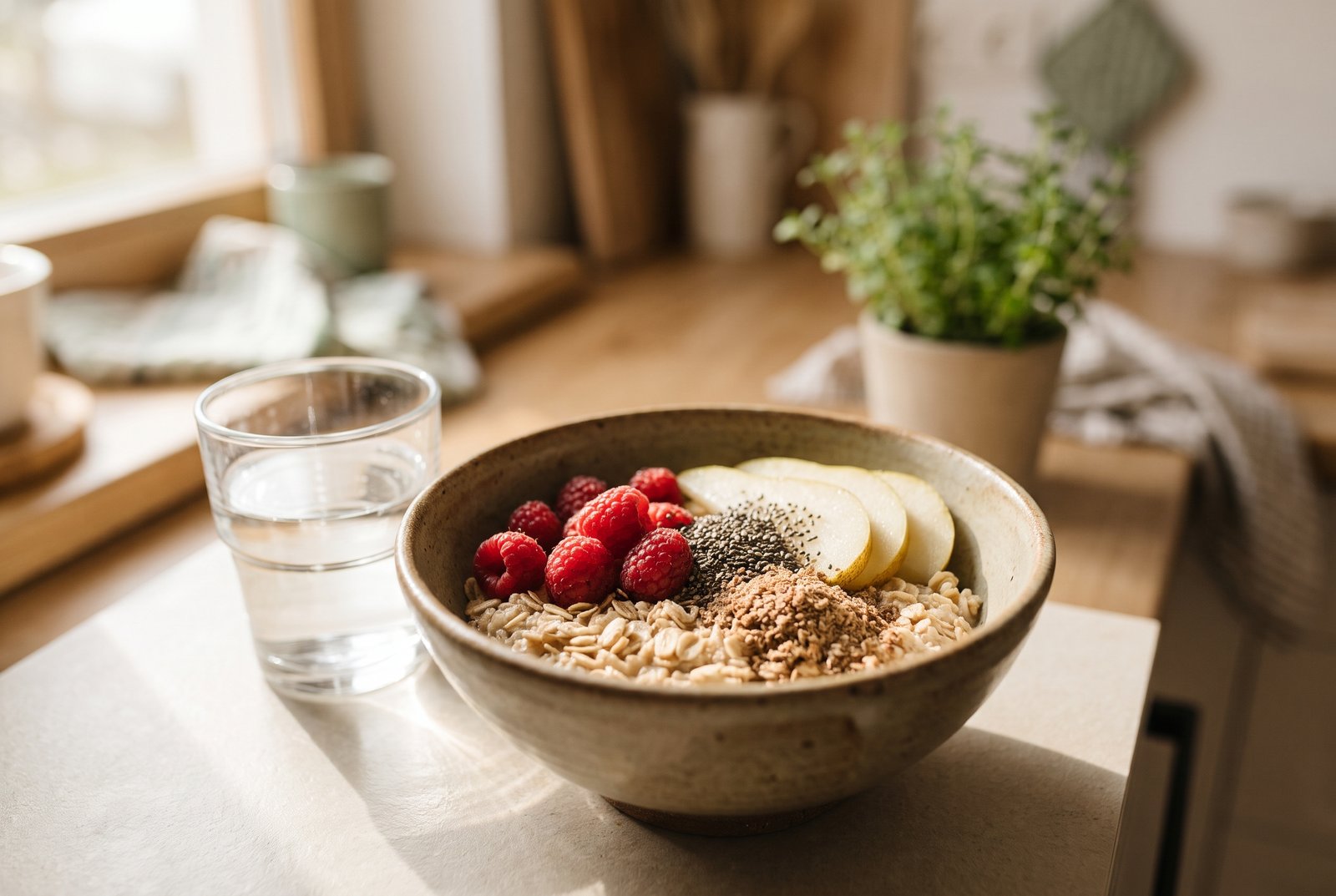
- Swap white rice for brown rice, farro or quinoa.
- Add a half cup of lentils or chickpeas to soups, salads and pasta sauce.
- Keep the skins on apples, pears and potatoes.
- Snack on an ounce of almonds (about 3.5 grams) or air-popped popcorn.
- Fill half your plate with vegetables like broccoli, Brussels sprouts or carrots.
For more snack ideas that pull their weight, browse our list of healthy snack ideas. Many foods on our anti-inflammatory foods list are high in fiber too.
Variety may matter as much as volume. In a small 2021 Stanford trial, a high-fiber diet raised the gut microbiome’s capacity to break down fiber, while the diversity of gut bacteria stayed fairly stable over the study period (Wastyk et al., 2021). It’s early research with only 18 people per group, but it’s a reminder that results can take time and vary from person to person.
Who should be careful with fibermaxxing
A high-fiber diet suits most people, but a few groups should check with a doctor or dietitian before ramping up:
- People with IBS, Crohn’s disease or ulcerative colitis, especially during a flare
- Anyone with a history of bowel obstruction or narrowing
- People with diverticulitis that’s currently active
- People taking medications that fiber supplements could affect
- Anyone with unexplained changes in bowel habits, blood in the stool or ongoing pain
FAQ
Is fibermaxxing healthy?
For most people, eating more fiber is a healthy move, since very few adults meet the recommended amount. The risk is in going too far, too fast. Reaching about 25 to 38 grams a day gradually is a sensible goal for most adults.
How much fiber is too much?
There’s no official upper limit, but Harvard Health notes there’s no proven benefit from going far beyond recommended amounts. If you’re having gas, cramps, loose stools or constipation, that’s a sign to slow down.
How long does fiber bloating last?
For many people, it eases within a few weeks as gut bacteria adjust, especially if you go slowly and drink enough water. If it doesn’t improve, or comes with pain, talk with your doctor.
What is a good high fiber breakfast?
Oatmeal with berries and chia seeds is one of the easiest. It can land around 15 grams of fiber.
Bottom Line
Fibermaxxing gets one thing right: most of us need more fiber. The healthiest way to get there is slower than the trend suggests. Add about 5 grams a week, spread it across your meals, drink plenty of water and lean on whole foods like oats, beans, berries and vegetables. Give your gut a few weeks to adjust, and you’ll likely end up eating more fiber with a lot less bloating.
Sources
- U.S. Department of Agriculture and U.S. Department of Health and Human Services. Dietary Guidelines for Americans, 2020-2025.
- U.S. Department of Agriculture and U.S. Department of Health and Human Services. Dietary Guidelines for Americans, 2025-2030.
- Institute of Medicine. Dietary Reference Intakes for Energy, Carbohydrate, Fiber, Fat, Fatty Acids, Cholesterol, Protein, and Amino Acids. National Academies Press.
- Reynolds A, et al. Carbohydrate quality and human health: a series of systematic reviews and meta-analyses. The Lancet. 2019.
- Harvard T.H. Chan School of Public Health. The Nutrition Source: Fiber.
- Harvard Health Publishing. Are you eating too much fiber? 2026.
- Cleveland Clinic. How much fiber do you need per day?
- Cleveland Clinic Butts & Guts podcast. Fibermaxxing: the truth about fiber, your gut microbiome and digestive health.
- Makki K, et al. The impact of dietary fiber on gut microbiota in host health and disease. Cell Host & Microbe. 2018.
- Wastyk HC, et al. Gut-microbiota-targeted diets modulate human immune status. Cell. 2021.
- National Institute of Diabetes and Digestive and Kidney Diseases. Eating, diet, and nutrition for gas in the digestive tract.
- National Institute of Diabetes and Digestive and Kidney Diseases. Eating, diet, and nutrition for irritable bowel syndrome.
- Monash University. About FODMAPs and IBS.
Want more practical, evidence-based guidance like this? Join the newsletter for new guides as soon as they’re published.
This article is for general education and isn’t medical advice. Talk with a doctor or other qualified healthcare professional about your own health, especially if you’re pregnant, nursing, taking medication, or managing a condition such as IBS, Crohn’s disease, ulcerative colitis or diverticulitis.



Leave a Reply