
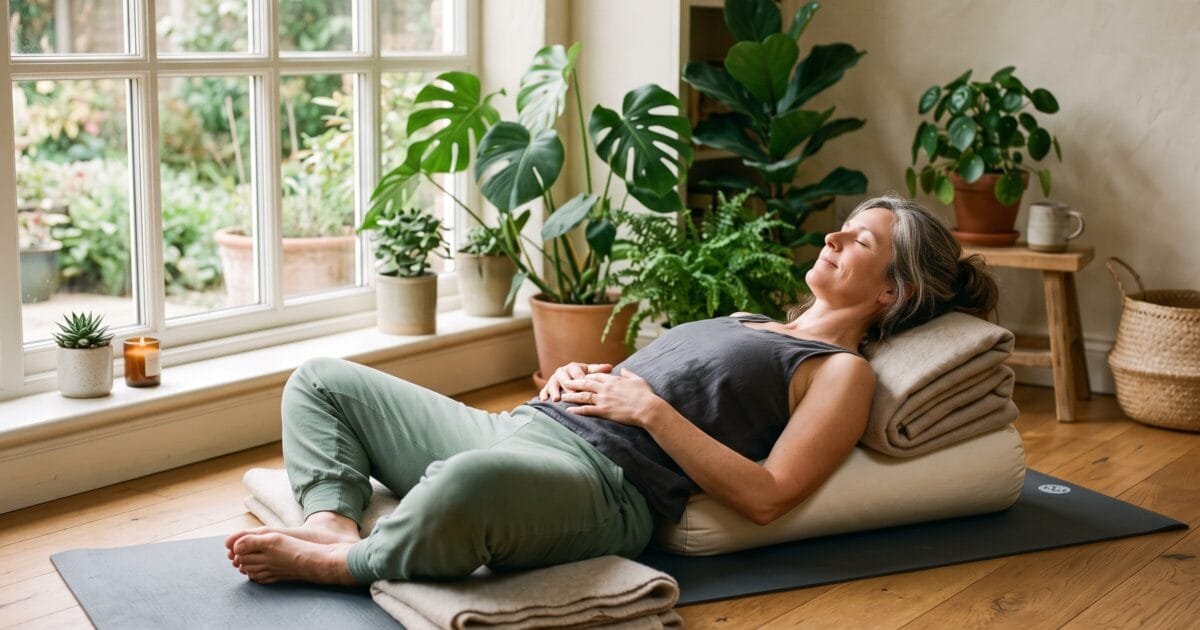
Hi, I’m Sophia. If you’ve noticed that the yoga practice that used to leave you calm now sometimes leaves you overheated, wired, or oddly achy, you’re not imagining it — perimenopause changes how your body responds to exercise, and that includes yoga. The good news is that yoga doesn’t stop working during this transition. It just works differently, and a few adjustments make it one of the more genuinely useful tools for this stretch of life rather than just a nice-to-have.
This is wellness education, not medical advice — think of it as a knowledgeable friend walking you through what the research actually shows, not a replacement for your doctor.
What the Research Actually Shows
It’s worth being honest about the evidence here, because “yoga helps with everything” claims are exactly the kind of thing worth being skeptical of. A systematic review and meta-analysis of 13 randomized controlled trials covering over 1,300 women found that yoga reduced total menopausal symptoms — psychological, somatic, vasomotor, and urogenital — compared with no treatment (NCCIH). When yoga was compared directly against other forms of exercise, the clearest advantage showed up specifically for vasomotor symptoms — hot flashes and night sweats — rather than across the board. That’s a more honest picture than “yoga fixes menopause,” and it’s still a genuinely useful one.
Both Mayo Clinic and Cleveland Clinic list yoga and breathing-based relaxation techniques among the reasonable non-hormonal approaches for managing hot flashes and the stress that tends to ride alongside this transition. Neither positions it as a replacement for hormone therapy when that’s medically appropriate — it’s a complementary tool, and I want to be upfront about that distinction rather than overselling a yoga mat.
How It Actually Helps, Symptom by Symptom
Hot flashes and night sweats
This is where the evidence is strongest. Regular practice — generally three or more sessions a week for eight or more weeks — has been associated with meaningful reductions in hot flash frequency in perimenopausal and menopausal women. Slow, controlled breathing in particular seems to matter here, which is part of why I pair yoga with practices like box breathing rather than treating them as separate tools.
Sleep disruption
A 2022 randomized controlled trial of women ages 45 to 60 found that 75 minutes of yoga, three times a week for 20 weeks, meaningfully improved sleep quality alongside other menopause symptoms. That’s a real time commitment, not a five-minute fix — which is useful to know going in so you don’t judge the practice after one session.
Mood, stress, and joint aches
Yoga’s effect on the nervous system — shifting activity toward the parasympathetic, “rest and digest” state — is the same mechanism behind its benefit for anxiety and stress generally, and it shows up clearly in the menopause research too, alongside modest improvements in the joint stiffness many women notice more in this stage. If stress is the bigger driver for you day to day, my guide to lowering cortisol naturally covers the broader picture beyond the mat.
A Simple Sequence for This Stage
I already have a full library of restorative yoga poses if you want the complete supported-hold approach. Here I want to highlight a shorter sequence with a few adjustments that matter specifically for hot flashes, joint aches, and a nervous system that may run hotter and more reactive than it used to.
- Cooling breath before you start (2–3 minutes) — Sit comfortably and inhale slowly through pursed lips or a curled tongue if you can do it, exhale through the nose. This is a good pre-practice reset if you’re already warm or mid-flash — skip the poses entirely and just do this if that’s all you have energy for.
- Seated Cat-Cow (5–8 rounds) — Sitting cross-legged or in a chair, hands on knees, arch and round your spine slowly with your breath. Gentler on aching joints than the tabletop version, and a good way to check in with where you’re holding tension today.
- Supported Reclining Bound Angle (5–7 minutes) — Lie back over a bolster or stacked pillows, soles of the feet together, knees supported by blocks or cushions. Opens the chest for easier breathing and takes pressure off the hips without any active stretching.
- Gentle Supine Twist, both sides (3–4 minutes each) — Knees fall to one side, arms open in a T, supported underneath by a pillow so the lower back doesn’t strain. A mild, joint-friendly way to relieve the stiffness many women notice more in perimenopause.
- Legs-Up-the-Wall (7–10 minutes) — A favorite for a reason: it’s calming, easy on tired joints, and a good option even mid-flash once the heat has passed, since it doesn’t add exertion.
- Savasana with a cool cloth (5–10 minutes) — Lie flat, arms and legs relaxed. A cool, damp washcloth over the forehead or back of the neck can make this more comfortable if you’re prone to overheating.
Keep the room cool if you can, wear breathable layers you can shed mid-practice, and don’t force any pose through joint pain — mild stretch sensation is fine, sharp pain is your cue to back off.
How Often You Actually Need to Practice
Based on the research above, consistency matters more than intensity: three sessions a week for at least eight weeks is the pattern most associated with real symptom change, and the sleep-focused trial used 20 weeks. That’s a longer runway than most wellness content admits. A single session can still help you feel calmer that day — but if you’re trying it specifically for hot flashes or sleep, give it two months before deciding whether it’s working for you.
What Yoga Won’t Do
I’d rather be honest than sell you on more than the evidence supports. Yoga is a complementary tool, not a substitute for medical treatment — it won’t correct significantly low estrogen, protect bone density the way strength training does, or replace hormone therapy when that’s the right call for you. For the fuller picture on what’s happening hormonally and the full range of options, my guides to perimenopause symptoms and menopause symptoms cover the lifestyle, medical, and supplement side in more depth. If bone health is on your mind for this stage, strength training after 40 is the piece yoga can’t substitute for.
Who Should Be Cautious
- If you have osteoporosis or significant bone density loss, avoid deep forward folds or spinal twists without guidance from a doctor or physical therapist — some poses carry a real fracture risk with fragile bones.
- If hot flashes are severe or disrupting your life, or if you’re experiencing symptoms that feel sudden rather than gradual, that’s worth a doctor conversation rather than managing with yoga alone.
- If you have a cardiovascular condition, check with your doctor before starting any new exercise routine, including yoga.
- None of this should cause sharp pain. Gentle stretch is fine; pain means back off.
Frequently Asked Questions
Can yoga really help with hot flashes?
The evidence points that way, particularly with regular practice of three or more sessions a week for eight or more weeks. It’s not a guarantee for every woman, and it works best alongside — not instead of — other strategies like a cool sleeping environment and, where appropriate, medical treatment.
Is yoga enough on its own to manage perimenopause symptoms?
For some women, yes, especially for stress, mood, and mild hot flashes. For others — particularly with significant bone density concerns, cardiovascular risk factors, or severe symptoms — yoga is a helpful piece of a bigger picture that should also include strength training and a conversation with your doctor about the full range of options, including hormone therapy.
What type of yoga is best for perimenopause?
Gentler, slower styles — restorative, yin, or a slow-paced hatha practice — tend to fit this stage better than a hot or fast-flowing vinyasa class, especially if hot flashes or joint aches are part of your experience. That said, if a more active practice is what you enjoy and your body tolerates it well, there’s no research suggesting you need to give it up.
How long before I notice a difference?
Give it at least eight weeks of consistent practice before judging results, and closer to 20 weeks if sleep is your main target, based on the trial designs behind the research above. A single session can still leave you calmer that day, which is worth something too.
The Bottom Line
Yoga isn’t a cure for perimenopause or menopause, and I don’t want to oversell it as one. But the research on hot flashes, sleep, and stress is genuinely encouraging, especially compared to how little most exercise fits are studied this specifically. Give it a real eight-week trial with the small adjustments above — a cooler room, gentler poses, a breath practice you actually do — and see how your body responds.
I’m slowly building out a full library of practice-based guides like this one — breathwork, gentle movement, and mindfulness tools you can actually fit into a real week. If that’s useful, subscribing to the newsletter is the easiest way to hear about new guides as soon as they’re published.
If night sweats are part of your picture and they’re disrupting sleep specifically, some readers find Attain’s Magnesium Glycinate Capsules ($27.99) a gentle addition alongside the practices above — magnesium glycinate is well-absorbed and commonly used to support relaxation and sleep. It’s not a substitute for a cool room or a real sleep routine, and it’s worth checking with your doctor if you’re on other medications. Disclosure: Attain Supplements is part of our family of brands, so we may earn from purchases made through this link.
⚕️ Disclaimer: This article is for general informational and educational purposes only and is not a substitute for professional medical advice, diagnosis, or treatment. If you have osteoporosis, a cardiovascular condition, or severe menopause symptoms, consult a qualified healthcare provider before beginning a new yoga practice or making changes to your symptom-management routine. Read our full medical disclaimer.


Leave a Reply