
Hi, I’m Sophia. I’ve written before about which foods have the best evidence behind them for immune support — the citrus, the mushrooms, the kefir, the leafy greens. That post answers what to eat. This one answers the question I actually get asked more often, which is: okay, but what do I do with all of that on a Tuesday morning when I have nine minutes?
So this is the practical half. Five immune-boosting smoothies I make on repeat, a formula for building your own, six recipes for when you’d rather chew than sip, and an honest look at what food can and can’t do for your immune system. No miracle claims — just the boring, repeatable stuff that actually adds up over a season.
What Makes a Smoothie Actually Immune-Supportive
A smoothie isn’t automatically good for your immune system just because it’s a smoothie. Plenty of them are essentially fruit-flavoured desserts. What makes one genuinely useful is whether it delivers the nutrients your immune cells actually need to do their jobs.
Harvard’s Nutrition Source describes several micronutrients as critical for the growth and function of immune cells, including vitamin C, vitamin D, zinc, selenium, iron and protein. A well-built smoothie is a genuinely efficient delivery vehicle for several of those at once — particularly vitamin C, vitamin A precursors, zinc and, if you use a live-culture base, probiotic bacteria.
The four things I try to get into every immune-supportive smoothie:
- A real vitamin C source. The NIH Office of Dietary Supplements notes that vitamin C plays an important role in immune function, partly through its antioxidant activity and its support of white blood cell function. Kiwi, citrus, strawberries and mango all deliver.
- A beta-carotene source. Your body converts beta-carotene to vitamin A, which maintains the mucous membranes that act as your first physical barrier against pathogens. Carrot, mango, sweet potato and spinach all work in a blender.
- A zinc or protein anchor. Zinc is required for immune cell development and communication. Pumpkin seeds, hemp hearts, cashews and Greek yoghurt all pull double duty here as zinc and protein.
- A live-culture or fibre base. A meaningful share of your immune tissue lives in your gut lining, which is why the gut–immune connection keeps coming up in this research. Kefir and live-culture yoghurt bring the bacteria; oats, chia and flax bring the fibre that feeds them.
My 5 Go-To Immune-Boosting Smoothies
Each of these makes one generous serving. I’m not precious about exact measurements — these are ratios I’ve landed on after a lot of trial and error, not laboratory formulas.
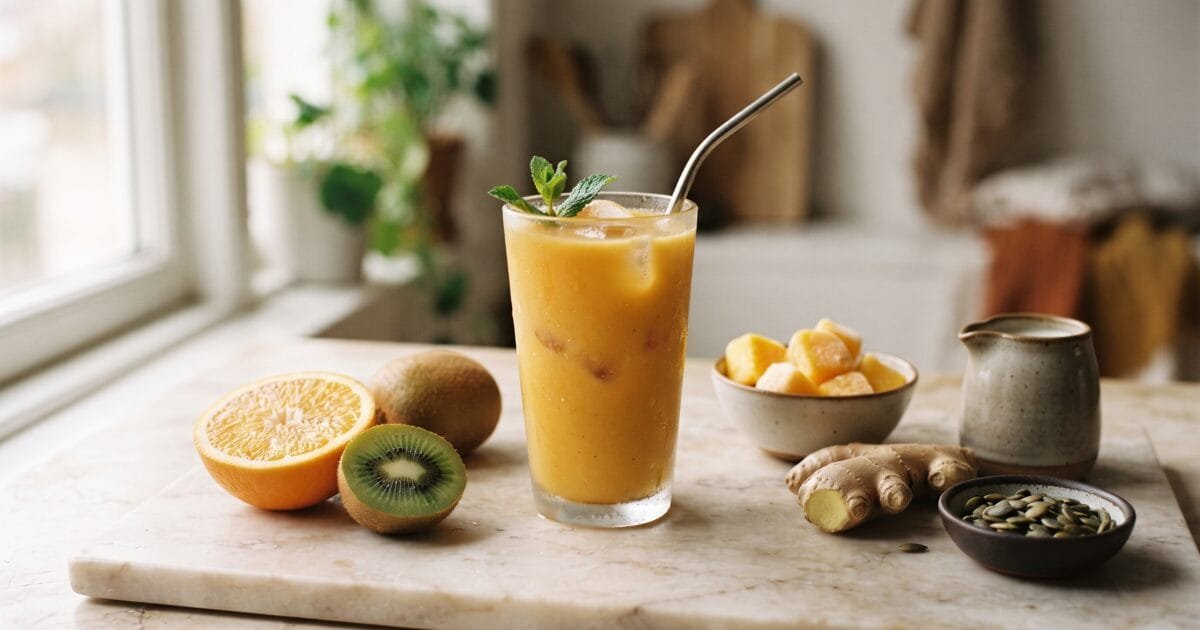
1. The Citrus Sunrise (the one I make most)
1 orange, peeled · 1 kiwi, peeled · ½ cup frozen mango · ½ cup plain kefir · 1 tbsp hemp hearts · small knob of fresh ginger · splash of water
Why it works: orange and kiwi together clear your full daily vitamin C need comfortably, mango adds beta-carotene, kefir brings live cultures, and hemp hearts add zinc and enough protein to stop it spiking your blood sugar. This is my default on grey mornings in February.
2. The Green One That Doesn’t Taste Green
Large handful baby spinach · ½ frozen banana · ½ cup frozen pineapple · 1 tbsp almond butter · ¾ cup unsweetened milk of choice · squeeze of lime
Why it works: spinach is quietly one of the better sources of beta-carotene, vitamin C and folate, and pineapple’s sweetness completely masks it. Almond butter brings vitamin E, an antioxidant involved in regulating immune function. If you’ve never liked green smoothies, start here.
3. Golden Turmeric & Mango
1 cup frozen mango · ½ cup plain Greek yoghurt · ½ tsp ground turmeric · crack of black pepper · ¼ tsp cinnamon · ½ cup milk of choice
Why it works: mango is a strong beta-carotene and vitamin C source, and Greek yoghurt adds protein and zinc. On turmeric, I’d rather be straight with you than sell it: NCCIH’s review of the evidence finds that claims about turmeric and curcumin outpace what the research has actually shown, and curcumin is poorly absorbed on its own. The black pepper helps absorption, and it tastes genuinely lovely — but I’m not going to tell you it’s doing more than that. I’ve gone into this properly in my guide to anti-inflammatory herbs and spices, including how far a culinary dose really gets you.
4. Berry, Beet & Pumpkin Seed
¾ cup frozen mixed berries · ¼ cup cooked beetroot · 2 tbsp pumpkin seeds · ½ cup plain kefir · 1 tsp chia seeds · water to loosen
Why it works: pumpkin seeds are one of the better plant sources of zinc, berries bring polyphenols and vitamin C, and the chia adds fibre that feeds your gut bacteria. The beetroot is mostly there for colour and earthiness, and it’s optional if you’re not a beet person.
5. The One for When You’re Already Run Down
½ cup frozen pineapple · ½ banana · 1-inch piece fresh ginger · juice of ½ lemon · ½ cup coconut water · 1 tbsp ground flaxseed · pinch of sea salt
Why it works: when I’m sick, what I actually want is something cold, hydrating and easy to get down. Coconut water and the salt help with hydration; ginger is soothing. To be clear about the evidence: NCCIH notes ginger has reasonable support for nausea and menstrual cramps, not for fighting off a cold. This one is for comfort and fluids, and I think that’s a perfectly good reason to make it.
The Build-Your-Own Immune Smoothie Formula
Once you stop following recipes and start following a structure, this gets much faster. Pick one from each row:
| Component | Why it’s in there | Pick one |
|---|---|---|
| Vitamin C fruit (1 cup) | Supports white blood cell function | Orange, kiwi, strawberries, pineapple, mango |
| Beta-carotene source (½ cup) | Converts to vitamin A; maintains mucous membranes | Mango, carrot, cooked sweet potato, spinach |
| Live-culture or fibre base (½–¾ cup) | Supports the gut lining and its bacteria | Kefir, plain Greek yoghurt, oats, unsweetened milk + chia |
| Zinc / protein anchor (1–2 tbsp) | Immune cell development; steadies blood sugar | Pumpkin seeds, hemp hearts, cashews, almond butter |
| Flavour & aromatics (to taste) | Makes it something you’ll actually repeat | Ginger, cinnamon, lemon or lime, mint, vanilla |
6 Immune-Boosting Recipes Beyond Smoothies
Smoothies are convenient, but most of the immune-supportive eating I actually do happens at dinner. These are the six things in my regular rotation.
- Garlic, ginger and mushroom broth. Sweat a lot of garlic and ginger in olive oil, add sliced shiitake and maitake, cover with stock, simmer twenty minutes, finish with soy sauce and spring onion. Mushrooms bring beta-glucans, and it’s the thing I make the moment anyone in the house starts sniffing. Worth knowing: NCCIH found only two small studies suggesting garlic may help with colds, both with methodological weaknesses — so I make this because it’s restorative and delicious, not because it’s medicine.
- Roasted sweet potato and red pepper traybake. Sweet potato, red peppers, red onion, chickpeas, olive oil, smoked paprika. Roast at 200°C until caught at the edges. Red peppers carry roughly twice the vitamin C of citrus by weight, and sweet potato covers beta-carotene. Leftovers are better than the first serving.
- Overnight oats with kefir and berries. Rolled oats, kefir, chia, frozen berries, left in the fridge overnight. Oats bring beta-glucans and fibre, kefir brings live cultures. This is the single easiest way I know to get a fermented food into a day you have no time in. If mornings are the meal you actually need help with, my anti-inflammatory breakfast ideas guide has nine more like it.
- Kimchi fried rice with a fried egg. Day-old rice, a generous amount of kimchi, sesame oil, spring onions, an egg on top. Fermented vegetables plus the zinc and vitamin D in the egg yolk. Fifteen minutes, one pan.
- Citrus and pomegranate winter salad. Segmented oranges, pomegranate seeds, baby spinach, toasted pumpkin seeds, olive oil and lemon. It hits vitamin C, beta-carotene and zinc in one bowl, and it’s the antidote to a week of heavy food.
- Ginger and turmeric golden milk. Warm milk of choice, fresh ginger, turmeric, black pepper, a little honey. Not a cure for anything — but it’s the thing I drink at nine in the evening instead of scrolling, which is arguably the more useful intervention.
Four Things That Quietly Undercut an Immune-Boosting Smoothie
- Sweetened yoghurt or juice as the base. A flavoured yoghurt can carry as much sugar as a dessert, which undoes a lot of what you were trying to do. Plain, live-culture yoghurt or kefir, then sweeten with fruit.
- No protein or fat. An all-fruit smoothie hits your bloodstream fast and leaves you hungry an hour later. A tablespoon of seeds or nut butter changes both the nutrition and how long it holds you.
- Treating it as an extra rather than a meal. A 400-calorie smoothie on top of breakfast is a different proposition to a smoothie that is breakfast. Decide which one you’re making.
- Expecting it to outrun no sleep. This is the one that matters most. Chronically elevated cortisol can suppress parts of your immune response, and no amount of kiwi compensates for months of five-hour nights.
What Food Can and Can’t Do Here
I want to be careful here, because this is a corner of the internet where claims get very large very quickly.
What the evidence supports: adequate intake of key nutrients gives your immune system the raw materials it needs, and deficiency genuinely impairs immune function. What it doesn’t support: the idea that loading up on any one food, or any one smoothie, meaningfully changes whether you catch what’s going around. The NIH’s review of vitamin C is a good illustration — regular supplementation doesn’t prevent colds in the general population, though it modestly shortened their duration, by about 8% in adults. Useful. Not miraculous. And taking it after symptoms start didn’t help at all.
Probiotics are similar. NCCIH’s assessment is that probiotics might influence the body’s immune response, while stressing that much remains to be learned about which strains help and for whom. That’s genuinely promising, and it’s also not the same as proven. If you want the fuller picture on that, I’ve written about the difference between prebiotics and probiotics separately.
The honest summary: eat this way because it’s a genuinely good way to eat — varied, plant-heavy, fermented food most days, enough protein — and because it overlaps almost entirely with anti-inflammatory eating. The immune benefit is real but incremental, and it compounds over months, not mornings.
When to See a Doctor
Getting sick sometimes is normal, and no recipe changes that. But please check in with your doctor if you’re catching infections unusually often, an illness lingers far longer than you’d expect, you have a fever above 103°F (39.4°C), you’re short of breath, or you have a condition or medication that affects your immune system. Frequent or slow-clearing infections can point to something that needs proper medical attention rather than a dietary tweak.
Frequently asked questions
What should I put in an immune-boosting smoothie?
Build it from four parts: a vitamin C fruit (orange, kiwi, strawberries, pineapple), a beta-carotene source (mango, carrot, spinach), a live-culture or fibre base (kefir, plain Greek yoghurt, oats), and a zinc or protein anchor (pumpkin seeds, hemp hearts, nut butter). Aromatics like ginger, cinnamon or lemon make it something you’ll actually drink again.
Do immune-boosting smoothies actually work?
They work in the sense that they’re an efficient way to get nutrients your immune cells genuinely need — vitamin C, vitamin A precursors, zinc, probiotics. They don’t work in the sense of stopping you catching a cold. The realistic benefit is incremental and comes from consistency over a season, not from any single glass.
What’s the best time of day to drink one?
Whenever you’ll actually do it consistently. I make mine at breakfast because that’s the meal I’m most likely to otherwise skip, but there’s no evidence that timing changes the nutritional benefit. If blood sugar crashes are an issue for you, having it alongside or after something with protein helps.
Can I make immune-boosting smoothies ahead of time?
Yes, with a caveat. I freeze the dry-and-frozen components in bags — fruit, seeds, spices — then add the kefir or milk fresh in the morning. A fully blended smoothie will keep in the fridge for about 24 hours, though it separates and loses some vitamin C to oxidation. Shake it and don’t leave it longer than a day.
Which foods should I focus on if I’d rather not do smoothies at all?
Entirely reasonable. The six cooked recipes above cover the same ground, and I’ve written a fuller breakdown of the individual foods with the strongest evidence behind them if you’d rather assemble your own approach from there.
The Bottom Line
An immune-boosting smoothie isn’t a shield. It’s a convenient way to get vitamin C, beta-carotene, zinc and live cultures into a morning you’d otherwise have skipped — and doing that most days, through a whole autumn and winter, is worth more than any single heroic ingredient.
Pick one smoothie and one cooked recipe from this page. Make them until you stop needing to look them up. That’s the whole strategy, and it’s a better one than it sounds.
Wellness education, not medical advice. Always consult a qualified healthcare professional before making significant changes to your diet or supplement routine, especially if you have a health condition or take medication.

[…] foods keep turning up in immune-supportive cooking. There are several live-culture options in my immune-boosting smoothie and recipe collection if you want somewhere practical to […]
[…] not any single meal. And if you’d rather have these foods as actual meals than as a list, my immune-boosting smoothie and recipe collection is the practical companion to this […]
[…] Diet is a genuinely useful piece of supporting your immune system. This article covered superfoods like antioxidant-packed blueberries, dark chocolate in moderation, turmeric, and green tea, each offering vitamins and minerals like C, D, and zinc that support immune defense. If inflammation is also part of your picture, these foods overlap heavily with my anti-inflammatory foods list, which is worth reading alongside this one. And if the question you actually have is what to make with all of this, I’ve put the practical half in a separate collection of immune-boosting smoothies and recipes. […]