
Do you ever feel like your body is working against you — the bloating, the mood swings, the exhaustion that hits like clockwork every month? You’re not imagining it, and you are absolutely not alone. So many of us have been searching for gentle, food-first ways to support our hormones without jumping straight to prescriptions or quick-fix supplements.
That’s exactly where seed cycling for hormonal balance enters the conversation. We’re going to walk through what it actually is, what the science says (honestly and fairly), and how you can start experimenting with it in a way that feels manageable and realistic. Whether you’re battling PMS, navigating irregular cycles, or riding the waves of perimenopause, this post is for you.
Key Takeaways
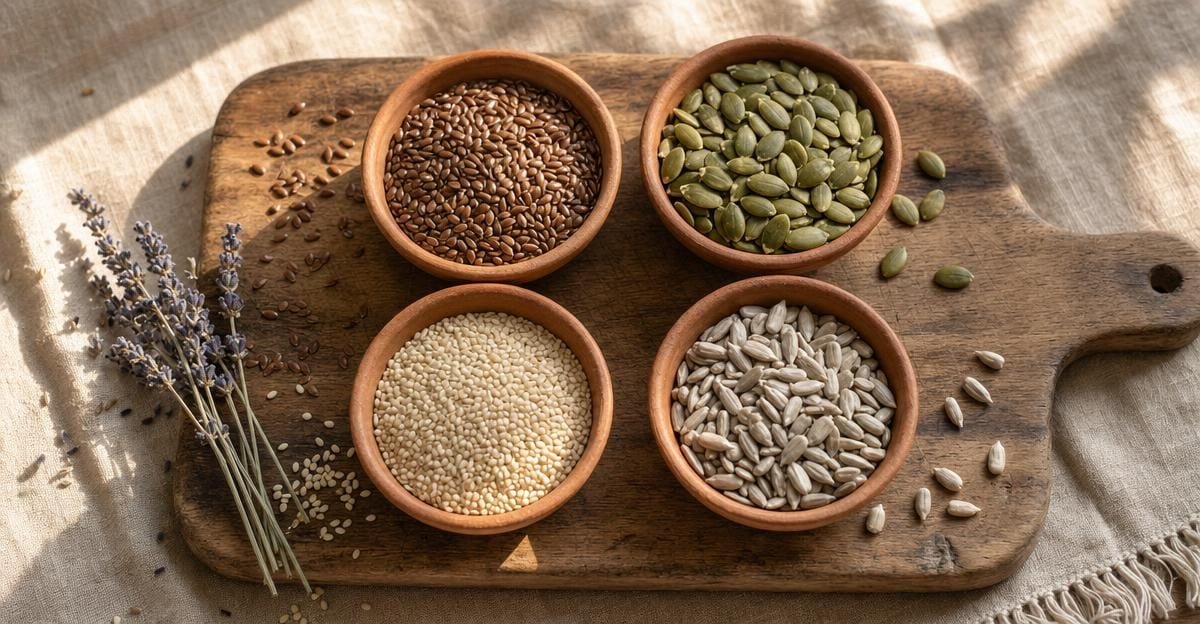
- Seed cycling involves rotating flax and pumpkin seeds in the first half of your cycle, and sesame and sunflower seeds in the second half.
- The practice aims to gently support estrogen and progesterone balance through lignans, zinc, and essential fatty acids.
- Clinical research is limited, but the nutritional value of these seeds is well-established and low-risk.
- Most women give it 2-3 full cycles before evaluating any noticeable shifts in PMS, mood, or cycle regularity.
- Seed cycling works best as one piece of a broader hormone-supportive lifestyle — not a standalone cure.
- It’s suitable for women with irregular cycles or perimenopause symptoms, with simple modifications for cycle tracking.
What Is Seed Cycling and Where Did It Come From?
Seed cycling is a food-based practice that involves eating specific seeds during different phases of the menstrual cycle to gently support the body’s natural hormonal rhythm. It’s one of those wellness approaches that feels both ancient and Instagram-modern at the same time — rooted in nutritional therapy traditions but widely shared in online wellness circles over the last decade.
The Basic Concept
The idea is elegantly simple. Your menstrual cycle has two main phases: the follicular phase (roughly day 1–14, starting with your period) when estrogen rises, and the luteal phase (roughly day 15–28) when progesterone takes the lead. Seed cycling pairs specific seeds with each phase based on their nutritional profiles — lignans, fatty acids, and minerals that may interact with hormone metabolism.
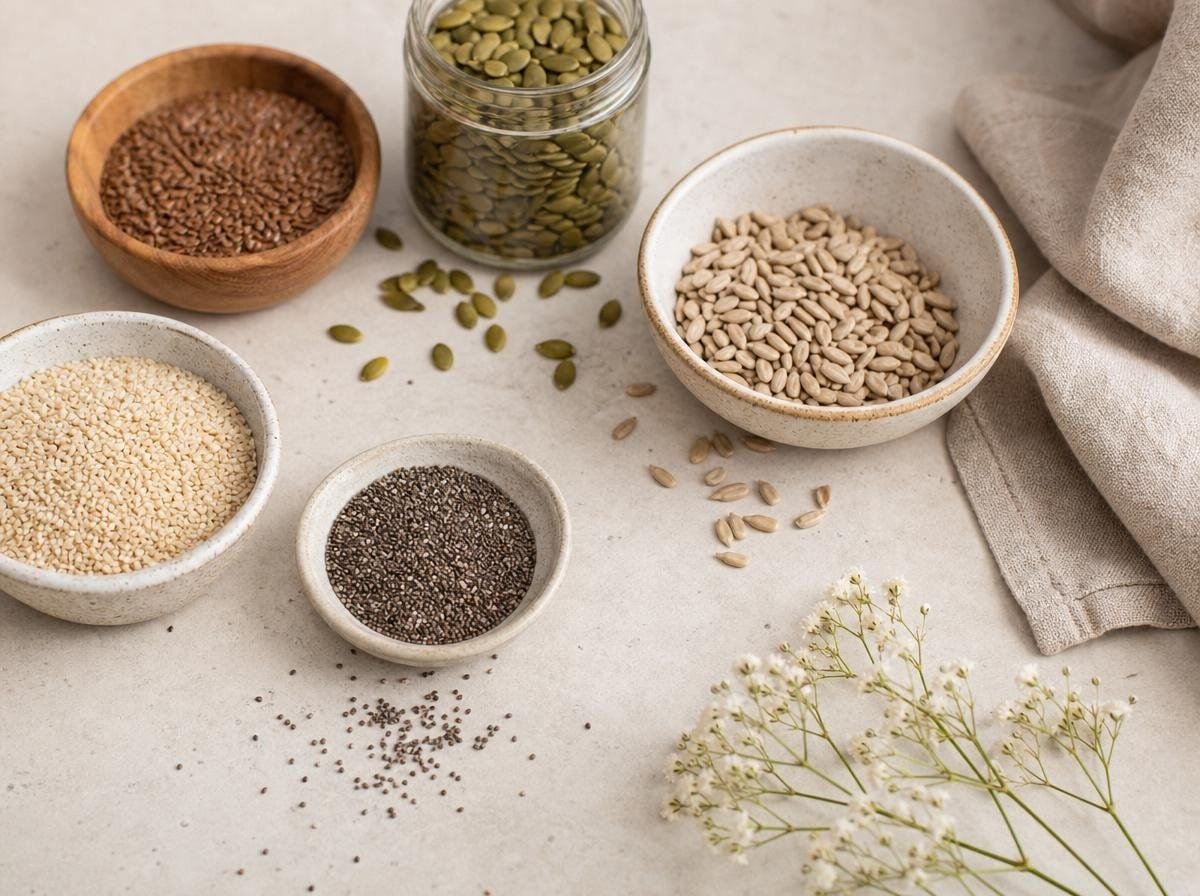
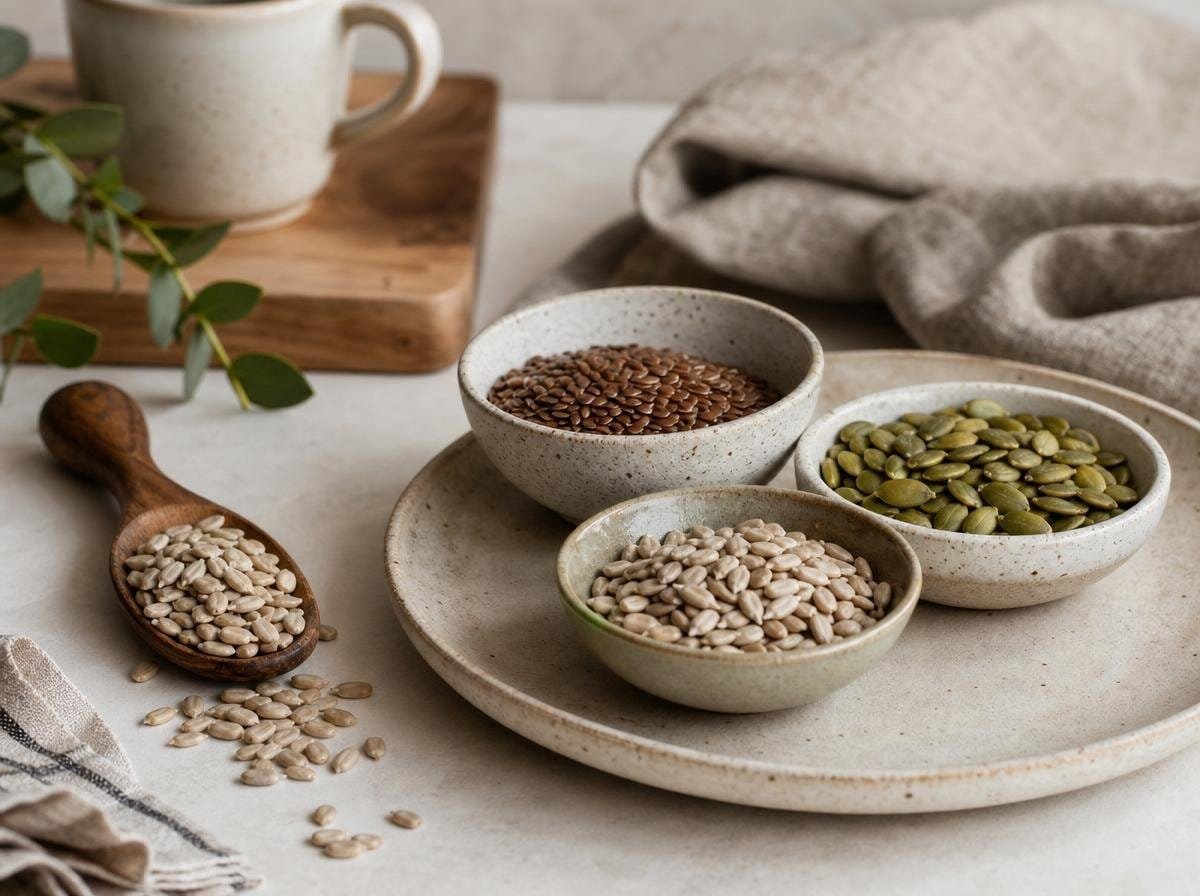
During the follicular phase, you eat one tablespoon each of ground flax seeds and raw pumpkin seeds daily. During the luteal phase, you switch to one tablespoon each of ground sesame seeds and raw sunflower seeds. That’s the entire protocol. Simple, affordable, and genuinely low-risk. If pairing food with your phases appeals to you more broadly, cycle syncing your eating and workouts applies the same logic to your whole routine.
Where the Idea Originates
Unlike many wellness trends, seed cycling doesn’t trace back to a single study or ancient text. It appears to have emerged from naturopathic and nutritional therapy communities, likely building on known research about phytoestrogens, lignans, and the hormone-modulating properties of seeds. It gained major momentum through health blogs and social media, which means the anecdotal evidence runs deep — even if the clinical trials don’t yet match.
Understanding that origin helps set realistic expectations. This isn’t a medically validated protocol, but it’s grounded in real nutritional science. Thinking of it as a nutrient-dense food ritual rather than a pharmaceutical intervention is the healthiest framing.
The Nutritional Science Behind Each Seed
One thing I love about seed cycling is that even if the hormonal effects are subtle or indirect, the seeds themselves are nutritional powerhouses. Let’s break down exactly what each one brings to the table — because this is where the science gets genuinely interesting.
Flax Seeds and Estrogen Support
Flax seeds are the richest known dietary source of lignans — plant compounds that act as phytoestrogens. Once consumed, gut bacteria convert these lignans into enterolignans (enterodiol and enterolactone), which can weakly bind to estrogen receptors. This means they may have a modulating effect: boosting estrogen activity when levels are low and competing with stronger estrogens when levels are high.
Flax seeds are also rich in omega-3 fatty acids (ALA), which support anti-inflammatory pathways — relevant because inflammation can worsen PMS symptoms. A 2017 study in the Journal of Clinical Endocrinology found lignan intake associated with reduced breast cancer risk, indirectly supporting the role of lignans in estrogen metabolism. For everyday cycle support, that estrogen-modulating quality is what makes flax seeds a logical choice for the follicular phase.
Always use ground flax seeds — whole seeds pass through largely undigested, so grinding unlocks all those beneficial compounds.
Pumpkin Seeds and Zinc
Pumpkin seeds are one of the best plant-based sources of zinc, a mineral that plays a key role in triggering ovulation and supporting the rise of progesterone after ovulation. Zinc also helps regulate the production of follicle-stimulating hormone (FSH), which drives follicle development in the first half of your cycle. This nutritional alignment with the follicular phase makes pumpkin seeds a natural pairing with flax.
Beyond zinc, pumpkin seeds offer iron, magnesium, and plant-based omega-6 fatty acids. If you’re someone who loses a fair amount of blood during your period, replenishing iron and magnesium in the days that follow is genuinely supportive.
Sesame Seeds and Progesterone Phase Support
Sesame seeds are also high in lignans — specifically sesamin and sesamolin — as well as zinc and vitamin E. The zinc continues to support progesterone production into the luteal phase, and vitamin E is well known for its role in reducing PMS symptoms like breast tenderness and mood shifts. Some small studies have found vitamin E supplementation reduces PMS severity, which adds a layer of plausibility to sesame’s role here.
Sesame seeds also contain calcium and magnesium, two minerals that often dip in the luteal phase and are associated with increased cramps and mood disturbance when low.
Sunflower Seeds and Luteal Phase Nutrition
Sunflower seeds are rich in selenium and vitamin E, both potent antioxidants. Selenium supports liver detoxification pathways, which matters because the liver is responsible for clearing used estrogen from the body. Sluggish estrogen clearance is thought to contribute to estrogen dominance — a pattern associated with heavy periods, PMS, and hormonal imbalances in perimenopause. The opposite pattern looks quite different — here are the signs of low estrogen and what tends to help.
Vitamin E, present in both sesame and sunflower seeds, has been studied in the context of reducing dysmenorrhea (painful periods) with positive results. The luteal phase pairing of these two seeds creates a nice vitamin E and selenium combination to support the body as it prepares for either pregnancy or menstruation.
Does Seed Cycling Actually Work? The Honest Answer
This is the question everyone wants answered, and I’m going to give you the most honest response I can. The short answer is: we don’t fully know yet — but that doesn’t mean it doesn’t work for many women. Let’s look at what the evidence actually says.
What the Research Does (and Doesn’t) Show
As of now, there are no large-scale, randomized controlled trials specifically testing seed cycling as a protocol for hormonal balance. The evidence base is made up of individual nutrient studies, observational research, and a wealth of anecdotal reports from women who’ve tried it. That’s a significant gap, and it’s important to be transparent about it.
What is well-researched is the individual nutritional impact of these seeds. Lignan intake from flax has demonstrated measurable effects on estrogen metabolism in several studies. Zinc deficiency is genuinely linked to menstrual irregularities. Vitamin E has shown benefit for PMS in small trials. So while “seed cycling” as a packaged practice hasn’t been tested, its individual components have real nutritional backing.
Why Anecdotal Evidence Matters Too
In the wellness world, we often dismiss anecdote too quickly. Thousands of women report reduced PMS symptoms, more regular cycles, and improved mood after several months of seed cycling. Could this be a placebo effect? Possibly, in part. Could it also reflect the genuine nutritional benefit of consistently eating four highly nutritious seeds? Absolutely.
I always remind readers: paying this kind of intentional attention to your cycle — tracking it, nourishing it, tuning in — has value beyond any single food. That mindful connection to your body is meaningful in itself. As I often say:
“Healing your hormones isn’t about one magic food — it’s about a hundred small, consistent choices that add up to a body that feels like home again.”
Comparing Seed Cycling to Other Hormone-Support Strategies
| Approach | Evidence Level | Cost | Risk Level | Best For |
|---|---|---|---|---|
| Seed Cycling | Low (indirect nutritional evidence) | Very low | Very low | PMS, cycle irregularity, perimenopause |
| Adaptogenic herbs (e.g. ashwagandha) | Moderate (HPA axis studies) | Low-moderate | Low | Stress-driven hormone disruption |
| Anti-inflammatory diet | Moderate-high | Variable | Very low | Broad hormone and inflammation support |
| Hormonal contraceptives | High | Low (with insurance) | Moderate (side effects possible) | Contraception, severe PMS/endometriosis |
| HRT / MHT | High | Moderate | Moderate (individual assessment needed) | Perimenopause / menopause |
Seed Cycling for PMS: What to Expect
PMS is one of the most common reasons women come to me looking for food-first solutions. The bloating, the irritability, the cramps, the chocolate cravings — we know the drill. Seed cycling for PMS targets the nutritional factors that can amplify those symptoms, and here’s how it plays out practically.
How Nutrient Deficiencies Drive PMS
A significant portion of PMS symptoms are worsened — or even caused — by nutritional gaps. Low magnesium is linked to cramps and anxiety. Insufficient zinc disrupts progesterone production, which can feed into the wider pattern of low progesterone symptoms like a short luteal phase and premenstrual spotting. Vitamin E deficiency correlates with breast tenderness. Omega-3 deficiency fuels the inflammatory pathways that make period pain worse. Seed cycling addresses all of these simultaneously, which is part of why women report such varied improvements — they’re filling in different nutritional gaps.
If you’re also dealing with significant sugar cravings around your period, it’s worth exploring how blood sugar fluctuations worsen hormonal symptoms — our 7-Day Sugar Detox Plan is a great companion resource for that piece of the puzzle.
Expected Timeline for PMS Relief
I’m always transparent with my clients about this: don’t expect dramatic results after one cycle. Most women who report meaningful improvements say they noticed changes after two to three months of consistent seed cycling. That’s roughly 60-90 days of daily seeds before you do a fair assessment. This isn’t a quick fix — it’s a nutritional foundation you’re building over time.
Track your symptoms across cycles. Note mood, bloating, cramp intensity, energy levels, and cycle length. This kind of self-monitoring helps you notice gradual shifts you might otherwise miss — and it’s genuinely fascinating data about your own body.
Supporting PMS with the Bigger Picture
Seeds work best when they’re part of a broader hormone-supportive lifestyle. Reducing processed foods, managing cortisol through stress practices, and prioritizing sleep all amplify whatever benefit the seeds provide. Consistently starting your day with intention matters too — you can read about powerful morning habits that support energy and hormonal health for ideas on building that foundation.
Seed Cycling for Perimenopause: A Gentler Approach
Perimenopause is a time when hormones fluctuate unpredictably — estrogen surges and drops erratically, progesterone often declines first, and cycles become irregular. Seed cycling can feel particularly appealing during this transition because it’s gentle, food-based, and doesn’t carry the complexity of hormonal interventions.
Adapting Seed Cycling When Your Cycle Is Irregular
If your cycles are irregular — whether from perimenopause, PCOS, stress, or simply being postpartum — you can’t reliably track day 1 through day 14 and day 15 through day 28. The common recommendation in this case is to use the lunar calendar as a guide: begin the follicular seeds on the new moon and switch to luteal seeds on the full moon. It’s not scientifically validated, but it gives you a consistent rhythm to work with, which seems to be part of what makes the practice beneficial.
Another option is to simply start with the follicular seeds today, run them for 14 days, then switch to luteal seeds for the next 14 days — repeating on a 28-day rotation regardless of when your actual period arrives. Many perimenopausal women find this structured rhythm itself helps them feel more grounded and connected to their body during a confusing transition.
The Estrogen Fluctuation Factor
One of the hallmarks of perimenopause is erratic estrogen — high one day, low the next, which drives symptoms like hot flushes, sleep disruption, and mood instability. The phytoestrogenic and lignan-rich qualities of flax seeds may offer very mild modulating support here, though it’s important not to overstate this effect. If your perimenopausal symptoms are significantly impacting your quality of life, a conversation with your doctor about HRT or other clinical options is absolutely warranted alongside any food-based approaches.
That said, the overall nutritional density of these seeds — selenium, zinc, vitamin E, magnesium, omega-3s — supports the adrenal system, which takes on extra hormonal load during perimenopause. Think of it as foundational nourishment for a body going through a real transition.
How to Start Seed Cycling: A Practical Step-by-Step
Getting started with seed cycling is genuinely one of the easiest nutritional changes you can make. There’s no complicated meal planning required, no expensive supplements, and no dramatic lifestyle overhaul. Here’s exactly how to begin.
Seed Cycling for Hormonal Balance: What You’ll Need
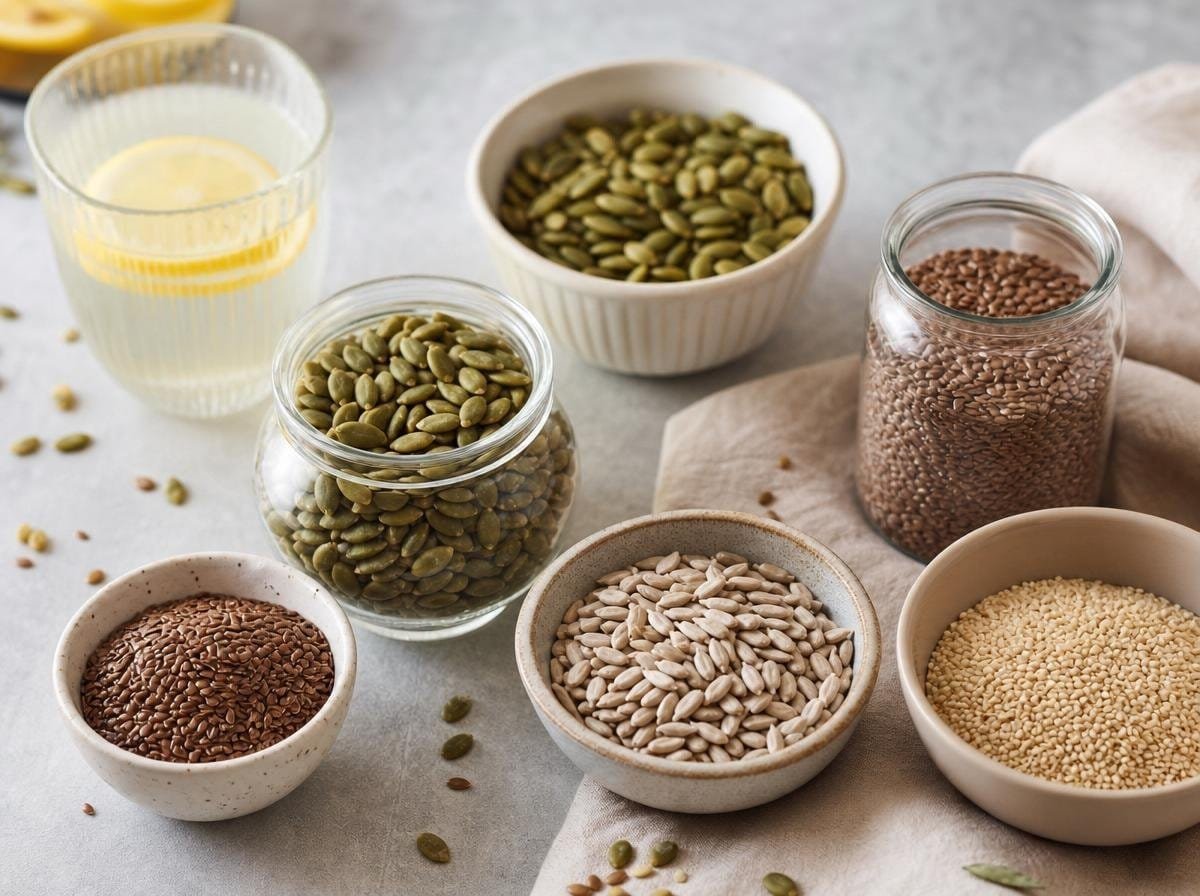
- Raw, organic pumpkin seeds (pepitas)
- Ground flax seeds (or a coffee grinder to grind your own)
- Raw sesame seeds or tahini
- Raw sunflower seeds
- A small glass jar or weekly pill organizer to keep portions ready
Buy in bulk when possible — it’s more economical and ensures you don’t run out. Store ground flax in the fridge or freezer to prevent oxidation, and keep all seeds in airtight containers away from heat and light.
Daily Routine and Serving Suggestions
The standard recommendation is one tablespoon of each seed per day, so two tablespoons total during each phase. This is easy to hit without even noticing. Here are my favorite ways to incorporate them:
- Blend into a morning smoothie (ground flax disappears completely)
- Stir into overnight oats or yogurt
- Sprinkle over salads or grain bowls
- Mix into homemade energy balls or bliss bites
- Stir sesame seeds into dressings or use tahini as your phase-two seed source
Consistency beats perfection here. Missing a day occasionally isn’t going to derail the whole practice — what matters is showing up most days over several months. Building this into an existing morning routine makes it almost effortless. If you’re still building your overall self-care foundation, exploring how to build a sustainable self-care routine that actually sticks can help you integrate seed cycling as one consistent piece of the puzzle.
Tracking Your Cycle and Symptoms
Use a simple period tracking app (Clue, Flo, or even a paper journal) to know where you are in your cycle. Mark your seed switch days as recurring reminders in your phone calendar. Take a brief symptom note weekly — energy, mood, bloat, sleep quality, cramp intensity. After two to three months, you’ll have meaningful data to evaluate whether it’s making a difference for you personally.
Common Mistakes and How to Avoid Them
Like any wellness practice, seed cycling has a few common pitfalls that can reduce its effectiveness or just make it harder to stick with. Here are the ones I see most often with my clients.
Using Whole Instead of Ground Flax
This is the most common mistake. Whole flax seeds are not bioavailable — they pass right through your digestive system intact, and you gain almost none of the lignan benefit. Always use ground flax seed (also sold as milled flax or flaxseed meal), or grind whole seeds yourself in a small coffee or spice grinder. Freshly ground is best for nutrient potency.
Expecting Too Much Too Soon
Hormonal health is a slow-burn project. The women who feel disappointed with seed cycling are almost always the ones who tried it for three or four weeks and declared it ineffective. Give it a genuine three-cycle trial. Your hormone system took years to get where it is — meaningful nutritional support takes time to accumulate.
Treating It as a Standalone Solution
Seeds can’t out-nourish a diet high in ultra-processed foods, poor sleep, or chronic unmanaged stress — all of which are major disruptors of hormonal health. Seed cycling is most powerful as one element of a broader approach that includes an anti-inflammatory, whole-food-rich diet, regular movement, stress management, and quality sleep. Stack these practices together and you’ll amplify everything — and if you want the wider picture, my guide to how to balance hormones naturally walks through those foundations in priority order.
Who Should Be Cautious About Seed Cycling
Seed cycling is generally very safe for most women, but there are a few situations where a little extra thought is warranted. Knowing these helps you approach the practice with appropriate care.
Hormone-Sensitive Conditions
If you have a history of hormone-sensitive cancers (such as estrogen-receptor positive breast cancer), it’s important to speak with your oncologist before significantly increasing phytoestrogen-rich foods like flax. While the evidence on dietary lignans and breast cancer risk is actually largely reassuring or positive, any meaningful dietary change deserves a professional conversation in this context.
Similarly, if you have thyroid conditions, raw flax and sesame seeds consumed in large amounts may have mild goitrogenic effects. The quantities used in seed cycling are small, but it’s worth mentioning to your healthcare provider if thyroid issues are relevant for you.
Seed Allergies and Digestive Sensitivity
Sesame is one of the major allergens — if you have a known sesame allergy, seed cycling in its standard form isn’t appropriate without substitution. Some women also find that ground flax seeds cause initial digestive changes (looser stools or bloating) as their gut microbiome adjusts. Starting with a smaller amount — half a tablespoon — and building up gradually usually resolves this within a week or two.
Pregnancy and Breastfeeding
All four seeds are nutritious foods that are generally safe during pregnancy and breastfeeding. However, the specific hormonal-modulating intent of seed cycling means it’s worth discussing with your midwife or OB if you are pregnant or trying to conceive, just to make sure it fits your individual picture.
Frequently Asked Questions
Does seed cycling actually work for hormonal balance?
Seed cycling hasn’t been tested in large clinical trials as a complete protocol, so we can’t make definitive claims. However, the individual seeds used are nutritionally potent — rich in lignans, zinc, vitamin E, selenium, and omega-3s — all of which play documented roles in hormone metabolism. Many women report real improvements in PMS, cycle regularity, and perimenopausal symptoms after two to three months. Think of it as high-quality nutritional support rather than a pharmaceutical-level intervention.
How long does it take for seed cycling to work?
Most women who see meaningful results report noticing changes after two to three full menstrual cycles of consistent practice — roughly 60 to 90 days. Hormonal changes are gradual, and nutritional interventions work by building up micronutrient levels over time. Track your symptoms monthly so you can spot subtle shifts that might otherwise go unnoticed.
What if my cycle is irregular or I’m in perimenopause?
If you don’t have a predictable cycle, you can use the lunar calendar as a guide — starting follicular seeds (flax and pumpkin) on the new moon and switching to luteal seeds (sesame and sunflower) on the full moon. Alternatively, simply rotate on a fixed 14-day schedule regardless of cycle timing. The consistent nutritional rhythm appears to be what matters most, even without perfectly synchronized cycle tracking.
Can I use tahini instead of whole sesame seeds?
Yes — tahini is simply ground sesame seeds, so it delivers the same lignans, zinc, and vitamin E. Use about one tablespoon of tahini as a substitute for the sesame seed portion. It’s delicious stirred into dressings, spread on toast, or blended into a smoothie. Just look for 100% sesame tahini without added oils or salt for maximum benefit.
Do I need to use organic seeds?
Organic is ideal but not mandatory, especially if budget is a factor. The most important thing is consistency — eating the seeds daily over several months will have far more impact than sporadic use of expensive organic varieties. If you can source organic, great; if not, conventional raw seeds are still nutritionally excellent. Just make sure they’re raw and unsalted rather than roasted, which can damage delicate fats.
Can seed cycling help with PCOS?
Some women with PCOS report improvements in cycle regularity with seed cycling, particularly due to the zinc content (supporting ovulation) and anti-inflammatory omega-3s from flax. However, PCOS is a complex hormonal condition, and seed cycling alone is unlikely to address all of its underlying drivers. It can be a valuable nutritional layer within a broader PCOS management plan, ideally guided by a knowledgeable healthcare provider or nutritionist.
Is there any reason seed cycling could make symptoms worse?
For most women, seed cycling is very well tolerated. The most common adjustment issue is digestive — ground flax in particular can have a mild laxative effect if you jump straight to a full tablespoon. Starting with half a tablespoon and building up over one to two weeks resolves this for most people. If you have a hormone-sensitive condition or a sesame allergy, review the cautions section above and consult your healthcare provider before starting.
If you’ve been searching for a gentle, food-first way to support your hormones through PMS, cycle irregularity, or the perimenopausal transition, I truly hope this post has given you a clear, honest picture of what seed cycling can — and can’t — do. It’s not magic, and it’s not a miracle cure. But it is a beautifully simple, low-risk, nutrient-dense practice that connects you more deeply to your cycle and your body. Give it a genuine three-month trial, stack it with other hormone-supportive habits, and pay attention to how you feel. Your body is always communicating with you — seed cycling is one loving way to start listening back. Ready to explore more about supporting your hormones naturally? Browse the rest of the Attain Supplements blog for recipes, supplement guides, and whole-body wellness inspiration tailored specifically for women like you.
nn


[…] Seed Cycling for Hormonal Balance: Does It Really Work? […]
[…] in the second — comes up constantly in this conversation. I looked at the actual evidence in does seed cycling really work, and the honest answer is: the seeds are nutritious, but there’s essentially no evidence that […]