
Hi, I’m Sophia. If you’ve been curious about Pilates but picture a studio full of reformer machines and regulars in matching leggings, here’s a different image: a mat, a quiet corner of your living room, and about 15 minutes. That’s all Pilates for beginners at home takes. No membership, no equipment budget, no experience required.
Pilates has a reputation for being either too gentle to matter or too advanced to attempt. Neither is true. It’s a forgiving way to build core strength and better posture, and because it needs almost no space or gear, it’s one of the easiest workouts to keep doing. Below you’ll find what Pilates for beginners involves, plus a step-by-step 15-minute routine with timings for each move.
What Is Pilates?
Joseph Pilates developed the method in the early 20th century, and it later became especially popular with dancers. It centers on slow, controlled movements that work your abdominal, back, hip and glute muscles together. People call this your “core,” though the word undersells how much of your trunk is involved. Every exercise starts by stabilizing that core before any limb moves, which is part of why Pilates builds control and coordination as much as strength.
You can do it on equipment like a reformer, but the original mat version uses only your body weight and gravity. It’s a solid full-body workout on its own, and it’s what this routine uses.
Why Pilates Works Well for Beginners
According to Cleveland Clinic, Pilates is a low-impact, full-body practice that may improve muscle tone, flexibility and strength, and it’s known for helping with lower back pain. Its yoga therapist source explains this as tight muscles, misalignment and weak core strength often showing up together. A Cochrane review of 10 trials found low-to-moderate-quality evidence that Pilates reduces low back pain compared with minimal treatment, with no clear advantage over other forms of exercise.
- Core strength: Pilates focuses on the core muscles of your abdomen, sides, mid-to-lower back, hips and buttocks, which many workouts underemphasize compared with the muscles you see in a mirror.
- Posture: A stronger, better-aligned core makes it easier to sit and stand without slumping, which Mayo Clinic notes is one of the everyday payoffs of core-strength work in general.
- Flexibility and balance: The stretching built into most Pilates sequences may improve range of motion, and single-leg and side-lying moves add a balance challenge that may carry over into everyday coordination.
- Accessible starting point: The movements are slow and self-paced, so Pilates is an easy way back in if you haven’t exercised in a while or feel put off by high-intensity formats.
One caveat: Pilates studies tend to be small and short, so the evidence is positive but thinner than for walking or strength training. Its biggest strength may be that people stick with it.
What You Need to Start at Home
This is the short list, on purpose:
- A supportive mat. You’re on the floor for the whole session, often on your back or side, so a thin yoga mat can feel hard on your spine and hips. If you don’t have one yet, our guide to choosing a mat covers what to look for, and the same cushioning points apply here.
- About 6 feet of clear floor space. Enough room to lie down and extend your arms and legs fully.
- Comfortable, close-fitting clothing. Loose clothing can bunch up or ride during floor work, which gets distracting fast.
That’s it. A small pillow or rolled towel is nice for extra support under your neck or lower back, but you don’t need one to start. No mat at all? A folded blanket or large towel on a carpeted floor works for your first few sessions, as long as it doesn’t slide.
A 15-Minute Home Pilates Workout for Beginners (No Equipment)
This beginner pilates workout is a short warm-up, six classic moves, and a cool-down, done in order. For each move, aim for 8-10 repetitions or 3-5 slow breaths. Move slowly and keep your lower back gently pressed toward the floor rather than arched. Here’s the rough timing:
- Warm-up: about 2 minutes
- Pelvic curl: about 2 minutes
- The hundred (modified): about 1.5 minutes
- Single-leg stretch: about 1.5 minutes
- Side-lying leg lifts: about 2 minutes (both sides)
- Modified plank: about 1.5 minutes
- Spine stretch forward: about 1.5 minutes
- Cool-down: about 2-3 minutes
Warm-Up (2 Minutes)
Lie on your back with your knees bent and feet flat. Rest your hands on your lower ribs and take five slow breaths, feeling your ribs widen as you inhale and soften as you exhale. Then gently rock your pelvis for about ten slow pelvic tilts: flatten your lower back toward the floor as you exhale, and let it return to its natural curve as you inhale. This wakes up your deep abdominals and sets the tone for control over speed.
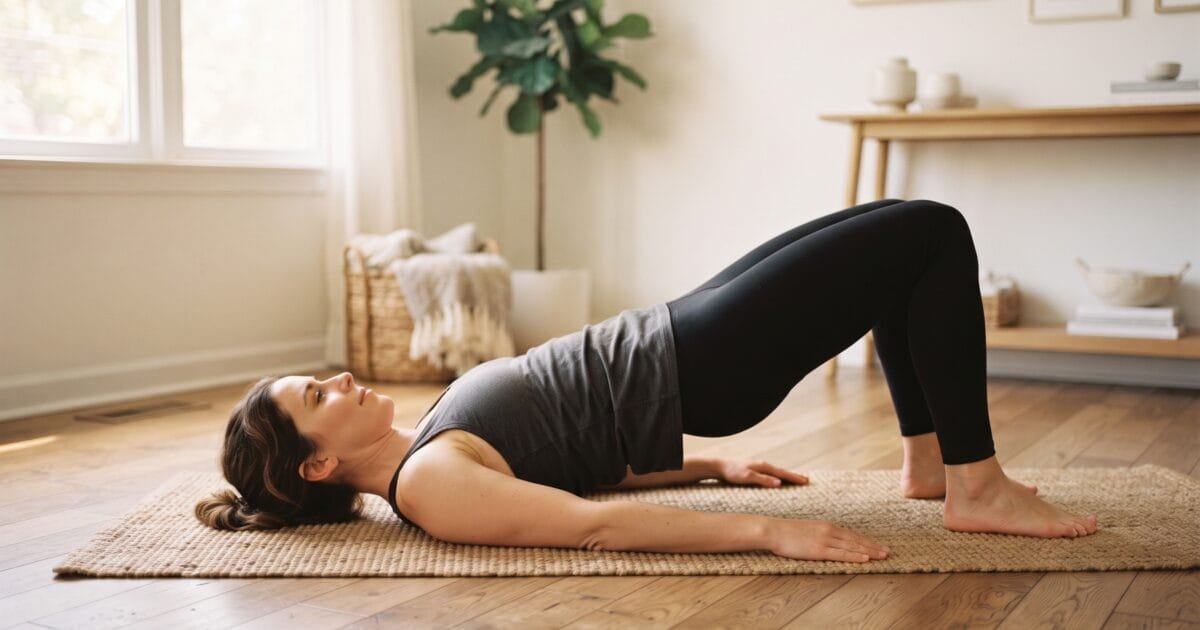
1. Pelvic Curl (Bridge)
Lie on your back, knees bent, feet flat. Tighten your abdominals, then peel your hips off the floor one vertebra at a time until your body forms a straight line from shoulders to knees. Lower slowly, one vertebra at a time.
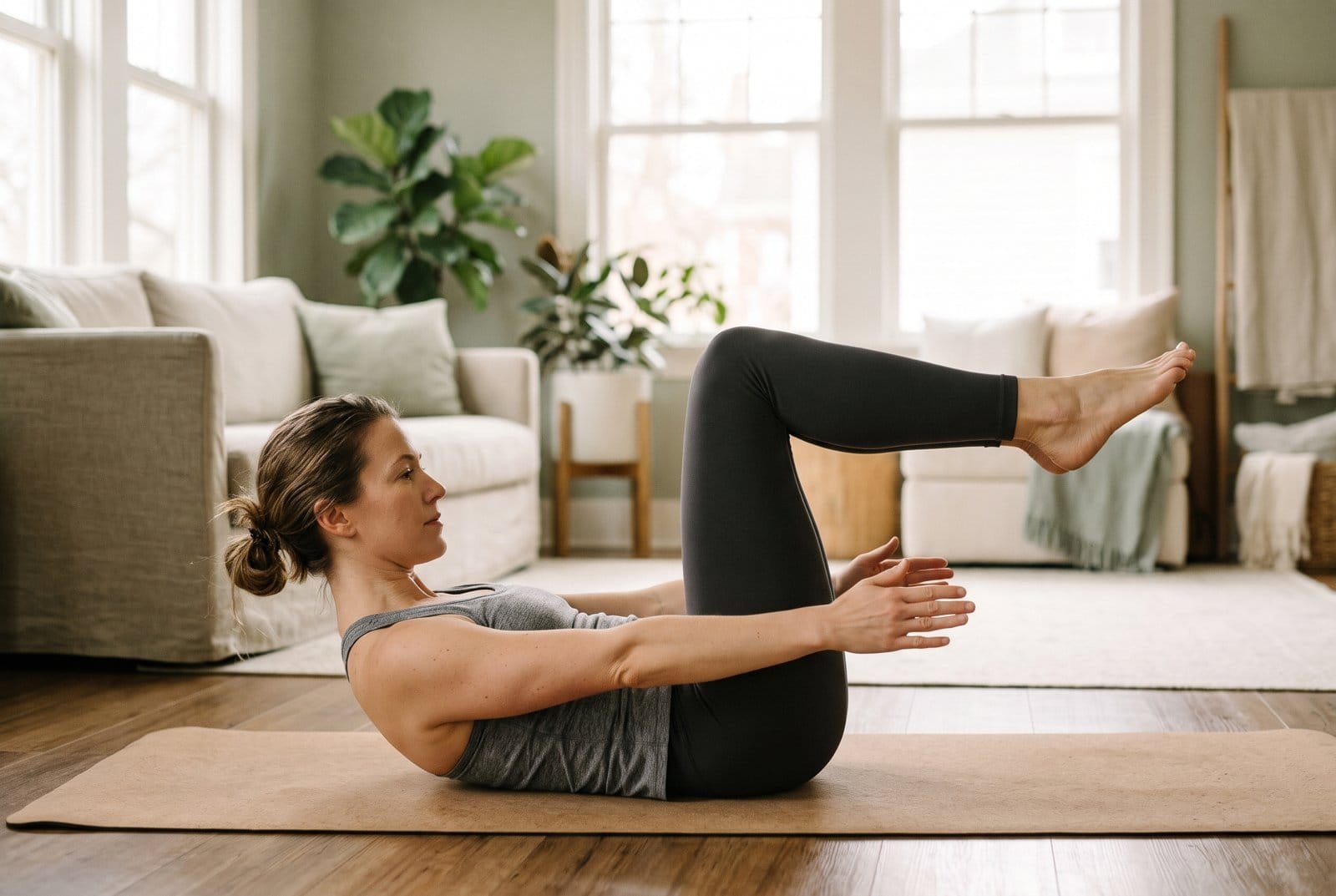
2. The Hundred (Modified)
Lying on your back with knees bent at 90 degrees, lift your head and shoulders slightly off the floor, extend your arms alongside your body, and pump them gently up and down, breathing in for 5 pumps and out for 5. If lifting your head is uncomfortable, keep it down and focus on the arm pumps and core engagement.
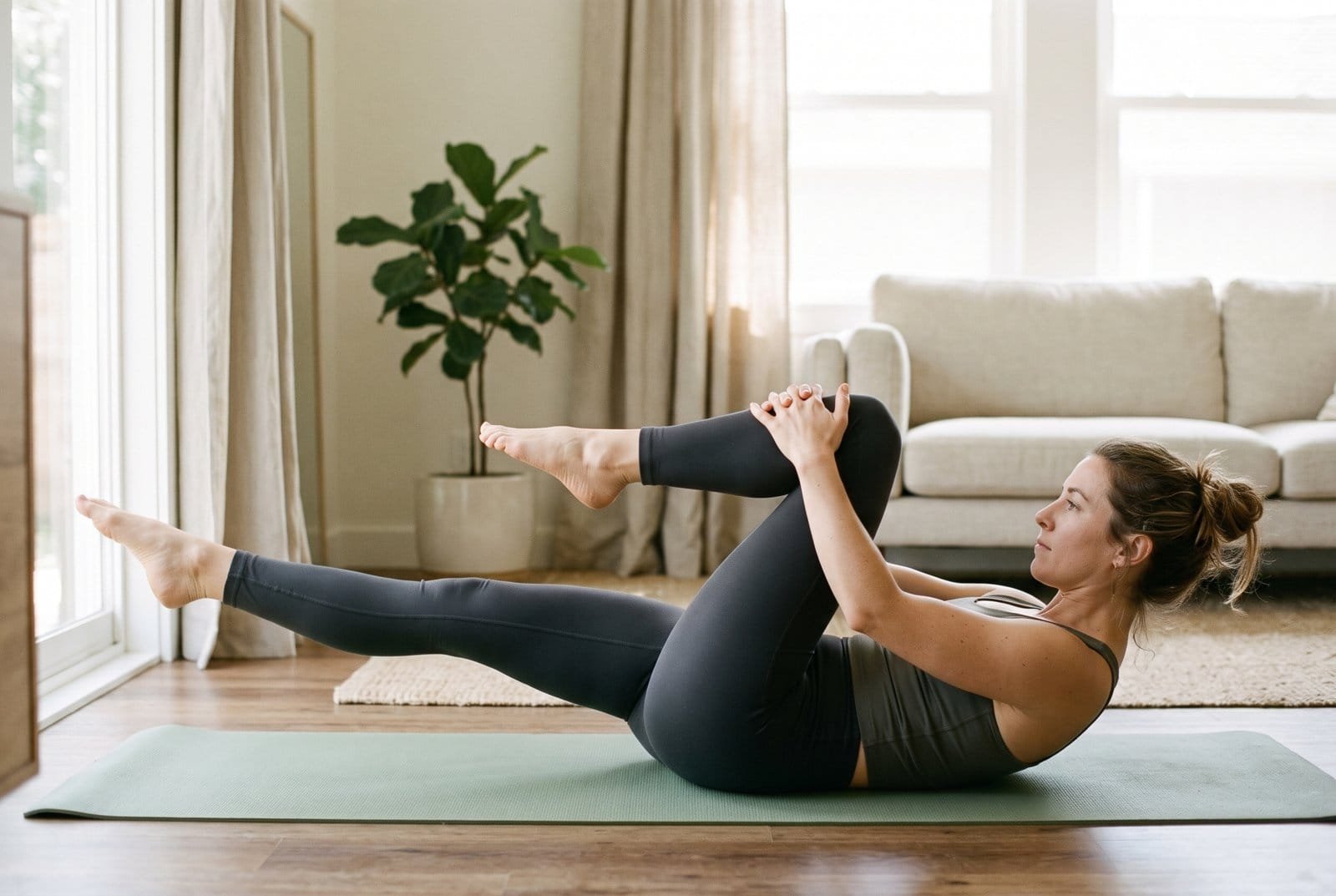
3. Single-Leg Stretch
On your back, bring your knees toward your chest. Extend one leg out at a 45-degree angle while pulling the other knee in toward you, then switch. Keep your lower back flat against the mat the whole time.
4. Side-Lying Leg Lifts
Lying on your side, legs stacked and slightly forward of your hips, lift your top leg a few inches and lower it with control. This targets the outer hip muscles that support pelvic stability. If your hips feel tight here, our hip mobility exercises make a good warm-up on other days.
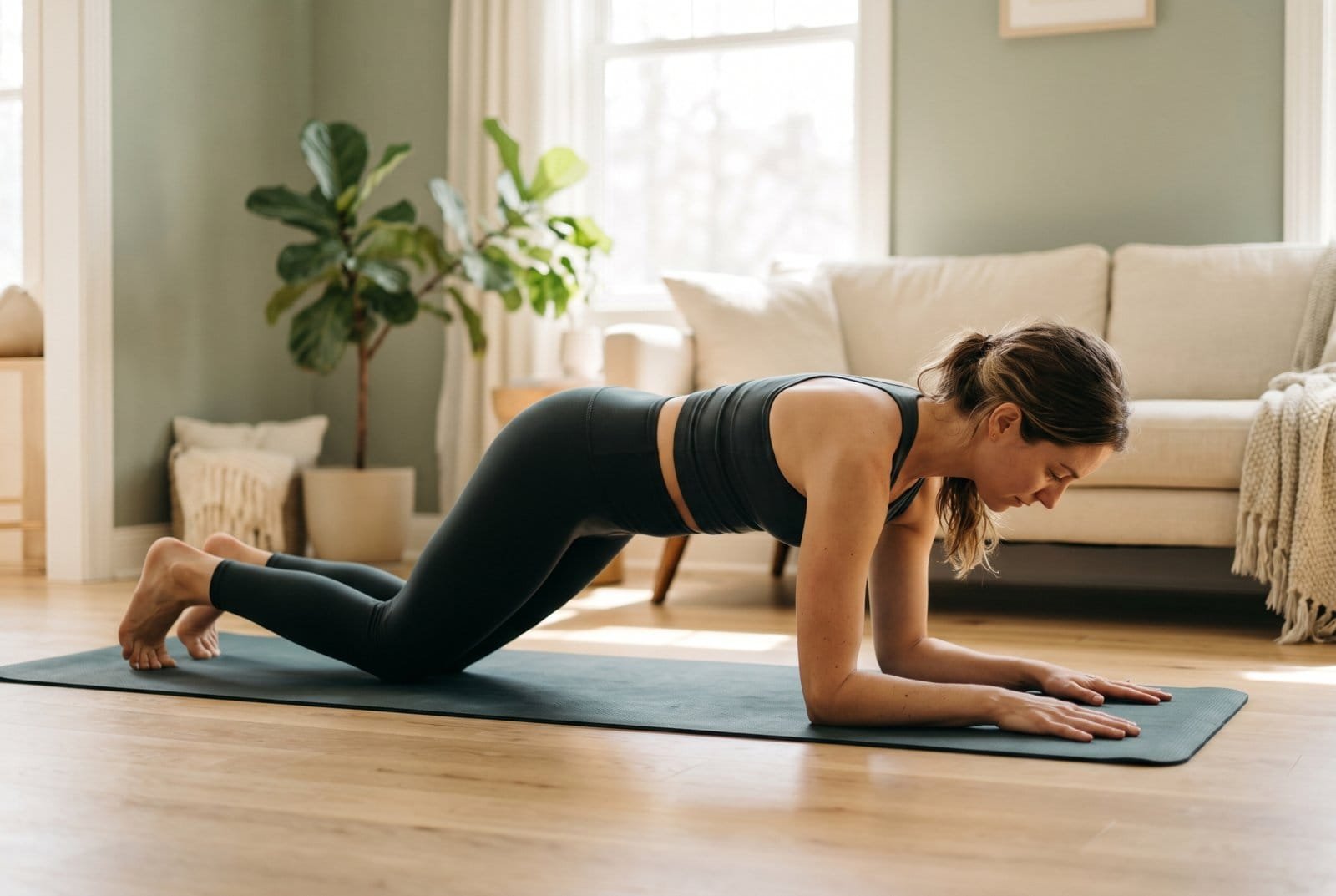
5. Modified Plank
Rest on your forearms and knees (or toes, if that’s accessible), with your body in a straight line from head to hips. Hold for 3-5 breaths, keeping your abdominals engaged so your lower back doesn’t sag.
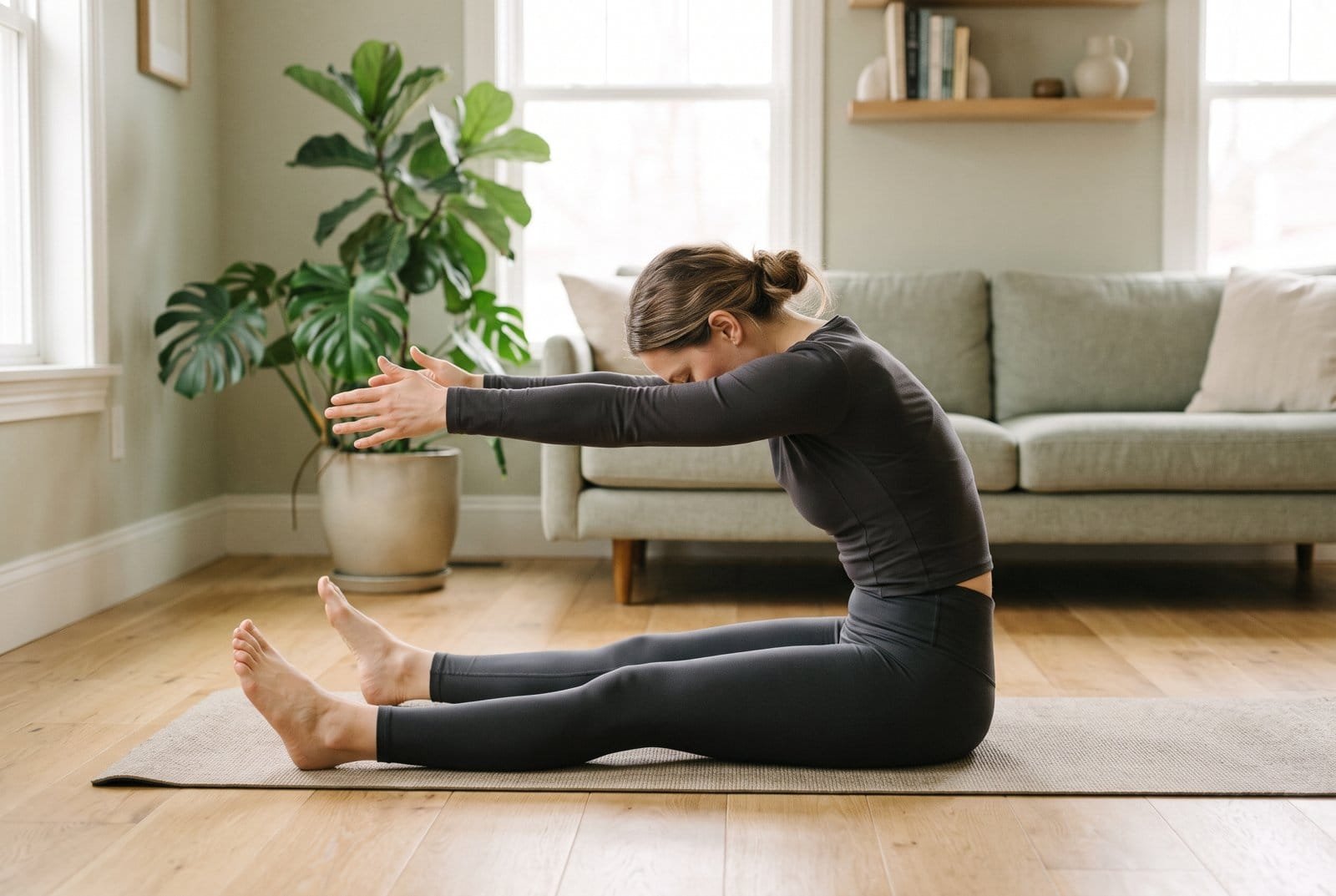
6. Spine Stretch Forward
Sit with your legs extended slightly wider than hip-width. Inhale to sit tall, then exhale as you round forward from your hips, reaching toward your feet. Inhale to roll back up to sitting.
As the routine gets easier, add a second round or slow the tempo further. Both make each move harder without any equipment.
Cool-Down (2-3 Minutes)
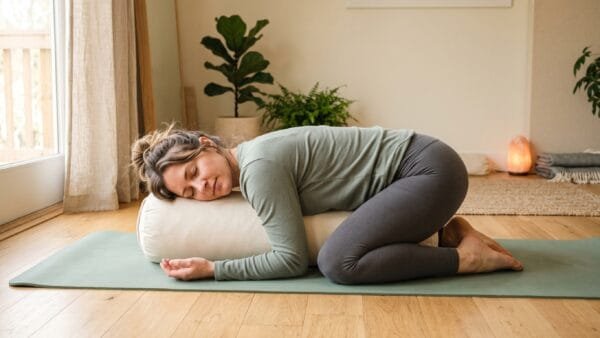
Finish by kneeling and sitting back toward your heels with your arms stretched long in front of you (child’s pose), and take five slow breaths. Then roll onto your back, hug your knees gently into your chest, and rock a little from side to side. Notice how your body feels compared with when you began. That small moment of attention is part of the practice. If you work out in the evening, a yoga nidra session is a calm way to carry that feeling into bedtime.
Easier and Harder Options
- Easier: keep your head down in the hundred, keep one foot on the floor during the single-leg stretch, and do the plank on your knees with your forearms on a sturdy surface if the floor is too much.
- Harder: slow each rep to a count of four up and four down, add a second round, or extend the legs lower in the single-leg stretch (only as far as your lower back stays flat).
Common Home Pilates Mistakes for Beginners
- Pulling on your neck. In the hundred and single-leg stretch, if your neck tires before your abdominals do, rest your head down.
- Arching your lower back. If your back lifts off the mat, bend your knees more or shorten the movement.
- Holding your breath. Try exhaling on the effort of each move. Quietly counting out loud can help you keep breathing.
- Rushing. Pilates is a control-based practice, not a cardio one. Five slow, well-executed reps beat fifteen sloppy ones.
How to Build a Home Pilates Habit
Consistency matters more than length. A simple first-month plan: do the full 15-minute routine two or three times a week, with a short walk or gentle stretch on other days. After a couple of weeks, add a fourth day or repeat the sequence twice. On a hectic day, the warm-up plus two moves still counts.
- Breathe on purpose. Pilates pairs breathing with movement, generally exhaling on the effort. Controlled breathing is one of the principles Cleveland Clinic lists for the Pilates method, and instructors teach it to help you stay focused and keep tension out of your neck and shoulders. For a broader breathing practice, try our box breathing guide.
- Pair it with other movement. Cleveland Clinic notes that you can expect some soreness as your body learns to move differently, and that Pilates works best alongside aerobic activity and resistance training. Our HIIT workout guide and strength training guide can fill out the rest of your week, and restorative yoga suits recovery days.
- Follow a video for your first few sessions. A well-reviewed beginner video helps you learn alignment before you go solo. When you’re new, it’s easy to compensate with your neck or lower back instead of your core without noticing.
Safety Notes and When to See a Doctor
It’s a good idea to check with a healthcare provider before starting any new exercise routine, especially if you’re pregnant, injured, recovering from surgery, or managing a diagnosed back or joint condition. Cleveland Clinic cautions that starting too early after an injury could make things worse. A session or two with a qualified instructor can teach you safe modifications.
- Sharp, pinching or radiating pain is different from normal muscle fatigue. Stop the movement if you feel it.
- If a move makes your lower back arch off the floor or strain, modify it (bend your knees more, shorten the range of motion) rather than pushing through.
- If you’ve had a baby, get any core separation (diastasis recti) checked before doing exercises like the hundred or full plank. Cleveland Clinic advises skipping movements that push the abdominals outward, like crunches and sit-ups, and working with a physical therapist experienced in diastasis recti, so some standard Pilates moves may need modification.
Stop and get medical advice if you notice any of the following:
- Sharp, shooting or radiating pain in your back, hips or legs during or after a session
- Numbness, tingling or weakness in your arms or legs
- Chest pain, dizziness, or shortness of breath beyond normal exertion
- Pain that persists or gets worse over several days rather than easing as your muscles recover
- Bulging or doming along the middle of your abdomen during movements like the hundred, particularly after pregnancy
What to Expect in the First Few Weeks
You may notice better body awareness and less tension within a couple of weeks, from paying closer attention to your alignment and breathing. Changes in core strength and posture can take several weeks of consistent practice, and timelines vary from person to person. Some muscle soreness in the first week or two, especially through your deep abdominals and lower back, is normal and usually fades as your body adapts. Many people find regular movement helps their mood too; our post on exercise and mental health covers the research.
Pilates for Beginners at Home: Frequently Asked Questions
Can I learn Pilates at home?
Yes. Mat pilates for beginners needs very little space or equipment, and plenty of people start at home. Cleveland Clinic suggests that even at home, it helps to learn from a qualified instructor, live or recorded, so you can learn good alignment.
Is 15 minutes of Pilates enough?
It’s a reasonable place to start. A short, focused session done consistently builds the habit, and you can add a second round or an extra day as you get stronger.
How often should a beginner do Pilates?
Two to four sessions a week is a manageable start. Take a rest day if you’re very sore.
Will Pilates help with back pain?
It may. Cleveland Clinic notes that Pilates is known especially for improving lower back pain, citing 2015 and 2020 studies, though the Cochrane review above found no clear advantage over other exercise. If you have back pain, check with your doctor before starting and stop if a move makes it worse.
The Bottom Line
Pilates at home asks for a mat, a bit of floor and 15 minutes. Start with the six moves above two or three times a week, go slowly, and stop if anything hurts. Give it a few weeks before you judge the results.
Related Reading
- Strength Training for Women Over 40: Where to Start
- Hip Mobility Exercises: A 10-Minute Routine to Loosen Tight Hips
- Restorative Yoga: 8 Poses to Calm Your Nervous System
- Yoga Nidra for Sleep: How to Practice It, Plus a Simple 20-Minute Script
- Box Breathing: How It Works and When to Use It
- HIIT Workout Guide: Benefits, Workouts and Beginner Plan
- The 4 Best Yoga Mats to Help Even the Most Unbothered Yogis
Want more evidence-based guidance like this? Join the newsletter for new guides as soon as they’re published.
Sources
- Cleveland Clinic: Pilates: What It Is and Health Benefits
- Mayo Clinic: Core strength exercises
- Cochrane Database of Systematic Reviews: Pilates for low back pain (2015)
- Cleveland Clinic: Diastasis Recti (Abdominal Separation)
⚕️ Disclaimer: This article is for general education and isn’t medical advice. Talk with a doctor or other qualified healthcare professional about your own health, especially if you’re pregnant, nursing, taking medication, or managing a condition, and before starting a new exercise routine. Read our full medical disclaimer.

Leave a Reply