

Hi, I’m Sophia. If you’ve spent any time searching for how to balance hormones naturally, you’ve probably been offered a 21-day “hormone detox,” a cortisol-cleanse tea, or a $300 at-home test kit that promises to explain everything about how you feel. Let me start somewhere more honest: hormones are not a light switch you flip, and nothing you buy is going to rebalance them by Friday.
What I can offer is the version I’d want a friend to read. I’m a wellness writer and researcher, not a clinician, so my job here is to read the good sources carefully and translate them without the hype. And the genuinely encouraging part is that the everyday things — what’s on your plate, when you sleep, how you move, how much pressure you’re under — really do influence your hormones. Not magically, and not overnight, but meaningfully, and in a direction you can feel.
What “balancing your hormones” actually means (and what it doesn’t)
Hormones are chemical messengers. Your endocrine system releases them into your bloodstream, where they tell tissues to speed up, slow down, store or repair. Insulin moves glucose into cells. Cortisol mobilizes energy under stress. Estrogen and progesterone run the menstrual cycle. Thyroid hormones set your metabolic pace.
Here’s what most “hormone balancing” content gets wrong: your hormones are supposed to fluctuate. Cortisol should be high in the morning and low at night. Estrogen and progesterone should rise and fall across a cycle. Insulin should spike after you eat. A flat line isn’t balance — it’s a malfunction. As the Endocrine Society describes it, the system runs on constant feedback, not on holding still.
So “balanced” really means: the rhythms are happening at the right times, in the right sizes, and your body is responding to them well. That’s the category most lifestyle change lives in — improving how sensitive your cells are to insulin, restoring a cortisol curve that rises in the morning and falls at night, giving your body enough raw material and rest to make and clear hormones properly.
And here’s what it can’t do, said plainly: diet and lifestyle do not replace medical evaluation. If you have polycystic ovary syndrome, thyroid disease, endometriosis, type 2 diabetes, or an adrenal or pituitary disorder, no amount of broccoli is treatment. Those are real conditions with real diagnostic criteria, and they need a doctor. Everything below is meant to work alongside proper care, never instead of it.
The hormones people usually mean
“My hormones are off” is a feeling, not a diagnosis, and it can point to half a dozen different systems. Here’s a quick map of the six that come up most, what tends to disrupt each one, and the change with the most leverage for it.
| Hormone | What it’s doing | What commonly throws it off | Highest-leverage change |
|---|---|---|---|
| Insulin | Moves glucose out of your blood and into cells for fuel or storage | Refined carbs eaten alone, very low activity, poor sleep, excess weight around the middle | Protein and fiber with every carb, plus a short walk after meals |
| Cortisol | Your main stress hormone; sets your wake-up drive and mobilizes energy | Chronic stress, short sleep, late screens, over-training, skipped meals, heavy caffeine | A consistent wake time plus morning daylight |
| Estrogen & progesterone | Drive the menstrual cycle; affect mood, sleep, bone and skin | Perimenopause, very low calories or body fat, high alcohol intake, sluggish gut and bowel function | Eat enough total food, and get adequate fiber |
| Testosterone | Muscle, bone density, libido and drive — in every body, not just men’s | Poor sleep, very low or excess body fat, chronic stress, alcohol, aging | Resistance training two to three times a week |
| Thyroid (TSH, T4, T3) | Sets your metabolic rate, temperature and energy | Autoimmune thyroid disease, iodine or selenium extremes, severe calorie restriction | Get it tested — this one is genuinely medical |
| Leptin & ghrelin | Your fullness and hunger signals | Short sleep, ultra-processed food, erratic meal timing, chronic dieting | Seven to nine hours of sleep and adequate protein |
Look at how much that third column repeats itself. Sleep, stress, under-eating and blood sugar show up again and again, which is exactly why a small number of foundational habits move so many hormones at once. You don’t need six protocols. You need four or five good habits done most of the time.
And if you’re in your late thirties or forties and your cycle, sleep and mood have all shifted together, read my guide to perimenopause symptoms before assuming you’ve done something wrong. Sometimes the honest answer is that a life stage has begun, and the goal shifts from fixing to supporting.
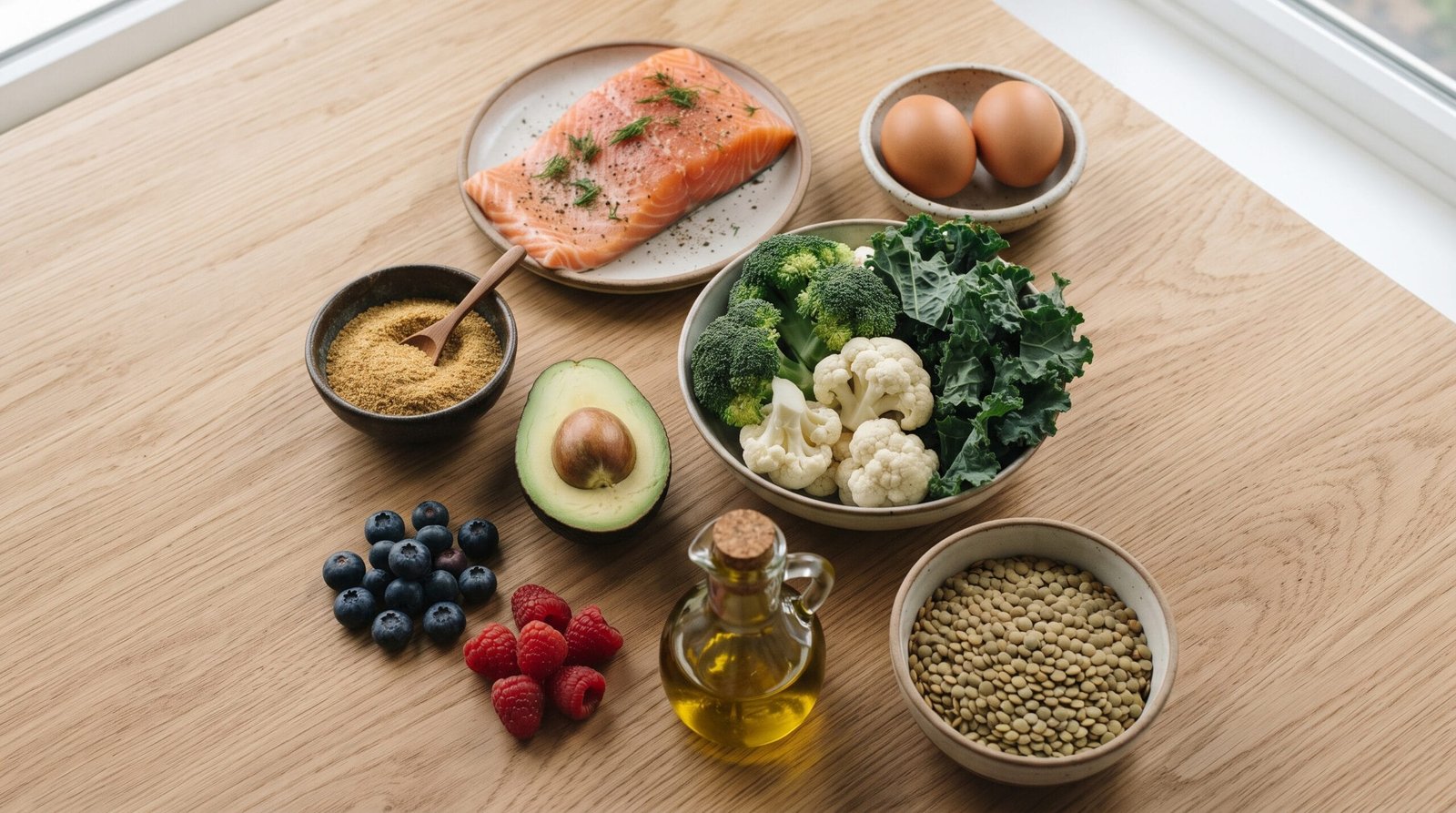
Food first: the foundations that matter most
These are in priority order deliberately. If you only change one thing, change the first. If you change three, you’ll likely notice a difference within a few weeks.
1. Protein at every meal
Protein is the least glamorous and most reliable change on this list. It blunts the blood sugar rise from a meal, supports satiety signalling, and supplies the amino acids your body needs to build and repair everything — including the transport proteins that carry hormones around. Harvard’s Nutrition Source is a good, non-hyped primer on how much you actually need.
Practically: aim for a palm-sized portion, roughly 25 to 35 grams, at breakfast, lunch and dinner. Breakfast is where most people fall short and where it matters most, because a protein-poor start tends to set up a whole day of crashes and cravings. Eggs, Greek yogurt, cottage cheese, tofu, tempeh, lentils, fish, poultry — whatever you’ll actually eat.
2. Fiber — including the cruciferous vegetables
Fiber does two hormone-relevant jobs. It slows glucose absorption, which steadies insulin. And it keeps your bowels moving, which matters because estrogen is partly cleared through the gut — if things are sluggish, more can be reabsorbed rather than eliminated. That’s not a detox claim, it’s ordinary physiology, and it’s one reason gut and hormone health are so entangled. My guide to gut health and nutrition goes further into it.
Cruciferous vegetables — broccoli, cauliflower, cabbage, Brussels sprouts, kale — get singled out because they contain compounds involved in estrogen metabolism. I’d frame that carefully: eating them regularly is a sensible, well-supported habit, while taking high-dose extracts of those same compounds is a different proposition with much thinner evidence. Aim for 25 to 35 grams of total fiber a day from real food, and build up gradually so your gut can keep pace.
3. Enough healthy fat
Steroid hormones — estrogen, progesterone, testosterone, cortisol — are literally built from cholesterol, so chronically very-low-fat eating does your endocrine system no favors. You don’t need to go high-fat; you need to stop being afraid of it. Olive oil, avocado, nuts and seeds, and fatty fish two or three times a week covers it. Most of these also appear on my anti-inflammatory foods list, which is convenient, because chronic low-grade inflammation is itself a hormone disruptor.
4. Blood sugar stability beats “clean eating”
Of everything here, blood sugar has the most downstream reach. Repeated sharp spikes and crashes push insulin higher, nudge cortisol up, worsen cravings, and in some people worsen androgen-related symptoms. The fix is unglamorous and effective: don’t eat carbohydrates naked. Pair them with protein, fat or fiber, eat at reasonably regular intervals, and walk for ten minutes after your biggest meal.
You don’t need a glucose monitor to do this well, and you certainly don’t need to fear fruit or potatoes. The practical mechanics are in balancing blood sugar through smart eating.
5. Eat enough — under-fueling is a hormonal stressor
This is the one I most wish were said louder. Persistent under-eating is one of the fastest ways to disrupt reproductive hormones. When energy availability stays too low for too long, the body downshifts whatever it considers optional: cycles become irregular or stop, thyroid output can drop, libido fades, sleep worsens, and cortisol often climbs.
Readers describe this pattern to me constantly — eating very little, training very hard, and wondering why their cycle disappeared and their energy went with it. If your periods have stopped or turned erratic while you’re eating lightly or training intensely, treat that as a signal to eat more and to talk to a doctor, not as a sign to try harder.
Sleep and circadian rhythm: the free intervention
If food is first, sleep is a very close second. Sleep is when growth hormone is released, when cortisol should bottom out, and when your hunger hormones reset. Even a few short nights can measurably reduce insulin sensitivity and shift leptin and ghrelin toward more hunger and less fullness. It’s remarkable how much “I have no willpower” is actually “I slept five hours.”
The highest-value habits are boring and they work: a consistent wake time, even on weekends; ten to thirty minutes of outdoor daylight within an hour of getting up; dimmer light and fewer screens in the last hour of the evening; a cool, dark bedroom; and caffeine cut off by early afternoon. If your schedule has drifted, start with resetting your circadian rhythm naturally, and magnesium for sleep covers the one supplement worth considering here.
Stress and cortisol, without the mythology
Cortisol is the hormone most often blamed and least often understood. You need it. The goal isn’t to crush it but to restore a healthy daily curve — a clear rise in the morning, a gentle decline into evening. Chronic pressure flattens or distorts that curve, and the knock-on effects reach insulin, sleep and sex hormones. I’ve covered the warning signs in high cortisol symptoms.
What actually helps is smaller than people expect: slow breathing with a longer exhale than inhale for two or three minutes, several times a day; time outdoors; genuine downtime that isn’t scrolling; saying no to one thing a week. Consistency beats intensity here — three minutes daily does more than a ninety-minute reset once a month. My guide on how to lower cortisol naturally collects the approaches with the best track record.
One clarification, because it’s everywhere: “adrenal fatigue” is not a recognized medical diagnosis. The idea that chronic stress exhausts your adrenal glands into under-production hasn’t held up under testing, and both the Endocrine Society and Cleveland Clinic say so directly. Adrenal insufficiency is real, serious and rare, and it’s diagnosed with proper testing rather than a symptom quiz. Your exhaustion is real. That particular explanation for it usually isn’t.
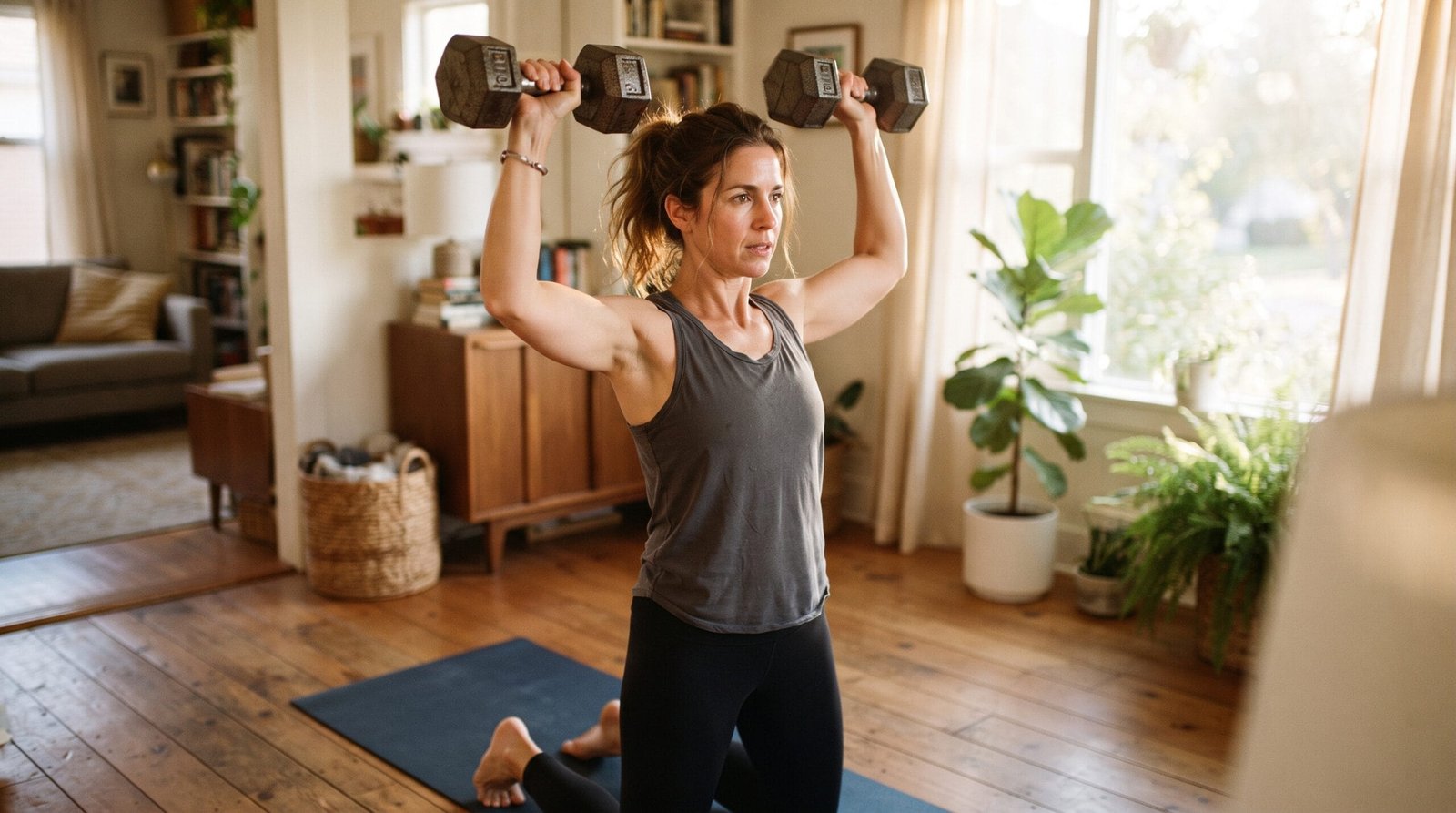
Movement — and why more isn’t automatically better
Exercise improves insulin sensitivity more reliably than almost anything else, and the effect starts immediately. Muscle is the largest site of glucose disposal in your body, so building and keeping it changes how you handle every meal. That’s why I’d put resistance training two or three times a week at the top of the movement list, above cardio, for most people asking about hormones. It supports testosterone, bone density and body composition as you age, too.
Add daily walking, ideally including a short one after your largest meal, and you’ve covered the essentials. High-intensity work has a place, but it’s a stressor, and stressors need recovery to become adaptations — my HIIT workout guide explains how to dose it rather than live in it.
The failure mode is worth naming: training hard while under-eating and under-sleeping doesn’t balance hormones, it disrupts them. The signs are recognizable — cycles becoming irregular or absent, fatigue that outlasts the workout, sleep getting worse instead of better, frequent illness or niggling injuries, performance sliding despite more effort. If that’s you, the intervention is more food and more rest, not more discipline.
Alcohol, ultra-processed food and endocrine disruptors
Alcohol has the clearest and most immediate effect of the three. It fragments sleep even when it helps you fall asleep, it’s metabolized by the liver alongside hormones, and at higher intakes it lowers testosterone. For many people, going from most nights to a couple of nights a week is the single most noticeable change on this page, often within two weeks.
Ultra-processed food matters mostly through the back door: it’s easy to overeat, low in fiber and protein per calorie, and it displaces the foods that would have steadied your blood sugar. I don’t think a packaged snack is a moral event. I do think that when most of your day comes from that category, hunger and fullness signalling gets noisy.
Endocrine-disrupting chemicals — BPA, certain phthalates, some pesticides — are a legitimate research area, and the National Institute of Environmental Health Sciences has a measured overview. Keep it in proportion rather than in panic: don’t microwave food in plastic, use glass or stainless steel for hot food and drinks, choose fragrance-free where it’s easy, and wash your produce. That’s most of the available benefit for almost none of the anxiety. Nobody needs to be afraid of their own kitchen.
Supplements, graded honestly
Supplements are the last five percent, not the first. That said, a few have real evidence for specific situations — and, just as importantly, clear limits. Here’s how I’d grade the ones that come up most.
| Supplement | Evidence | Reasonably supported for | What the evidence does not support |
|---|---|---|---|
| Magnesium | Moderate | Correcting a shortfall, and modest help with sleep quality and muscle relaxation. Many adults fall short of the recommended intake. | “Rebalancing” hormones, or doing much at all if your intake was already adequate |
| Vitamin D | Moderate, if deficient | Correcting a documented deficiency, which is genuinely common — see the NIH fact sheet | Raising testosterone or improving fertility in people whose levels are already normal |
| Omega-3 (EPA/DHA) | Moderate | Triglycerides and general anti-inflammatory support, with some evidence for menstrual pain (ODS overview) | Directly changing estrogen or progesterone levels |
| Ashwagandha | Mixed but promising | Reducing perceived stress and cortisol over six to eight weeks in several small trials (NCCIH summary) | Long-term safety is not well established; avoid in pregnancy, and use caution with thyroid and autoimmune conditions |
| Maca | Limited | Small trials suggest modest improvements in energy, mood and libido; generally well tolerated | Most studies find it does not measurably change serum hormone levels — it is not a hormone |
| Inositol | Promising, condition-specific | Insulin sensitivity and cycle regularity in PCOS, where it has more support than anything else on this list | Any clear benefit for people without PCOS or insulin resistance |
If you want one honest recommendation rather than a cabinet full: the useful pair for most readers is magnesium in the evening when sleep is the weak link, and maca when what you’re chasing is steadier day-to-day energy. Attain Supplements, our sister brand, makes both, and I like them because the labels are simple and the doses aren’t buried in a “proprietary blend.” Their Maca Plus Capsules for Energy & Vitality ($14.99) are the gentler starting point, and the Magnesium Glycinate Capsules ($27.99) use the well-absorbed glycinate form that tends not to upset your stomach. Disclosure: Attain Supplements is part of our family of brands, so we may earn from purchases made through this link.
If stress rather than sleep is your sticking point, ashwagandha has more direct research behind it — I compared the options in ashwagandha vs. rhodiola. And a note I’d rather over-say than under-say: supplements interact with medications, they aren’t right in pregnancy without guidance, and none of them substitutes for a diagnosis. Talk to your doctor or pharmacist first.
When to see a doctor — and what hormone tests actually mean
Please book an appointment rather than self-managing if you have periods that have stopped, become very irregular or turned unusually heavy; new or worsening acne alongside unwanted hair growth or hair loss; unexplained weight change; persistent fatigue, cold intolerance, constipation or hair thinning (classic hypothyroidism symptoms); trouble conceiving after six to twelve months; severe pelvic pain; or anything that’s escalating.
On testing, a few things are worth knowing before you spend money. Timing matters enormously — progesterone is meaningful roughly seven days after ovulation and close to meaningless at other points, so a random draw can look alarming for no reason. Thyroid assessment usually starts with TSH and free T4, sometimes with antibodies. And PCOS is diagnosed by a combination of criteria rather than one number; ACOG explains how that works.
Which brings me to direct-to-consumer test kits. Some are legitimate; plenty overpromise. I’d be skeptical of salivary “adrenal stress panels” that diagnose a condition which isn’t recognized, single-timepoint sex-hormone panels sold without cycle context, and any result that arrives packaged with a supplement protocol from the company that sold you the test. A number without clinical context isn’t insight — it’s just a number, and usually an anxious one.
A realistic timeline
Expectations are half the battle, so here’s roughly how this unfolds when someone actually sticks with it.
- Weeks 1–2: steadier energy after meals, fewer afternoon crashes, better sleep once your wake time is consistent and evening alcohol is down.
- Weeks 3–6: cravings quieten, mood feels less reactive, strength starts climbing, digestion improves as fiber settles.
- Months 2–3: cycle-related changes begin to show, because a follicle takes around three months to mature. This is the honest answer to “why hasn’t my period changed yet.”
- Months 4–6: markers like fasting insulin or HbA1c can meaningfully move, and the habits stop feeling like a project.
Anything promising a hormonal transformation in seven, fourteen or twenty-one days is selling you a timeline your endocrine system doesn’t run on.
Myths worth retiring
This topic attracts more nonsense than almost anything else in wellness, so let me be the annoying one about it.
- “You need a hormone detox.” Your liver and kidneys handle clearance. No tea, juice protocol or powder performs a detox, and none has been shown to change hormone levels.
- “Adrenal fatigue is why you’re tired.” It isn’t a recognized diagnosis. The tiredness is real, but that label sends people down expensive dead ends instead of toward a workup that might find the actual cause.
- “Seed cycling regulates your cycle.” It’s harmless and the seeds are nutritious, but evidence that timing flax and pumpkin against sesame and sunflower shifts estrogen or progesterone is essentially absent. I looked at the claims properly in does seed cycling really work.
- “Cortisol-blocking supplements fix belly fat.” Cortisol influences fat distribution, but blocking it isn’t how you’d want to solve that, and the products marketed this way don’t do what the label implies.
- “An at-home kit will tell you what’s wrong.” Sometimes it contributes something useful. Often it produces an out-of-context number and a matching supplement recommendation from the same company.
- “Natural means safe.” Hormonally active herbs are still hormonally active. Some interact with thyroid medication, antidepressants or contraception. “Natural” describes an origin, not a safety profile.
Frequently asked questions
How long does it take to balance hormones naturally?
Energy, sleep and cravings often improve within two to four weeks. Cycle-related changes usually take two to three months, because egg maturation runs on roughly a ninety-day timeline. Markers like fasting insulin typically need three to six months of consistency.
What foods help balance hormones?
There’s no single hormone food. The pattern that helps is adequate protein at each meal, 25 to 35 grams of fiber including cruciferous vegetables, healthy fats from olive oil, nuts, seeds and fatty fish, and enough total calories. Eating enough matters more than eating perfectly.
Can I balance my hormones without seeing a doctor?
You can improve the lifestyle inputs on your own, and that’s worth doing. But if your periods have stopped or changed significantly, you’re struggling to conceive, or you have symptoms of thyroid or adrenal disease, you need a medical evaluation. Lifestyle change and medical care aren’t competing options.
Do hormone-balancing supplements actually work?
A few have real evidence for specific purposes — inositol for PCOS, ashwagandha for stress and cortisol, magnesium and vitamin D for correcting shortfalls. None of them “balances hormones” as a general claim, and any product promising that across the board is overselling.
Is “adrenal fatigue” real?
Not as a diagnosis. Major endocrine organizations have found no evidence that chronic stress exhausts the adrenal glands the way the term describes. Adrenal insufficiency is a real and serious condition diagnosed with specific testing, which is exactly why the vague label is worth avoiding.
Does exercise balance hormones?
Resistance training and regular walking meaningfully improve insulin sensitivity and support testosterone and bone health. But heavy training combined with under-eating does the opposite and can suppress reproductive hormones. Dose and recovery matter as much as effort.
The Bottom Line
Learning how to balance hormones naturally is far less exotic than the internet suggests. It’s protein and fiber at most meals, enough food and enough fat, a consistent sleep schedule with morning daylight, strength training a couple of times a week, honest limits on alcohol, and a few minutes a day of genuinely downshifting. That’s the whole foundation. Supplements help at the margins; they can’t replace it.
The other half of doing this well is knowing where the edge is. If your cycle has stopped, if you’re exhausted in a way food and sleep aren’t touching, if you suspect PCOS or thyroid disease — that’s a doctor’s job, and getting it looked at properly is smarter than any protocol I could write. Give the foundations three months of real consistency, stay a little skeptical of anyone selling a shortcut, and let your body work on its own schedule. It usually knows what it’s doing once you stop fighting it.
Wellness education, not medical advice. I’m a wellness writer and researcher, not a healthcare provider. Always consult a qualified healthcare professional before starting new supplements or making significant changes, especially if you have a health condition, are pregnant, or take medication.
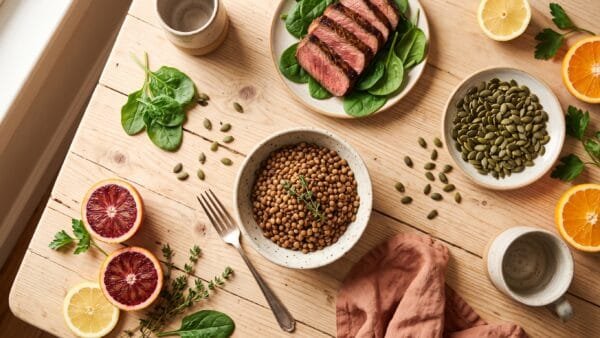
[…] at once and they’re things you fully control. They’re the same ones I set out in my food-first guide to balancing hormones naturally, applied here to this particular season. None of this is about perfection — it’s about a […]