
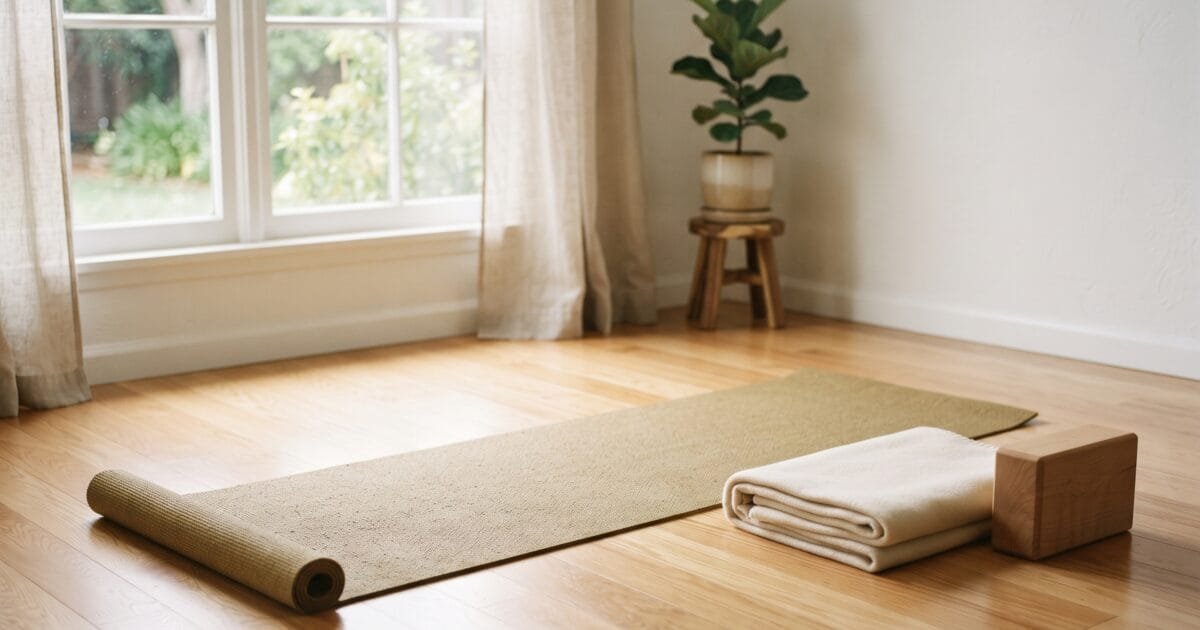
Hip mobility exercises won’t fix a desk job, but a few minutes a day can take the edge off stiff hips. If you spend most of your day at a desk, in a car, or on a couch, your hips may feel tight before you even stand up. That stiffness has a cause: your hip flexors, the muscles that lift your knees and bend you at the waist, spend hours in a shortened position. Harvard Health notes that sitting for long periods causes the hip flexors to tighten and shorten, which can lead to stiffness and discomfort, and that tight hip flexors may contribute to low back pain.
Hips may respond well to small, regular doses of movement. You don’t need a gym or special equipment, just ten minutes and a bit of floor space. I’ll cover what’s happening in your hips, eight stretches I keep going back to, and a 10-minute routine for busy days.
Why Tight Hips Happen (and How Hip Mobility Exercises Help)
Your hip flexors are a group of muscles that work together every time you walk, climb stairs, or bend at the waist. The main ones are the psoas and iliacus, with help from the rectus femoris and sartorius. When you sit for long stretches, these muscles stay in a shortened position. Over time they tighten and shorten, which can create the feeling of stiffness when you finally stand up.
Because the hip flexors attach to the pelvis and lower back, chronically tight hip flexors can make it harder to rotate the pelvis properly, which can contribute to low back pain (same article). The research on this link is still limited, though. One small 2024 study of 70 first-year undergraduates looked at hip muscle flexibility and low back pain and found that hamstring length and study-related stress were associated with back pain, while most students’ hip flexor length was normal (PMC, 2024). That’s too little to say mobility work protects your lower back, so think of it as one piece of the picture.
An hour at your desk won’t wreck your hips. They adapt to whatever position you hold most, so a few minutes in the opposite direction usually helps. Some people also find they carry stress as tension in their hips. If that sounds familiar, these somatic exercises for stress stored in the body pair well with the stretches below.
Mobility, Flexibility, and Strength: What’s the Difference?
Flexibility is how far a muscle can lengthen. Mobility is how well you can move a joint through its range under your own control. Your hips are ball-and-socket joints built to move in many directions, and a day of sitting uses only a small slice of that range. A good routine mixes stretches with controlled movements like circles and squat holds. Add a little glute strength work, like a simple bridge, so your hips feel stable as well as loose.
Hip Mobility Stretches: 8 Moves to Loosen Tight Hips
You don’t need to do all eight every day. Pick two or three and aim for most days of the week rather than one long session. A Harvard Health guide to stretching suggests holding each stretch for about 30 seconds per side, and its hip flexor article says 10 to 30 seconds, repeated up to about a minute in total. Breathe slowly through each hold. If your breathing gets choppy, the steady count from box breathing can help you settle in. You should feel tension but not pain, and avoid bouncing.
1. Kneeling Hip Flexor Stretch
Kneel with your right leg forward, knee bent at 90° and foot flat on the floor. Rest your hands on your right thigh for support, then gently press your hips forward while keeping your left knee down and your torso upright. You should feel the stretch along the front of your left hip and thigh. Hold, then switch sides.
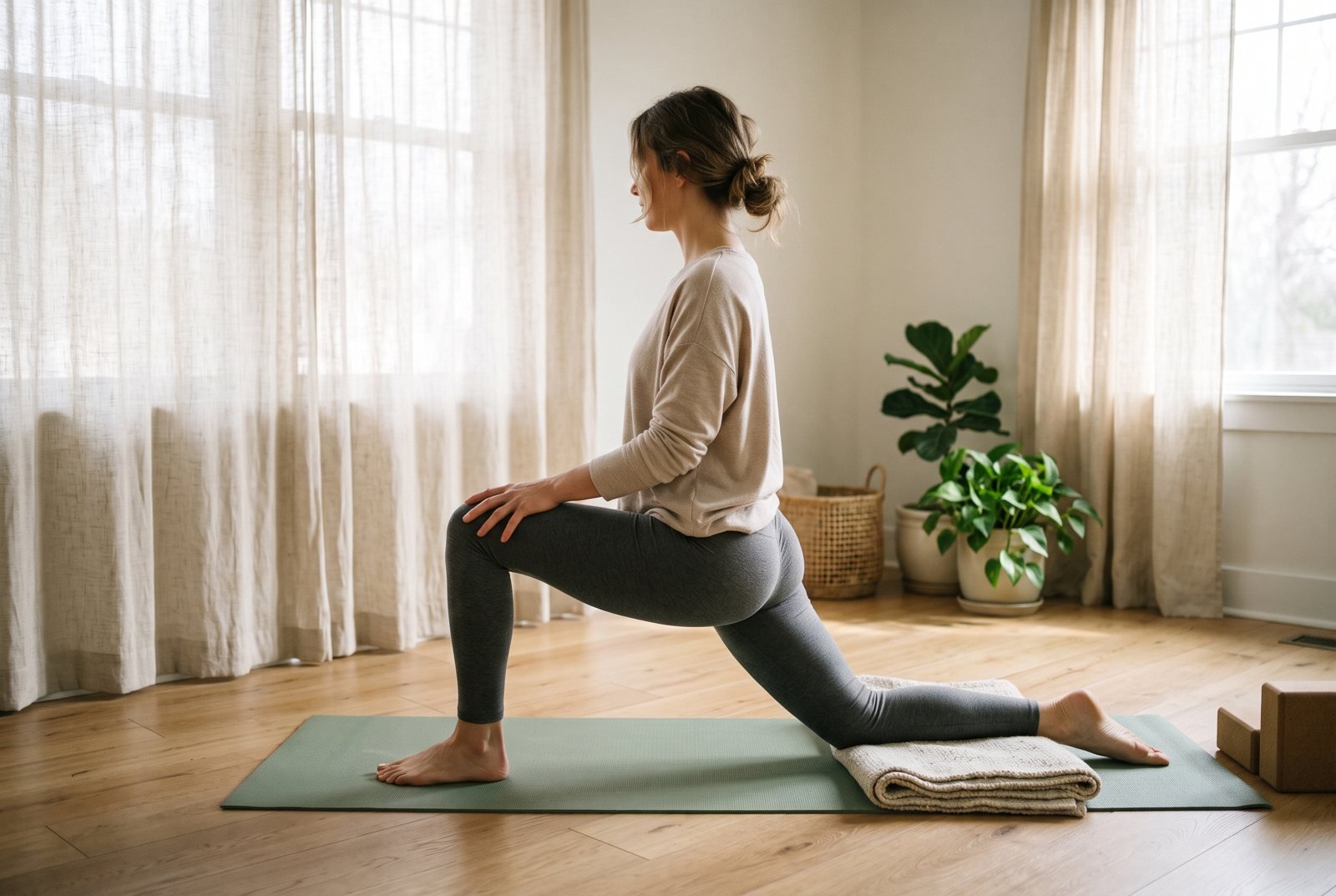
Make it work better: Tuck your tailbone slightly under, as if you were zipping up a tight pair of jeans, before you shift forward. Without that small tuck, it’s easy to arch your lower back and miss the hip entirely. Pad your back knee with a folded towel or blanket if the floor is hard.
2. Floor Hip Flexor Stretch
Lie on your back. Pull your right knee toward your chest with both hands while keeping your left leg extended and pressed into the floor. Flex your left foot to deepen the stretch through that hip flexor. Hold, then switch legs.
3. Figure-Four Stretch
Lie on your back with knees bent. Cross your right ankle over your left knee, then reach through and pull your left thigh toward your chest. This targets the glutes and outer hip rather than the front of the hip, which is useful if your hips feel tight in more than one place.
4. 90/90 Hip Stretch
Sit on the floor with one leg bent in front of you at 90° and the other bent behind you at 90°. Keeping your spine tall, lean gently forward over the front leg. This position works your hip’s internal and external rotation, which sitting all day barely uses.
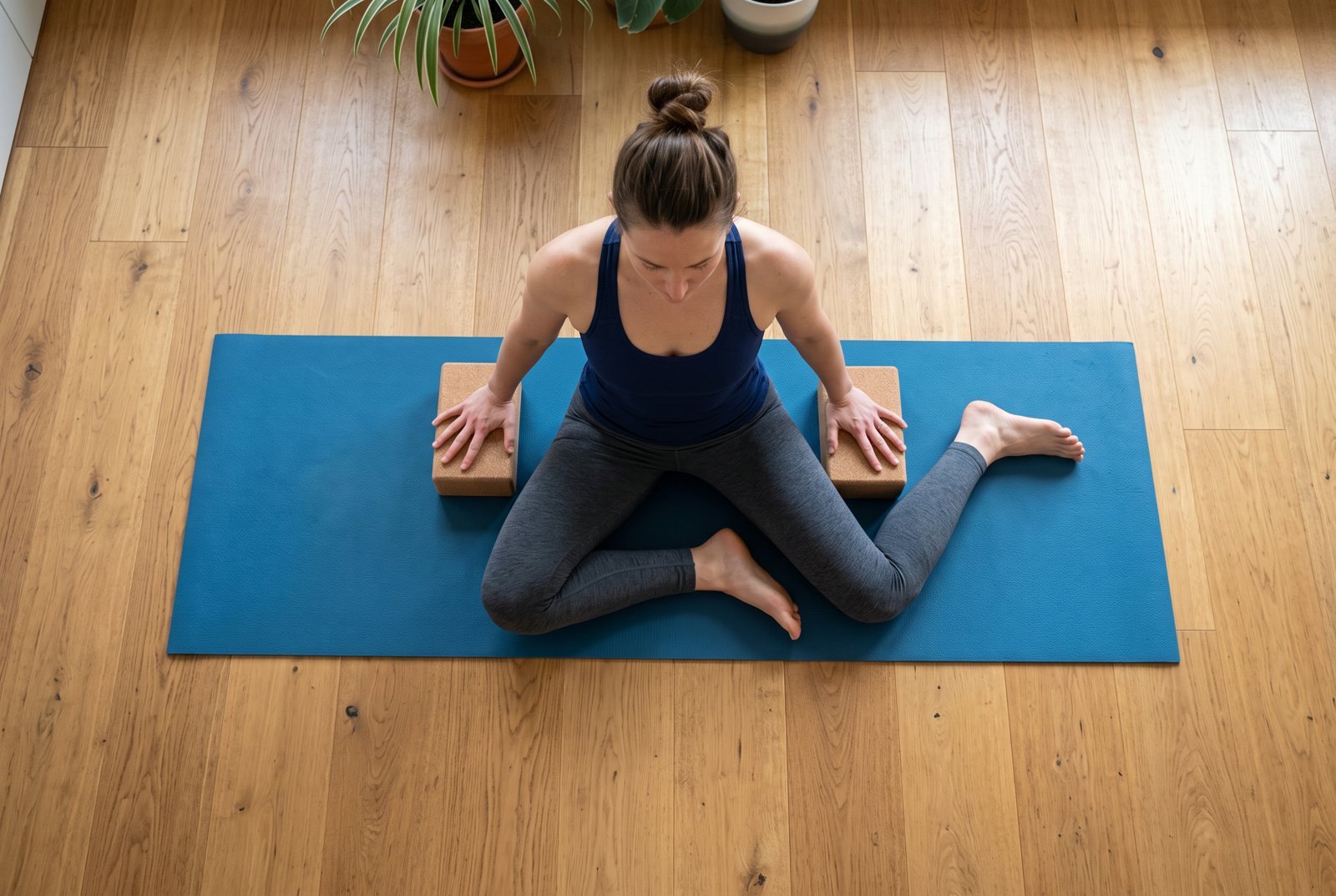
If it feels awkward: That’s normal, because this position asks a lot of most people. Sit on a folded blanket or a cushion to lift your hips, and place your hands on the floor or on blocks in front of you. If your back knee complains, bring that leg in closer rather than forcing the angle.
5. Standing Hip Circles
Stand on one leg (holding a wall or chair if needed) and slowly circle the opposite knee up, out, back, and down. Do 10 circles in each direction, then switch legs. It moves the hip joint through its full range before you ask it to do anything harder.
6. Butterfly Stretch
Sit with the soles of your feet together and knees dropped out to the sides. Hold your feet and gently hinge forward from the hips, keeping your back long rather than rounded. This opens the inner thighs and hips together.
7. World’s Greatest Stretch
From a standing position, step into a deep lunge, plant both hands on the floor inside your front foot, then rotate your torso and reach the same-side arm toward the ceiling. It’s a lot in one move, but it works your hip flexor, hamstring, and upper back at once, so it’s a good use of a spare minute.
Slow it down: Take two or three breaths in the lunge, two or three with your hands down, and two or three as you rotate. If getting your hands to the floor is too far, rest them on a pair of books or a sturdy chair.
8. Deep Squat Hold
Lower into the deepest squat you can manage with your heels flat, resting your elbows against the inside of your knees to gently press them outward. Hold for 30–60 seconds. This hold teaches your hips to sit comfortably in a fully bent position again, something many of us lose touch with without regular practice.
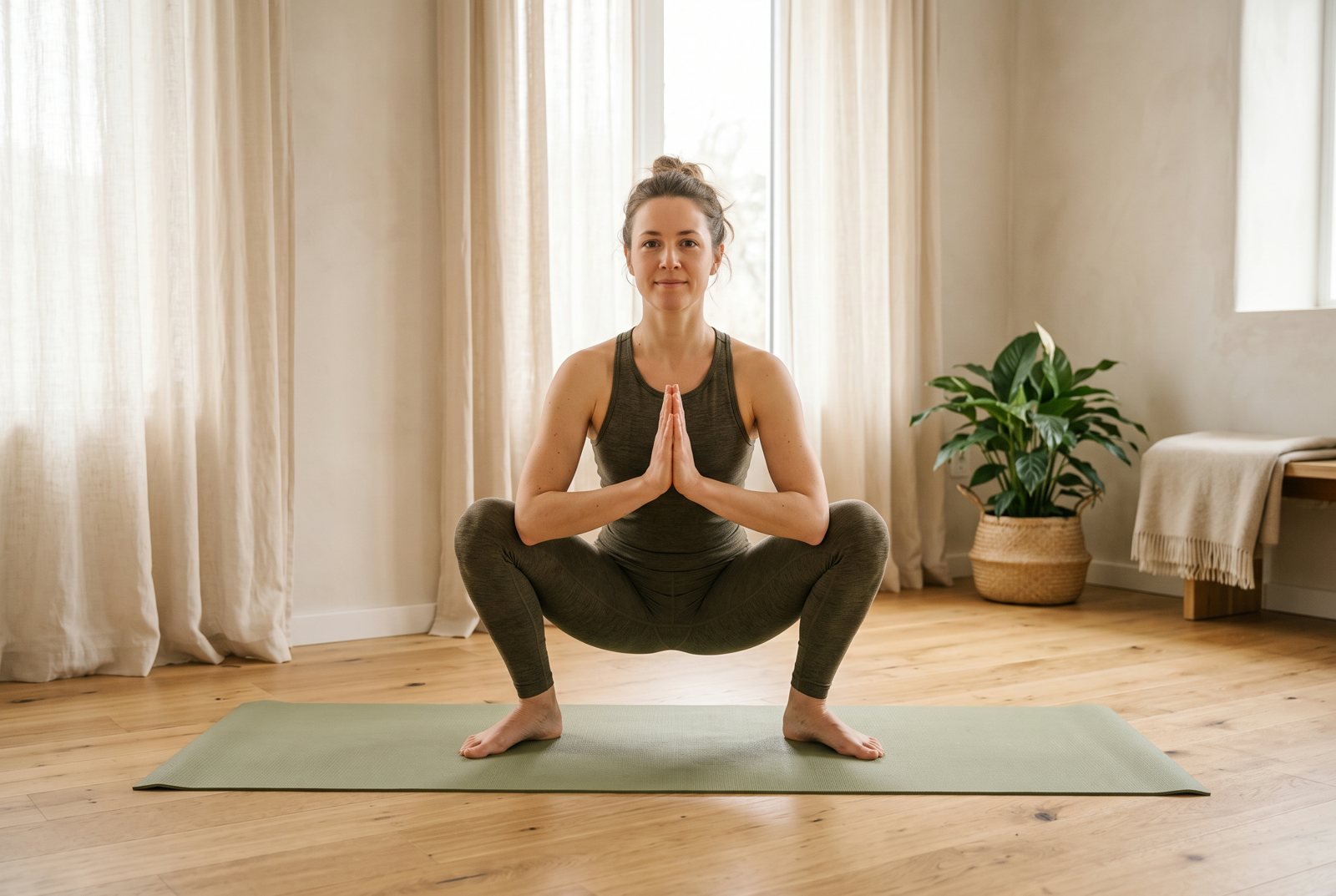
If your heels lift: Place a rolled towel or a thin book under them, or hold on to a door frame or sturdy counter for support. Over a few weeks you can slowly reduce the support. Aim for a relaxed hold you can breathe through.
A 10-Minute Hip Mobility Routine
When you’re short on time, here’s an order that works well. It starts with gentle movement to warm the joint, moves into the longer stretches, and finishes with the squat to put your new range to use. It also works as a warm-up before something more intense, like one of the sessions in our HIIT workout guide.
- Standing hip circles: 1 minute total. About 5 circles each direction on each leg to wake the joint up.
- Kneeling hip flexor stretch: 2 minutes total. One minute per side, breathing slowly.
- Figure-four stretch: 2 minutes total. One minute per side on your back.
- 90/90 hip stretch: 2 minutes total. One minute on each side, switching legs with control.
- World’s greatest stretch: 2 minutes total. Three or four slow reps per side.
- Deep squat hold: 1 minute. Rest your elbows inside your knees and breathe.
On days when you have even less time, do the kneeling hip flexor stretch and the figure-four stretch. Between them they cover the front and back of the hip, so call it a win.
Common Hip Mobility Mistakes to Avoid
- Forcing the range. Stretching into sharp or pinching pain doesn’t make you more flexible faster. Back off to a point where you can still breathe smoothly.
- Letting your lower back do the work. In lunge-style stretches, an arched lower back moves the stretch away from the hip. Keep your ribs stacked over your pelvis.
- Only stretching the front. Hips can feel tight in the glutes and outer hips as well as the front, which is why the figure-four and 90/90 belong in the mix.
When Stretching Helps, and When It Isn’t Enough
These exercises may help with ordinary stiffness from sitting, and with the low back tightness that often travels with it. If you’re active, whether that’s walking, strength training, or a restorative yoga practice, a few minutes of hip mobility work beforehand can make the rest of your movement feel better. They also fit into a lighter day built around gentle yoga poses. A cushioned mat makes the floor-based stretches much easier on your knees and hips, and we rounded up a few in our guide to the best yoga mats.
That said, stretching alone won’t resolve pain that’s sharp, radiates down a leg, or doesn’t ease up with rest and movement. That kind of pain is worth a conversation with a doctor or physical therapist. And if you sit for most of your workday, one of the simplest changes is to break up long stretches of sitting by standing up and moving for even a minute or two. The Harvard T.H. Chan School of Public Health notes there’s no consensus on exactly how long to sit before a break. “Every 30 minutes” is a common convention rather than a data-based rule, but taking breaks from prolonged sitting is still advised. The stretches above may help ease tightness, and they pair well with those breaks.
When to See a Doctor
Tight, achy hips after a long day are normal. Check in with a doctor or physical therapist, though, if you notice any of the following:
- Sharp pain in the hip or groin, especially pain that gets worse with stretching rather than better
- Pain that wakes you at night or is still present when you’re resting
- A catching, locking, or giving-way sensation in the hip
- Numbness, tingling, or weakness that travels down your leg
- Hip pain after a fall or injury, or difficulty putting weight on that leg
- Swelling, redness, or warmth around the joint, particularly with a fever
- Stiffness that doesn’t loosen up after a few weeks of consistent, gentle stretching
If you’ve had a hip replacement or other hip surgery, or have been diagnosed with a condition like arthritis, check with your provider or physical therapist before starting any new stretching program. Some of the positions above, especially deep squats and the 90/90, may need to be modified for you.
How to Fit Hip Mobility Exercises Into Your Week
You don’t need a 20-minute ritual. Two or three of these stretches, done at a time you’ll remember (after your morning coffee, during a work break, or as a warm-up before a workout), will do more. Consistency tends to matter more here than intensity.
Stack it with something you already do. Try the kneeling stretch while the coffee brews or the figure-four while you catch up on a show, and keep your mat where you can see it. A minute of standing hip circles between meetings also helps keep your hips from locking up through the day.
If you want to pair this with something for your strength and posture, our guide to strength training for women over 40 is a good next stop. Mobile hips and a bit of strength work go well together, especially as we get older. On the days after a harder workout, a few slow hip stretches fit well with the recovery habits in our workout recovery guide.
Hip Mobility Exercises: Frequently Asked Questions
How Often Should I Do Hip Mobility Exercises?
Most days of the week works well, and even a short session counts. Because these are gentle stretches and controlled movements, you generally don’t need rest days between them. If a particular stretch leaves you sore the next day, scale it back or skip a day.
Why Do My Hips Feel Tight After Sitting?
When you sit for long periods, your hip flexors stay in a shortened position, and over time they can tighten and shorten, leading to stiffness. Standing up then asks those muscles to lengthen again, which may be what reads as “tightness.” Moving regularly and stretching may help your hips get used to a wider range again.
Should Hip Stretches Hurt?
No. You should feel a stretch, a gentle pull, or mild discomfort that eases as you breathe. Sharp, pinching, or burning pain is a signal to back off, adjust your position, or stop. If it keeps happening, check in with a doctor or physical therapist.
Can Tight Hips Cause Back Pain?
They can contribute. Because the hip flexors attach to the pelvis and lower back, tightness there can change how your pelvis moves, which may contribute to low back pain. Back pain has many possible causes, though, so persistent or severe back pain deserves a proper evaluation.
The Bottom Line
Tight hips from sitting usually respond to small, regular doses of movement. Pick two or three of these stretches, hold each for about 30 seconds per side, and do them most days. Try to move more through the workday, too. If you have sharp pain, numbness, or pain that wakes you at night, check with a doctor or physical therapist before stretching through it.
Related Reading
- Strength Training for Women Over 40: Where to Start
- Restorative Yoga: 8 Poses to Calm Your Nervous System
- Workout Recovery: 5 Ways to Recover Faster
- Somatic Exercises for Stress Stored in the Body
- Box Breathing: How It Works and When to Use It
- HIIT Workout Guide: Benefits, Workouts and Beginner Plan
Want more practical, evidence-based movement guides like this one? Join my newsletter for a new one most weeks.
Sources
- Harvard Health — Do you spend most of your day sitting? These hip flexor stretches are for you
- Harvard Health — The importance of stretching
- Harvard Health — Stretching and strengthening exercises to relieve and prevent lower back pain
- Harvard T.H. Chan School of Public Health — Make sitting less and moving more a daily habit for good health
- PubMed Central — Is Hip Muscle Flexibility Associated with Low Back Pain Among First-Year Undergraduate Students? (2024)
⚕️ Disclaimer: This article is for general education and isn’t medical advice. Talk with a doctor or other qualified healthcare professional about your own health, especially if you’re pregnant, nursing, taking medication, or managing a condition — and before starting a new exercise routine if you have existing pain or injury. Read our full medical disclaimer.



Leave a Reply