

If the week or so before your period feels like a different version of you, with a shorter fuse, puffy jeans and a pull toward the snack drawer, you’re far from alone. Luteal phase symptoms are the physical and emotional changes that show up in the stretch between ovulation and your period, and for most women they’re uncomfortable but manageable. For a smaller group they’re intense enough to upend work, relationships and mood, and that can be a sign of premenstrual dysphoric disorder (PMDD).
Below you’ll find what the luteal phase is, the symptoms that are common, how PMS and PMDD differ, and the food, movement and sleep habits with the best evidence behind them. There’s also a clear list of when to call a doctor, and what to do right away if your mood ever turns dark.
If you are thinking about hurting yourself, please reach out now.
In the US, call or text 988 to reach the 988 Suicide & Crisis Lifeline, free and open 24/7. If you are in immediate danger, call 911 or go to the nearest emergency room. Outside the US, contact your local emergency number. Thoughts like these can come with PMDD, they can pass, and help works.
What is the luteal phase?
Your cycle has two main halves. The first half (the follicular phase) runs from the first day of your period to ovulation. The second half, the luteal phase, starts right after ovulation and lasts until your next period begins. It lasts about 14 days, according to Cleveland Clinic, though it can run a little shorter or longer.
After the egg is released, the empty follicle becomes a small gland called the corpus luteum, which makes progesterone. Progesterone rises, estrogen has a second smaller bump, and then, if there’s no pregnancy, both drop in the last few days before bleeding starts. That late-luteal drop is when most premenstrual symptoms peak. If you want to plan meals and workouts around each phase, our guide to cycle syncing walks through the whole month.
One point researchers keep coming back to: women with bad premenstrual symptoms usually don’t have abnormal hormone levels. The Office on Women’s Health notes that some women seem more sensitive to the normal hormone shifts, and that serotonin, a brain chemical that changes across the cycle, may play a role. So a “brutal luteal phase” says more about how your brain responds than about your hormones being broken.
Common luteal phase symptoms
The American College of Obstetricians and Gynecologists (ACOG) lists a long menu of premenstrual symptoms. Most women get a handful, not all of them.
Physical symptoms
- Bloating, water retention and a few pounds of temporary weight gain
- Breast tenderness or swelling
- Food cravings and bigger appetite, often for sweet or salty foods
- Headaches, aches and cramps
- Tiredness or low energy
- Breakouts and skin changes
- Digestive changes such as constipation or loose stools
Emotional and mental symptoms
- Irritability, anger or a shorter fuse than usual
- Feeling low, teary or easily overwhelmed
- Anxiety or tension
- Trouble concentrating or feeling foggy
- Wanting to pull back from people
- Sleep changes, from insomnia to needing extra naps
Sleep is a big one. Progesterone nudges your core temperature up after ovulation, and the drop right before your period can make sleep lighter and more broken. We cover that in detail in period insomnia: why sleep falls apart before your period.
PMS vs PMDD: how to tell the difference
Most women notice some premenstrual changes. Doctors call it premenstrual syndrome (PMS) when the symptoms come back cycle after cycle and get in the way of normal life. ACOG’s description is specific: symptoms show up in the 5 days before your period for at least three cycles in a row, ease within 4 days after bleeding starts, and interfere with some of your usual activities.
PMDD sits further along the same spectrum, with mood symptoms at the center. The Office on Women’s Health describes it as severe irritability, depression or anxiety in the week or two before a period, easing two to three days after bleeding begins. A diagnosis needs five or more symptoms, including at least one mood symptom, and it’s confirmed by tracking symptoms daily over at least two cycles.
Signs it may be more than PMS
- Your mood shifts feel out of proportion and hard to control, such as rage, despair or feeling like a different person
- Relationships or work take a hit every month in the same window
- Symptoms clear up within a few days of your period and then return like clockwork
- You feel hopeless, worthless or have thoughts that life isn’t worth living
How common is it? A 2024 meta-analysis of 44 studies with more than 50,000 participants put PMDD at about 3.2% when the diagnosis was confirmed with daily tracking, and 7.7% with a provisional diagnosis. In other words, a lot of people who suspect PMDD have severe PMS instead, and daily tracking is what separates the two.
The same pattern can also hide another condition. ACOG notes that depression and anxiety are the most common conditions that overlap with PMS, and that about half of women seeking PMS treatment have one of them. If your low mood is there all month and just gets worse before your period, that points toward something different, and it deserves care in its own right. Shifts in your 40s can also come from perimenopause, when cycles and symptoms start to change.
How to track your luteal phase symptoms
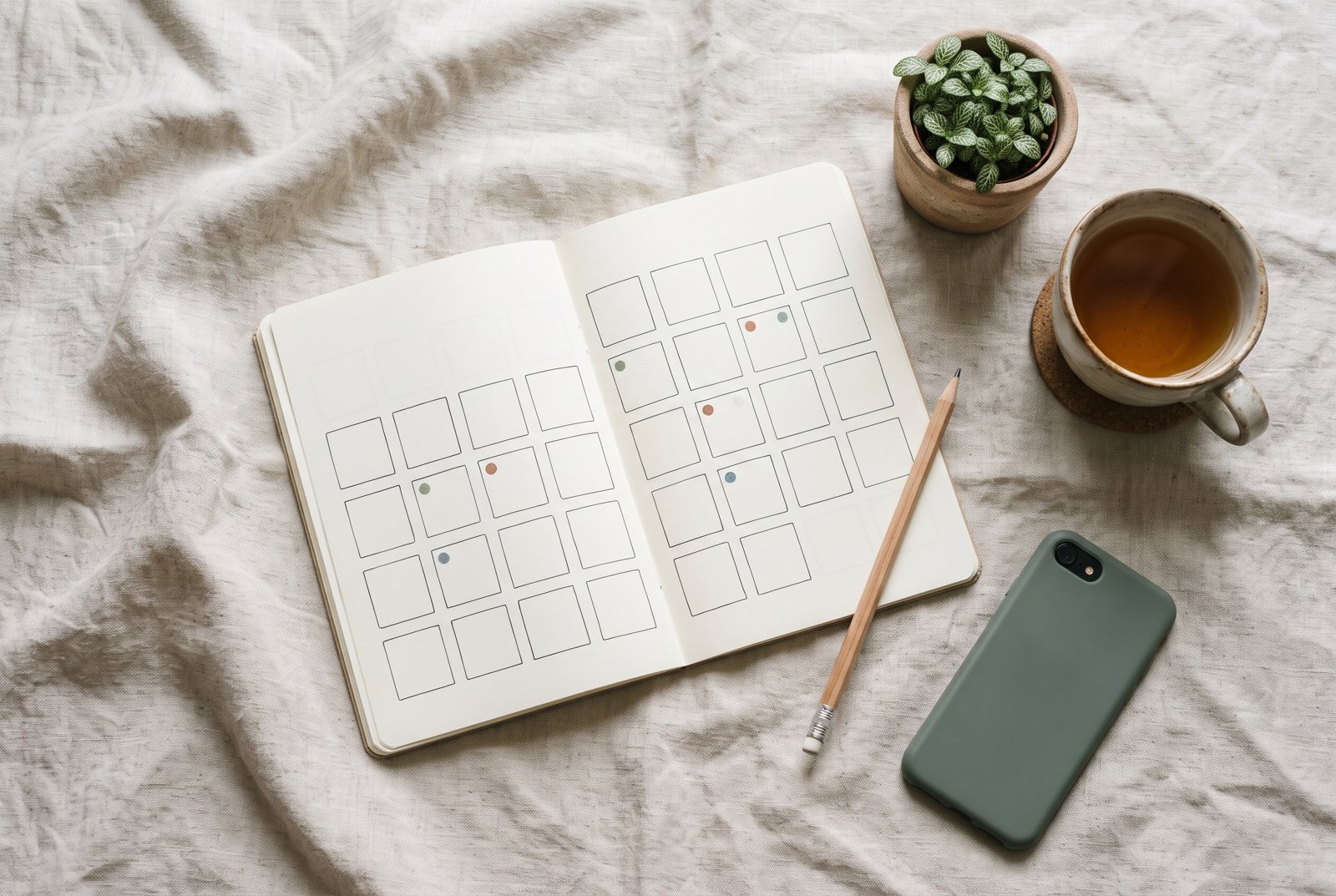
Tracking sounds tedious, but it’s the single most useful step, both for you and for any doctor you see. ACOG suggests writing down and rating your symptoms every day for at least two to three months, along with your period dates.
- Pick one place to log: a paper calendar, a notes app or a period-tracking app.
- Each evening, rate 4 to 6 symptoms from 0 (none) to 3 (severe). Include at least one mood symptom.
- Mark day one of each period.
- After two cycles, look for the pattern. Symptoms that cluster in the days before bleeding and fade soon after point toward a premenstrual cause.
- Bring the log to your appointment. It saves time and makes the conversation much easier.
If writing helps you sort out what you’re feeling, a few of our journaling prompts for stress fit well alongside a symptom log.
What helps luteal phase symptoms
For mild to moderate symptoms, ACOG says lifestyle and diet changes often bring relief. None of these is a cure, and results vary from person to person, but each one has some evidence behind it.
Move most days, all month long
ACOG notes that regular aerobic exercise lessens PMS symptoms for many women and suggests at least 30 minutes most days, all cycle long instead of only on bad days. A 2026 systematic review of 20 trials found that running, Pilates and yoga improved negative mood, pain and fatigue in women with PMS, with the clearest results from programs of three or more sessions a week for 9 to 12 weeks. A brisk walk counts.

Eat for steadier blood sugar
ACOG’s food suggestions are simple: lean on complex carbohydrates (whole grains, beans, lentils, brown rice), add calcium-rich foods like yogurt and leafy greens, cut back on salt, sugar and fat, and go easy on caffeine and alcohol. Smaller meals or a planned snack between meals can keep you from crashing into a craving. Our guide to balancing blood sugar through smart eating has easy ways to build those meals.
Calcium has the strongest supplement data
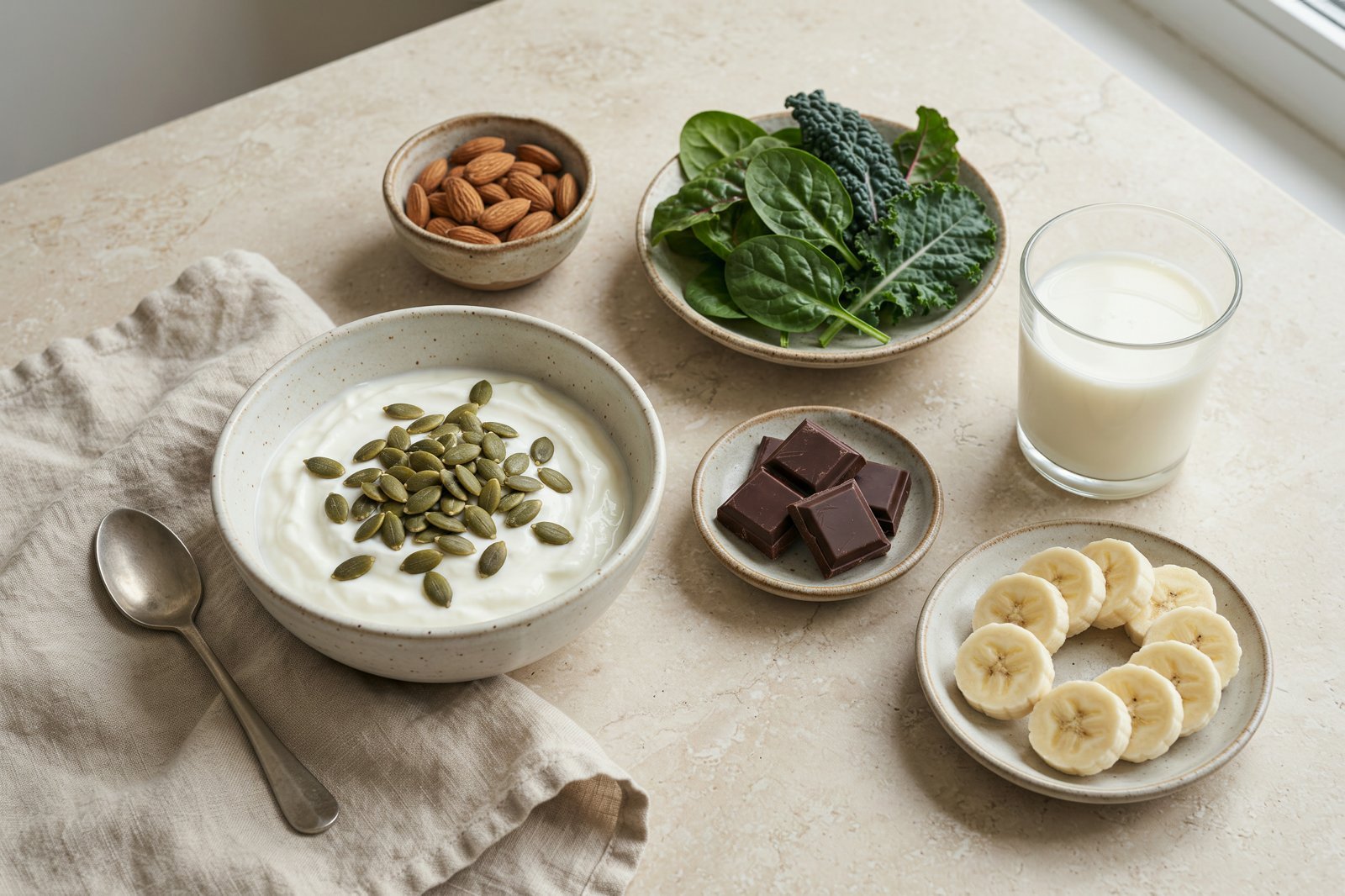
In a large 1998 trial of 466 women with moderate to severe PMS, 1,200 mg of elemental calcium a day cut total symptom scores by 48% by the third cycle, compared with 30% for placebo. ACOG lists 1,200 mg of calcium a day as an option. Food counts toward that total, so a cup of yogurt, a glass of milk and a serving of greens go a long way before any pill.
Magnesium and vitamin B6: possible, with caveats
ACOG says magnesium supplements may help with bloating, breast tenderness and mood symptoms. If you’re weighing a supplement, our comparison of magnesium glycinate vs citrate explains which form tends to be gentler on the stomach. Food sources like pumpkin seeds, almonds, beans and dark chocolate add some too.
Vitamin B6 has a mixed record. A systematic review in the BMJ suggested doses up to 100 mg a day may help, but most of the trials were low quality. Long-term high doses of B6 have been linked to nerve problems, so check with your doctor or pharmacist before adding it, especially if you already take a multivitamin.
Protect your sleep and stress budget
ACOG recommends regular sleep and wake times, including weekends, to ease moodiness and fatigue, plus relaxation practices such as breathing exercises, meditation and yoga. A few minutes of slow breathing exercises for anxiety or a couple of restorative yoga poses before bed are easy places to start. If your mind races at night in the days before your period, try our wind-down plan for overthinking at night.

Plan around the hard days
Once your log shows which days are hardest, you can plan for them. Keep big conversations, deadlines and social marathons off those dates when you can, prep easy meals ahead, and give the people close to you a heads-up. Planning won’t change your hormones, but it can take a lot of pressure off the week.
A word on seed cycling and “hormone balancing” products
You’ll see a lot of products promising to fix your luteal phase. ACOG points out that most products marketed for PMS haven’t been tested or proven, and that some can interact with medications. Popular ideas like seed cycling are harmless as food habits but have little direct evidence. Low progesterone is a separate issue with its own signs; if that’s on your mind, see our guide to low progesterone symptoms.
Medical treatments a doctor may suggest
When lifestyle changes aren’t enough, there are well-studied medical options, and they’re worth a real conversation with your doctor. According to ACOG and the Office on Women’s Health, these include:
- SSRIs, a type of antidepressant. Three (sertraline, fluoxetine and paroxetine) are FDA-approved for PMDD, and some women take them only in the second half of the cycle.
- Hormonal birth control that stops ovulation, including one pill with drospirenone that’s FDA-approved for PMDD.
- Pain relievers such as ibuprofen or naproxen for cramps, headaches and aches.
- Relaxation-based therapy, such as guided breathing, meditation or biofeedback, which ACOG lists as an option alongside other treatments.
Which option fits depends on your symptoms, health history and plans, so this is a decision to make with your doctor.

When to see a doctor
- Premenstrual symptoms get in the way of work, school or relationships most months
- Your mood drops into hopelessness, rage or panic before your period
- You have any thoughts of self-harm or suicide (call or text 988 right away)
- Symptoms last all month, or don’t ease within a few days after bleeding starts
- Your periods become very heavy, very painful, irregular or stop, or you bleed between periods
- Symptoms change suddenly in your late 30s or 40s, or you’re unsure whether it’s perimenopause
- You want to try a supplement and take other medications or have a health condition
FAQ
How long does the luteal phase last?
About 14 days for many women, running from ovulation to the start of the next period. It can be a few days shorter or longer, and a cycle-tracking log will show you your own pattern.
What are the first signs of the luteal phase?
Some women notice a slight rise in morning body temperature, cervical mucus turning thick and pasty, breast tenderness or feeling warmer and sleepier. Many notice nothing until the premenstrual days near the end.
Why do I feel so bad in my luteal phase?
Researchers think some people are more sensitive to the normal rise and fall of progesterone and estrogen, and serotonin may be involved. Sleep loss, stress and blood sugar swings can pile on top of that.
Is a “brutal luteal phase” normal?
Feeling off, tired or irritable before your period is common. Symptoms that wreck your work, relationships or sense of self every month are not something to push through quietly. That’s a good reason to start tracking and see a doctor.
Can PMDD start later in life?
It can feel like it. Some women notice premenstrual mood symptoms getting worse in their late 30s and 40s, and perimenopause can change cycles and symptoms. A doctor can help sort out what’s going on.
What should I do if I have suicidal thoughts before my period?
Treat them as urgent, even if you know they’ll fade when your period starts. In the US, call or text 988 to reach the 988 Suicide & Crisis Lifeline any time, or call 911 if you’re in immediate danger. Then tell your doctor, because a 2021 meta-analysis found higher rates of suicidal thoughts and attempts in women with PMDD, and treatment helps.
The bottom line
Luteal phase symptoms are common, and for most women a mix of regular movement, steady meals with enough calcium, good sleep and a little planning takes the edge off. Track your symptoms for two or three cycles so you can see your own pattern. If the week before your period hijacks your mood, your relationships or your sense of safety, that’s not a weakness. It may be PMDD, it’s treatable, and you deserve help with it.
Sources
- American College of Obstetricians and Gynecologists. Premenstrual Syndrome (PMS) FAQ. Last reviewed November 2025.
- U.S. Office on Women’s Health. Premenstrual dysphoric disorder (PMDD). Updated September 2025.
- Cleveland Clinic. Luteal Phase.
- Reilly TJ, et al. The prevalence of premenstrual dysphoric disorder: systematic review and meta-analysis. Journal of Affective Disorders. 2024.
- Prasad D, et al. Suicidal risk in women with premenstrual syndrome and premenstrual dysphoric disorder: a systematic review and meta-analysis. Journal of Women’s Health. 2021.
- Thys-Jacobs S, et al. Calcium carbonate and the premenstrual syndrome: effects on premenstrual and menstrual symptoms. American Journal of Obstetrics and Gynecology. 1998.
- Wyatt KM, et al. Efficacy of vitamin B-6 in the treatment of premenstrual syndrome: systematic review. BMJ. 1999.
- Li X, et al. A systematic review of exercise interventions on negative affect, pain, and fatigue in women with premenstrual syndrome. BMC Women’s Health. 2026.
- 988 Suicide & Crisis Lifeline.
Want more practical, evidence-based guidance like this? Join the newsletter for new guides as soon as they’re published.
⚕️ Disclaimer: This article is for general education and isn’t medical advice. Talk with a doctor or other qualified healthcare professional about your own health, especially if you’re pregnant, nursing, taking medication, or managing a condition. Read our full medical disclaimer.



Leave a Reply